amateur radio
CW
ham radio
high speed telegraphy
morse code
radio amatur
amateur radio, ARRL, cw, CW operating, dots and dashes, dxing, FCC, ham radio, ham radio contest, ham radio hobby, homebrewing, learn morse code, low power radio, morse code, qrp, Radio communication, radio gear, radio projects, radio skills, sdr, software defined radio, telegraphy, vintage radio, weak signal communication, wireless telegraphy
9M2PJU
0 Comments
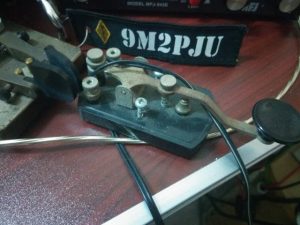
The Art of Morse Code (CW): Is it Still Relevant in the Digital Age?

In an age dominated by 5G networks, AI-generated text, and instant global video calls, the rhythmic dits and dahs of Morse code might seem like a nostalgic echo from the Titanic era. It’s fair to ask: Is Morse code actually still relevant?
For the uninitiated, the answer might be “no.” But for the millions of Amateur Radio (Ham) operators around the globe, the answer is a resounding, enthusiastic YES.
Far from being dead, Morse code—known in the hobby as CW (Continuous Wave)—is experiencing a massive renaissance. It remains one of the most efficient, reliable, and deeply satisfying ways to communicate.
This post dives deep into why this 19th-century invention is not only surviving but thriving in the 21st century.
1. The Ultimate Weak-Signal Powerhouse
If there is one technical reason Morse code refuses to die, it is efficiency.
When you speak into a microphone (SSB or FM), your voice spreads out over a wide bandwidth—typically 2.5 kHz or more. That power is diluted. Morse code, by comparison, focuses all your transmitter’s energy into an incredibly narrow sliver of bandwidth, often less than 100 Hz.
Why does this matter?
- Punch Through the Noise: A CW signal can be heard clearly when voice signals are completely buried in static or atmospheric noise.
- Distance Champion: You can talk around the world on CW using less power than a lightbulb (often 5 watts or less).
- Emergency Reliability: When solar cycles are poor and bands are “dead” to voice traffic, the piercing tone of CW can still make the trip.
Technical Insight: An improvement of just a few decibels in signal-to-noise ratio can mean the difference between a contact made and a contact lost. CW offers a signal-to-noise advantage of nearly 20dB over SSB voice. That is a massive difference in the world of radio physics.
2. The King of QRP (Low Power)
There is a subset of ham radio called QRP—the art of operating with very low power. While you can do QRP with voice or digital modes, CW is the undisputed king of this domain.
Imagine sitting on a mountain peak (SOTA – Summits on the Air) or a park bench (POTA – Parks on the Air) with a radio the size of a deck of cards, powered by a small battery. With just 5 watts and a simple wire thrown into a tree, a skilled CW operator can easily work stations in Europe, Asia, or the Americas.
This portability appeals to the modern “maker” and “outdoorsman” demographics. It transforms radio from a sedentary indoor hobby into an active, outdoor adventure.
3. The “Maker” Connection: Simplicity in Design
In a world of black-box appliances that cannot be repaired, Morse code radios are refreshingly simple.
A voice transmitter requires complex audio processing and linear amplification chains. A CW transmitter, at its heart, is just an oscillator that you turn on and off.
This simplicity makes CW the perfect entry point for homebrewing (building your own gear).
- The Rockmite: A legendary DIY kit that fits in an Altoids tin.
- QCX / QDX: Modern high-performance kits that you can build for under $50.
For engineers and tinkerers, there is a primal joy in communicating across oceans using a device you soldered together with your own hands.
4. A Language Beyond Language
One of the most beautiful aspects of Morse code is its ability to smash language barriers.
Ham radio has developed a universal set of “Q-codes” and abbreviations that allow two people who speak completely different languages to have a meaningful conversation.
- QTH = “My location is…”
- RST = “Your signal report is…”
- 73 = “Best regards”
A Japanese operator and a Brazilian operator can exchange names, locations, weather reports, and equipment details entirely in Morse code, without either speaking a word of the other’s native tongue. It is a truly global, neutral “lingua franca.”
5. The “Flow State”: Mindfulness and Mental Health
This might be the most surprising reason for CW’s longevity: It is good for your brain.
Learning Morse code is not about memorizing a chart; it’s about training your brain to hear a rhythm and instantly associate it with a letter. It is a form of auditory pattern recognition, very similar to learning a musical instrument.
Many operators describe a “Flow State” when operating CW at high speeds (20+ words per minute). You stop thinking about individual dots and dashes and start hearing whole words and phrases.
- Brain Training: Studies suggest that learning complex auditory skills can help maintain neuroplasticity as we age.
- Stress Relief: The intense focus required to decode a weak signal forces you to block out the distractions of daily life. It is a form of meditation.
6. How to Get Started (It’s Easier Than You Think)
Decades ago, you had to pass a grueling code test to get your license. That barrier is gone. Now, people learn CW because they want to, not because they have to.
If you are ready to join the ranks of the “brass pounders,” here is the modern roadmap:
- Throw Away the Chart: Do not memorize visual dots and dashes (A = • —). This is a trap! You must learn the sound. (A = di-dah).
- Use the Koch Method: This method teaches you two letters at full speed, then adds one more only when you have mastered the previous ones.
- Download the Right Tools:
- Apps: Morse Mania (iOS/Android) or Iz2uuf (Android).
- Websites: LCWO.net (Learn CW Online) – The gold standard for browser-based learning.
- Software: Morse Runner – A contest simulator that feels like a video game.
- Join a Club: The Long Island CW Club and CW Academy offer Zoom-based classes that have revolutionized how the code is taught.
Conclusion: The Code Lives On
Is Morse code relevant? If you judge relevance by mass adoption, perhaps not. But if you judge it by utility, reliability, efficiency, and the sheer joy it brings to its practitioners, then Morse code is more relevant than ever.
It stands as a testament to the idea that “newer” isn’t always “better.” Sometimes, the simplest solution—an on/off switch and a rhythmic mind—is the most powerful one.
So, turn on the radio, tune down to the bottom of the band, and listen. The music of the airwaves is waiting for you.


Post Comment