Turning Silicon into Radio: The Magic of Transmitting LoRa Without a Radio Chip
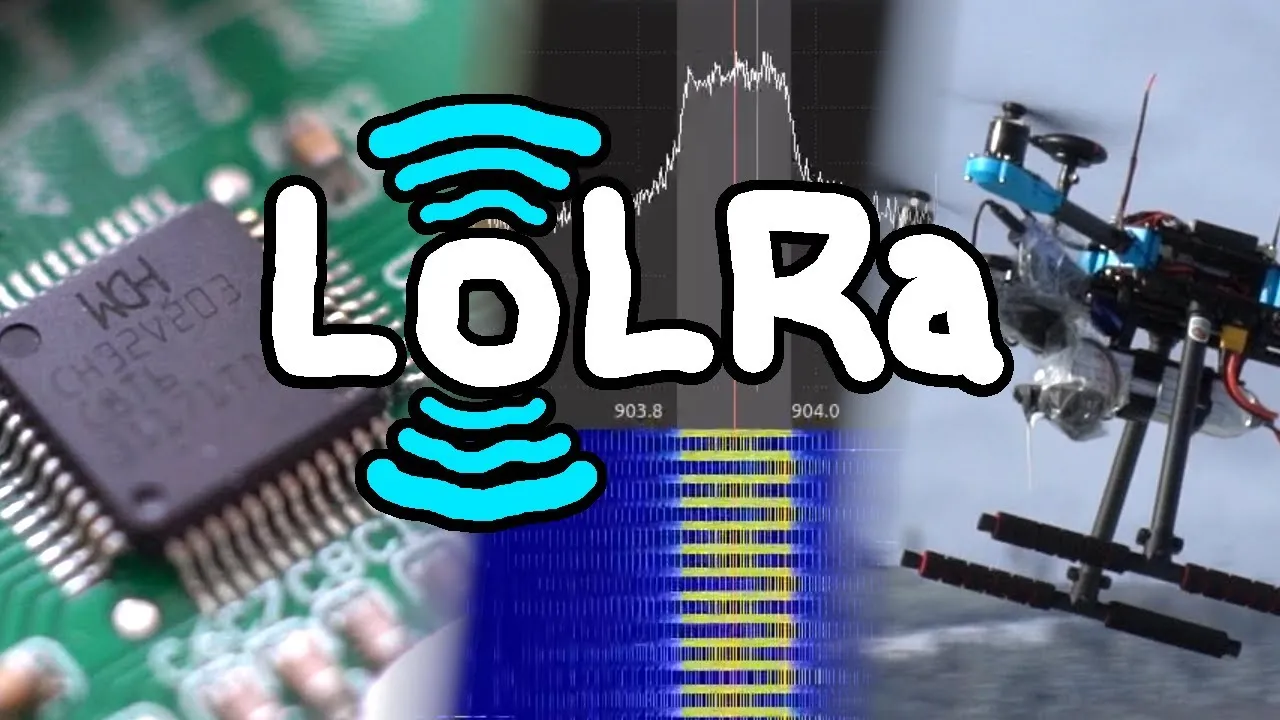
In the world of IoT, if you want to send data over a long distance, you buy a LoRa chip. It’s a specialized piece of silicon designed to handle the complex “chirps” of Spread Spectrum modulation. But what if you could do it with a $0.10 microcontroller and a piece of wire?
Enter LoLRa, a mind-bending project by cnlohr that proves you don’t need a radio to make waves.
The Premise: “Artisanally Crafted EMI”
Usually, engineers spend their lives trying to stop microcontrollers from emitting radio interference (EMI). Charles Lohr decided to do the opposite. By precisely controlling the pins on cheap microcontrollers like the CH32V003 or ESP32-S2, LoLRa generates “artisanally crafted signals” that trick professional LoRa gateways into thinking a real radio is talking to them.
How it Works: Harmonics and Aliasing
The project relies on two core principles of physics that most of us try to ignore:
- Square Waves are Liars: A square wave isn’t just a square; it’s actually a collection of infinite odd harmonics. If you toggle a pin at 70MHz, you are also unknowingly emitting a (weaker) signal at 210MHz, 350MHz, and—crucially—910MHz.
- Bitstream Synthesis: By using high-speed peripherals like SPI or I2S (usually meant for displays or audio), the code “bit-bangs” a digital stream so fast that it creates “images” of the signal in the 900MHz ISM band.
The Result: Miles of Range from a $0.10 Chip
The most shocking part of LoLRa isn’t just that it works, but how well it works. In range tests, a tiny CH32V203 microcontroller—a chip that costs less than a cup of coffee—successfully transmitted a packet to a gateway over 1.6 miles (2.5km) away.
When pushed further using an ESP32-S2 and a “Bitenna” (a dipole made of two GPIO pins), the team achieved a staggering 1.4 miles even during light precipitation.
The “Lohrcut”
One of the most elegant parts of the repository is what Charles calls the “lohrcut.” Generating these signals usually requires massive lookup tables that wouldn’t fit on a small chip. Instead, the project uses a function that determines the signal’s amplitude at any given point in time, allowing it to synthesize the frequency shifts (the “chirps”) on the fly.
A Word of Caution
Before you start broadcasting, there’s a catch. Because this method relies on harmonics, it is “dirty” radio. It emits noise across hundreds of frequencies simultaneously. As the README warns, this is not FCC compliant. It is an experimental “don’t try this at home unless you’re in the middle of nowhere” kind of project.
Why This Matters
LoLRa is a masterclass in understanding the underlying physics of our hardware. It reminds us that the “limitations” listed in a datasheet are often just suggestions. Whether you’re interested in SDR (Software Defined Radio), extreme optimization, or just want to see a $0.10 chip do something “impossible,” the LoLRa repository is a goldmine of wizardry.
Want to dive into the code? Check out the LoLRa GitHub Repository.



Post Comment