amateur radio
dx cluster
ham radio
radio amatur
amateur radio, amateur radio hobby, amateur radio software, cc cluster, dx cluster, dx cluster etiquette, dx cluster flooding, dx cluster guide, dx cluster node, dx cluster rules, dx cluster spam, dx cluster tutorial, dx spider, dx spots, dxing, false spotting, ham radio, ham radio ethics, ham radio operators, ham radio volunteer, packet cluster, radio contesting, radio propagation, spotting network, sysop, telnet cluster
9M2PJU
0 Comments
The Invisible Web: Understanding the Amateur Radio DX Cluster
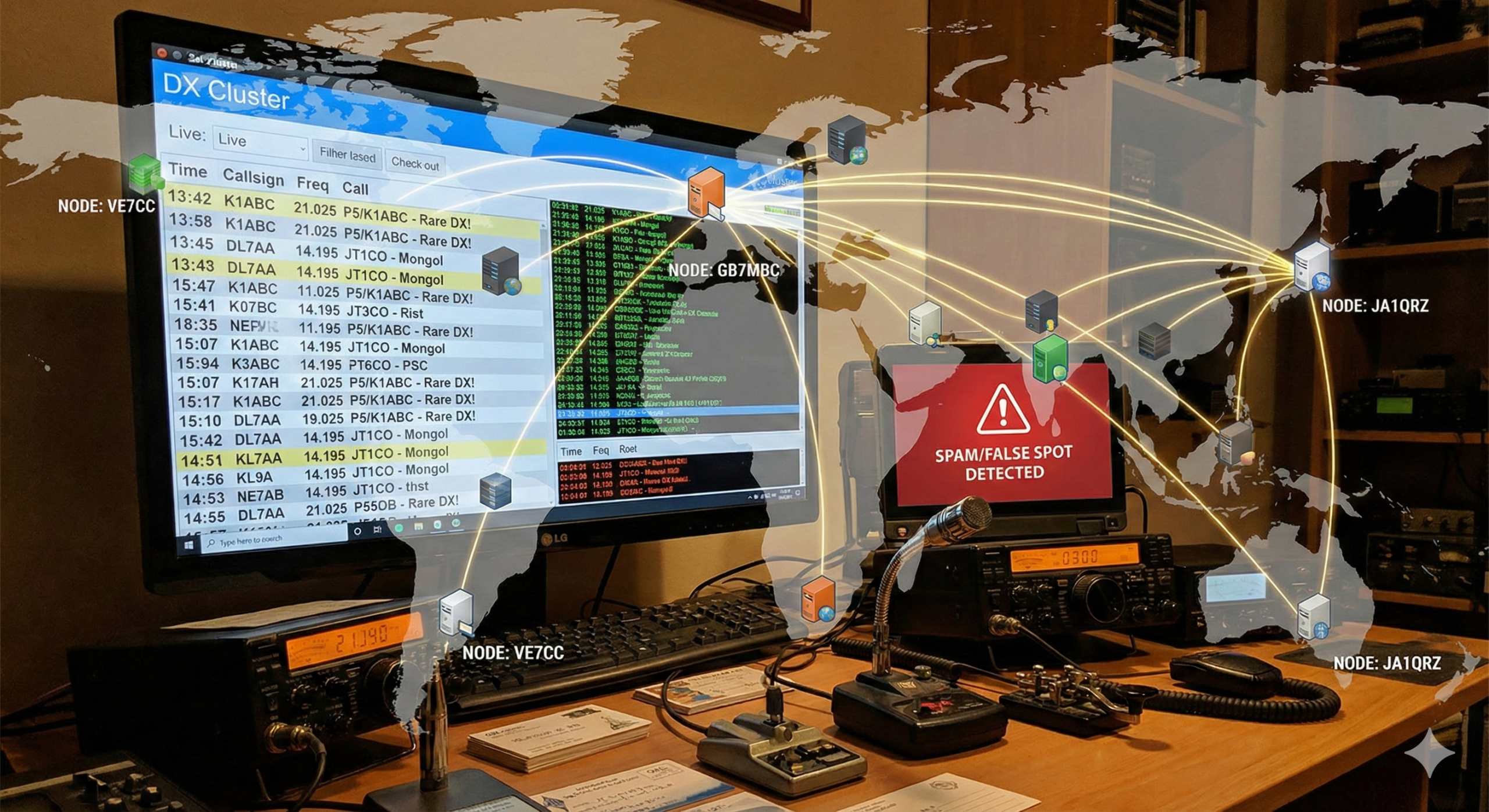
If you are a DXer (a hunter of long-distance contacts), the “Cluster” is likely your constant companion. It is the scrolling list of callsigns, frequencies, and comments that tells you exactly where the action is on the bands. But have you ever stopped to ask: Where does this data come from? Who pays for the servers? And why is it so fragile?
1. What is the DX Cluster?
At its core, the DX Cluster is a distributed network of servers (nodes) that share real-time information about amateur radio stations active on the air.
When you connect to a cluster node (either via a Telnet client, a website, or your logging software), you are plugging into a global “party line.” If a ham in Japan spots a rare station in Angola on 21.025 MHz, that information is sent to their local node, which then instantly relays it to every other connected node worldwide. Within seconds, you see that “spot” on your screen in New York or London.
2. A Brief History: From Packet to Internet
The system wasn’t always this fast. It began in the late 1980s with PacketCluster, software written by Dick Newell, AK1A.
- The Packet Era: Originally, clusters were local networks connected via VHF/UHF packet radio. You would tune your 2-meter radio to a local node to receive text updates. It was slow and localized.
- The Internet Era: As the internet grew, the software evolved. New platforms like DX Spider, CC Cluster, and AR-Cluster allowed nodes to connect via Telnet (internet) rather than just radio. This created the massive, lightning-fast global mesh we use today.
3. Who Runs the Network?
This is the most common misconception. No single person or company runs the DX Cluster.
The network is a collective of volunteers. Every “node” you connect to (e.g., dxc.ve7cc.net or gb7mbc.spud.org) is a server run by an individual System Operator (SysOp) or a local radio club.
- The Cost: These SysOps pay for the electricity, the server hardware, and the internet bandwidth out of their own pockets.
- The Effort: They spend countless hours maintaining the Linux or Windows databases, fighting off bot attacks, and managing connections.
There is no “CEO of the DX Cluster.” It is a true anarchist cooperative—it works only because everyone agrees to use the same protocol to share data.
The Ethics of the Cluster: Why Truth Matters
Because the network is run by volunteers and relies on user-generated data, it is incredibly vulnerable to abuse. This is where the “Spirit of Amateur Radio” comes into play.
The DX Cluster is built on a foundation of trust. When you see a spot, you trust that the station is actually there, on that frequency, and is who they say they are.
1. The Problem of Flooding and Spamming
“Flooding” occurs when a user or a bot sends a massive number of spots or messages into the network in a short period.
- Why it is harmful:
- Denial of Service: It can crash the volunteer-run nodes. Remember, these run on modest hardware. A flood of data can overload the CPU, disconnecting thousands of legitimate users.
- Burying Data: If someone spams the network with nonsense, legitimate spots for rare DX stations are pushed off the screen instantly. You might miss a “New One” (ATNO) because a spammer filled the window with garbage.
2. False Spotting: The Cardinal Sin
Intentionally posting false spots (e.g., spotting “P5/K1ABC” in North Korea when they are not actually there) is perhaps the most unethical action on the cluster.
- Wasting Time: Thousands of operators turn their antennas, tune their amplifiers, and strain their ears listening for a station that doesn’t exist. You are stealing time from fellow hobbyists.
- Degrading Trust: If users cannot trust the spots, the tool becomes useless.
- The “Cheerleader” Effect: Sometimes friends spot friends just to make them look popular or to help them run a pile-up. This is considered poor etiquette. A spot should be a genuine report of hearing a station, not a promotional advertisement.
3. Self-Spotting
While acceptable in some modern contests or specific niche activities (like POTA – Parks on the Air), self-spotting on the general DX cluster is traditionally viewed as taboo (But some contests allow self-spotting!).
- The Philosophy: DXing is about the hunt. The spot is supposed to be a reward given to you by a listener who heard your signal. Spotting yourself is akin to high-fiving yourself in public—it is seen as seeking unearned attention.
Conclusion: Be a Guardian of the Network
The DX Cluster is a privilege, not a right. It exists only because hundreds of SysOps donate their resources and millions of hams agree to use it responsibly.
Good DX Cluster Citizenship:
- Verify before you spot: Ensure you have actually heard the station and confirmed the callsign.
- Don’t use the cluster as a chat room: There are “Announce” functions for varying topics, but the main “Spot” window is for frequency reports only.
- Thank your SysOp: Occasionally, send an email to the person running the node you use. They rarely get thanked for keeping the lights on.
By respecting the network, we ensure this incredible “invisible web” remains alive for the next generation of radio amateurs.


Post Comment