Why “Don” 10? The History of the Army’s Toughest Cable
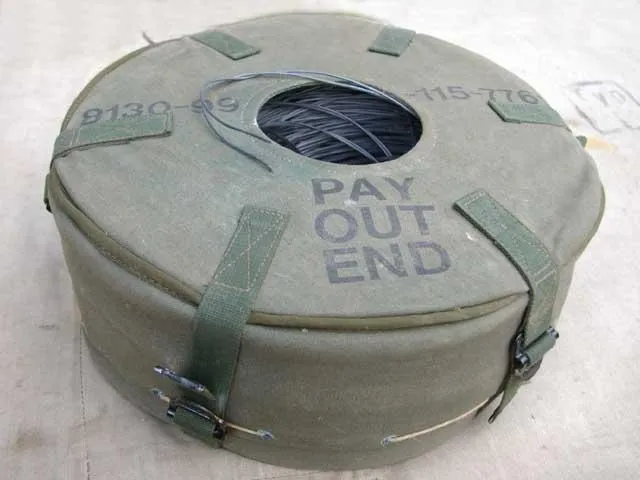
If you have ever served in the Signals, you have likely encountered D10 Cable. Often referred to as “the line” or simply “Don 10,” this distinct, twisted-pair field wire has been the physical nervous system of British and Commonwealth armies for decades.
But we were recently asked a simple question that stumped even some veterans: Why is it called “Don 10”?
If the official nomenclature is Cable, Electric, D10, and the modern NATO phonetic alphabet for ‘D’ is Delta, shouldn’t it be “Delta 10”?
The answer lies in a mix of military tradition, evolving technology, and a phonetic alphabet that refused to die. Here is the story of D10-from the mud of Flanders to the digital age.
What is D10 Cable?
Before we solve the name mystery, it is worth explaining what this cable actually is. D10 is a field telephone cable designed to survive where standard wires fail.1
Unlike domestic phone lines, D10 is designed for war. It is a twisted pair cable, meaning two insulated wires are wound around each other. This isn’t just for organization; the twist cancels out electromagnetic interference (crosstalk), allowing for clear voice and data transmission over miles of damp earth.
It is famous for being incredibly strong yet lightweight enough for a soldier to deploy at a run. But how did we get here?
A (Very) Short History of “The Line”
The “Don” series represents a century of trial and error in making a wire that is conductive enough to carry a voice but tough enough to survive a tank driving over it.
The Early Years: D1 to D8 (WWI – WWII)
The lineage began during the Boer War and World War I. The primary challenges were insulation and weight.
- D1 through D5: Early variants struggled with the elements. They often used gutta-percha or simple cloth insulation that rotted in the mud or cracked in the freezing cold.
- D8 (The Old Workhorse): By the end of WWI, the Army had evolved the design to D8. This was a single conductor made of steel and copper strands, insulated with rubber and a cotton braid. It was heavy and had to be laid from large drums on wagons or trucks. Despite its weight, D8 remained the standard through WWII and into the 1950s.
The Game Changer: D10
D10 was the massive leap forward, driven by the invention of modern plastics in the post-WWII era. It replaced the rotting cotton and heavy rubber of D8 with Polyethylene (PE) and Nylon. This allowed for a cable that was thinner, lighter, and virtually waterproof.
The Mystery of the Name: Why “Don”?
So, if D10 arrived in the modern era, why does it use an archaic nickname?
The answer is a linguistic fossil. The nickname “Don” harkens back to the World War I era phonetic alphabet, long before “Alpha Bravo Charlie” became the NATO standard.
During the First World War, there were variations in the phonetic alphabet between the Army, the Royal Flying Corps, and the Royal Navy. The consensus is that the Army alphabet was:
A – Ack
B – Beer
C – Cork
D – Don
Because the early field cables were designated D-class (D1, D2, etc.), soldiers naturally referred to them using the spoken alphabet of the time. “Cable D1” became “Don 1”. “Cable D8” became “Don 8”.
By the time D10 was introduced, the phonetic alphabet had officially changed to the NATO standard where D is “Delta.” However, old habits die hard in the military. The “Don” prefix had become so synonymous with field cable that it stuck. Even as signallers were learning “Delta,” they were still laying “Don 10.”
Under the Hood: Why D10 is Still Used
“Don 10” isn’t just a museum piece; it is still highly regarded because of its unique construction.
- The “Secret Sauce” (4+3): If you strip back the insulation, you won’t find just copper. Each strand of D10 is a composite. It typically contains 4 tinned copper wires for conductivity and 3 galvanized steel wires for sheer tensile strength.
- Breaking Strain: Thanks to those steel strands, D10 has a breaking strain of approx 150-200 lbs. You can pull it tight across a ravine, or use it as an emergency antenna support, and it won’t snap.
- The “Zip” Sheath: The outer nylon sheath is extremely hard, resisting cuts from rocks and boots. The two wires are molded in a way that allows them to be “zipped” apart easily for splicing, but they won’t separate on their own.
Summary
Why “Don 10”? It is a respectful nod to the past. While the technology inside the cable is modern plastic and steel, the name carries the DNA of the “Ack Don” alphabet used by the signallers who laid the first lines under fire in the trenches.
Next time you handle a reel of D10, remember: you’re holding a piece of Cold War technology with a World War I name.



Post Comment