Bridging the Analog-Digital Divide: A Deep Dive into ‘APRS pro’ for iOS
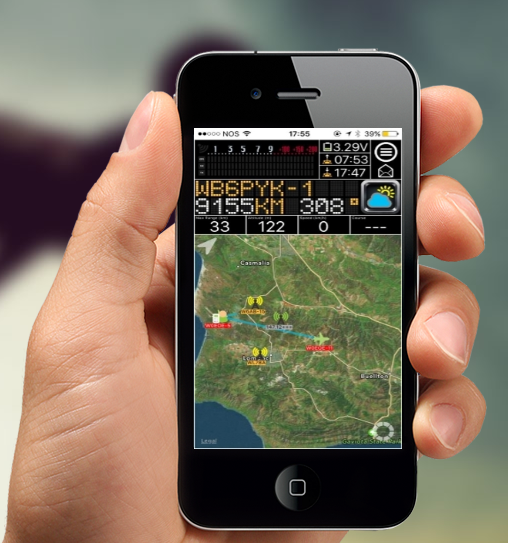
For decades, the Amateur Radio world has been somewhat bifurcated. On one side, you have the rugged, analog reliability of HF and VHF radios; on the other, the slick, user-friendly interface of modern smartphones. For a long time, connecting these two worlds required bulky, expensive external hardware-specifically Terminal Node Controllers (TNCs)-and a mess of cabling that made mobile operations a headache.
However, the landscape of the Automatic Packet Reporting System (APRS) is shifting. A software solution that has been gaining significant traction in the community is APRS pro. By leveraging the computing power already sitting in your pocket, this application attempts to modernize the packet radio experience without discarding the RF roots that hams love.
Here is an in-depth look at how APRS pro is attempting to redefine the “Shack-in-a-Box” concept.
The Death of the Hardware TNC?
The most significant technical achievement of APRS pro is its embedded “Soft TNC” (Terminal Node Controller). Historically, if you wanted to send digital data over an analog radio, you needed a physical modem box between your radio and your computer.
APRS pro eliminates this hardware barrier. By using the iPhone’s own audio processing capabilities, the app functions as a high-fidelity modem.
- VHF/UHF Operations: It handles the standard 1200 baud packets used for local 2-meter communications.
- HF Operations: It supports 300 baud modes for long-range High Frequency work.
For the end-user, this simplifies the setup dramatically. All that is required is a simple audio interface cable to connect the phone to the radio. The app handles the modulation and demodulation, effectively turning an iPhone into a fully functional command station.
Beyond RF: A Hybrid Connectivity Approach
While radio purity is important, APRS pro acknowledges the reality of modern infrastructure. The app is designed to be “transport agnostic.” It functions seamlessly over traditional RF, but it also integrates fully with cellular data (2G/3G/4G) and WiFi.
Perhaps most interestingly for off-grid adventurers, the app bridges the gap with commercial satellite trackers. It supports integration with Spot and deLorme satellite devices. This means a user can be completely off the grid-miles away from a cell tower or a digipeater-and still populate their location data onto the APRS pro map interface.
Intelligent UI: Dynamic Symbols and Mapping
One of the common complaints about legacy APRS software is the static nature of the user interface. APRS pro attempts to solve this with “Context-Aware” computing.
A standout feature is the Dynamic Symbol system. In traditional setups, if a user switches from driving a jeep to hiking on foot, they have to manually dive into menus to change their beacon icon from a “Car” to a “Hiker.” APRS pro automates this by detecting the device’s motion and speed, changing the symbol dynamically.
Furthermore, the mapping engine is robust. It allows for customizable layers, including real-time traffic data, building footprints, and specific Points of Interest (POI). This transforms the map from a simple location plotter into a tactical situational awareness tool.
The Communication Hub: Real-Time and Offline Messaging
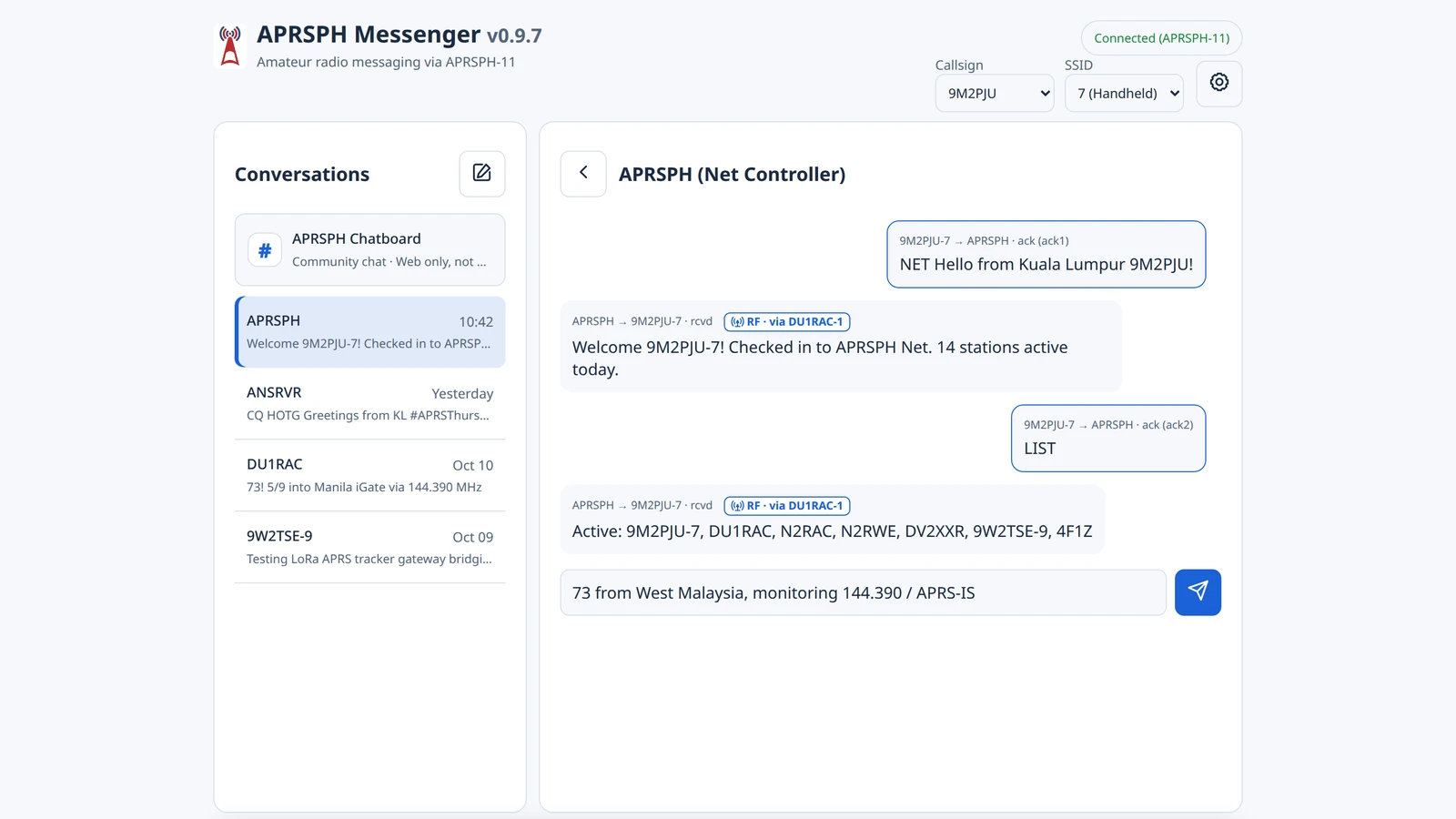
APRS is not just about dots on a map; it is a messaging network. APRS pro includes a chat interface that mimics modern SMS or WhatsApp functionality, but over the APRS network.
It addresses a major pain point of RF communication: packet loss. If a user drives through a tunnel or loses connectivity, messages are often lost to the ether. APRS pro utilizes a server-side buffer that stores incoming messages while the user is offline and delivers them the moment connectivity is restored.
Contributing to the Network: Built-in iGate
The application encourages users to be active participants in the network infrastructure rather than just passive consumers. It features a built-in iGate (Internet Gateway).
When connected to a radio, the app can “listen” to local RF traffic from other hams and forward that data to the global APRS-IS (Internet Service) network. This allows a mobile user to act as a digital repeater, helping other nearby stations get their signal out to the world.
Safety Protocol
Finally, the developers have integrated a dedicated safety layer for emergency situations. The interface includes a prominent Emergency Button. When activated, this triggers a distress message sent directly to ALL nearby stations. For hikers, search and rescue volunteers, or remote workers, this creates an immediate digital lifeline to the surrounding amateur radio community.
The Verdict
APRS pro represents a maturity in the ham radio software market. By moving the complex processing from external hardware into software, it lowers the barrier to entry for new hams while providing the advanced features-like iGating and Satellite integration-that veterans require.
It is a compelling example of how amateur radio can evolve by embracing, rather than resisting, the smartphone revolution.






Post Comment