amateur radio
cardputer
esp32
ham radio
amateur radio, APRS TNC, cat control, CW decoder, digital mode ham radio, diy ham radio, ESP32 amateur radio, ESP32-S3 ham radio, FT8 portable, ham radio, ham radio projects, ham radio tools, M5Stack Cardputer-Adv, MMDVM display, pocket TNC, portable ham radio, POTA equipment, satellite ham radio, SOTA gear, wspr beacon
9M2PJU
0 Comments
The M5Stack Cardputer-Adv and Amateur Radio: 15 Real Possibilities Worth Exploring
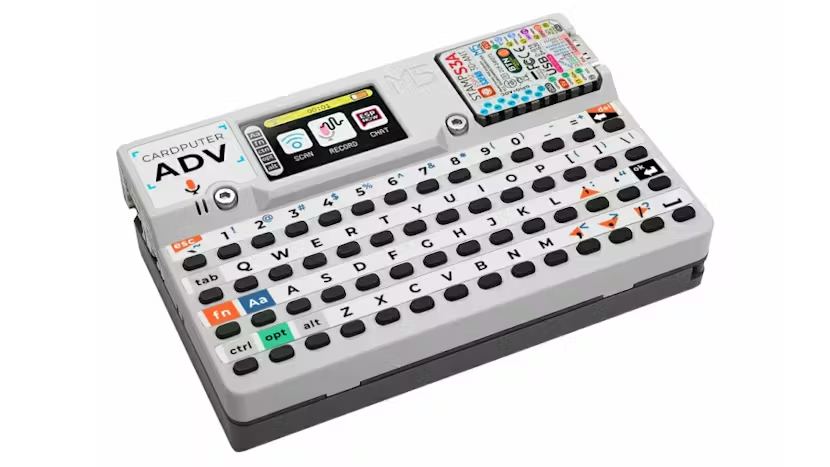
Every ham knows the feeling: you see a new gadget and immediately think, “How can I use this on the air?” The M5Stack Cardputer-Adv ESP32-S3 is one of those devices. It’s not a radio, but it’s a pocket-sized toolbox that hits a sweet spot for portable ham ops.
If you hold a license and you like to build, here are 15 concrete possibilities for the Cardputer-Adv in amateur radio. All of them are technically feasible based on the hardware. None require you to suspend disbelief.
1. Your Shirt-Pocket APRS Terminal
The Cardputer-Adv has the 3 essentials for APRS: a keyboard to type messages, a 3.5mm jack for AFSK audio, and a 1750mAh battery that lasts a field day. Flash TNC firmware and you’ve got a self-contained tracker. No phone, no Mobilinkd, no cable mess. Type >APRS and send a message from a summit.
2. FT8 Without the Laptop
The ESP32-S3 can decode FT8. Several projects already prove it. The Cardputer adds a screen and keyboard to the equation. The possibility: walk to a park, plug into your QDX or IC-705, and work FT8 while the sun is up. The 1.14″ screen is tight, but you only need to see the callsign and report.
3. A Real CAT Control Head for Portable
Tired of digging through radio menus? The EXT header gives you UART and I2C. That means the Cardputer could become a dedicated CAT panel. Map the 56 keys to band, mode, VFO A/B, or CW memories. For rigs like the FX-4CR or uSDX, this is a lighter alternative to a laptop.
4. The Satellite Pass Assistant You Actually Carry
Satellite work is all about timing and pointing. The Cardputer-Adv can pull TLEs over WiFi, calculate the next pass, and show AZ/EL. Strap it to your Arrow antenna and the BMI270 IMU turns it into a digital compass. You get live pointing data on screen while you work RS-44.
5. Rotator Controller for Your SOTA Beam
Doing SOTA with a small Yagi? Use the Cardputer’s GPIO to drive a light rotator. The IMU gives you heading feedback so you know where the beam is pointing. No more guessing or using your phone’s compass next to metal.
6. Morse Code Swiss Army Knife
CW ops get a lot here. The audio in means it could decode incoming Morse. The keyboard means it becomes a memory keyer. The speaker means instant code practice. For Field Day, it’s a logger, keyer, and decoder in 81 grams.
7. SWR Meter With a Brain
Connect a basic directional coupler to the ADC pins. Now the Cardputer-Adv can display SWR, power, and plot graphs. Save sweeps to the microSD. You’ve just built an antenna analyzer display that runs all day on its internal battery.
8. QRP WSPR Beacon
The ESP32-S3 is stable enough for WSPR timing. Add a simple LPF and you have a beacon that runs for 24+ hours. Use the keyboard to set your callsign and grid. Hang a wire in a tree and spot yourself on WSPRnet.
9. Echolink/AllStar DTMF Pad
The ES8311 codec generates clean tones. The possibility: use the Cardputer as a dedicated DTMF pad for Echolink, IRLP, or your club repeater’s autopatch. No more fighting with your phone’s dialer.
10. The MMDVM Hotspot Display We Needed
Hotspots are tiny and headless. The Cardputer-Adv could connect over serial and show talkgroup, last heard, BER, and CPU temp. Map keys to “Parrot”, “Disconnect”, or “TG4000”. Your hotspot finally gets a front panel.
11. Contest & SOTA Logger That Fits in Your Palm
Typing on a phone in the rain is misery. The 56-key board is tactile. Log callsign, RST, and exchange straight to microSD in ADIF. Import to N1MM later. The battery won’t die in the middle of a pileup.
12. SSTV on a Keychain
Decode SSTV from the audio jack and see the picture right there on the 1.14″ screen. It’s small, but for Robot 36 from the ISS, it works. You can also generate SSTV audio to send your own images QRP.
13. Fox Hunt and RFI Hunting Tool
Feed signal strength from an HT into the ADC. Combine it with the IMU heading and you’ve got a digital fox hunt display. It could log bearings and triangulate. For RFI hunting, log signal vs. position as you walk.
14. Wireless Remote Head for the Shack
Running a Flex or IC-705 at home? The Cardputer-Adv has WiFi and BT. It could become a wireless control head. Sit in the backyard and run your base station from the patio using your home network.
15. APRS iGate in a Box
Combine the TNC function with WiFi. The Cardputer could hear packets on RF and gate them to APRS-IS. Solar + battery + Cardputer + UV-K5 = ultra-portable iGate for events or emergencies.
The Reality Check
To be clear: none of this works out of the box. The Cardputer-Adv ships as a blank ESP32-S3 board. You need firmware, cables, and a real radio. It won’t replace your FT5DR or IC-7300.
But if you’re the kind of ham who owns a soldering iron and has compiled Arduino code before, the possibilities are real. You’re looking at $50 of hardware that can replace 4 separate gadgets in your go-kit.


Post Comment