CW and Modern Amateur Radio: How Much Did Morse Code Really Shape the Hobby?
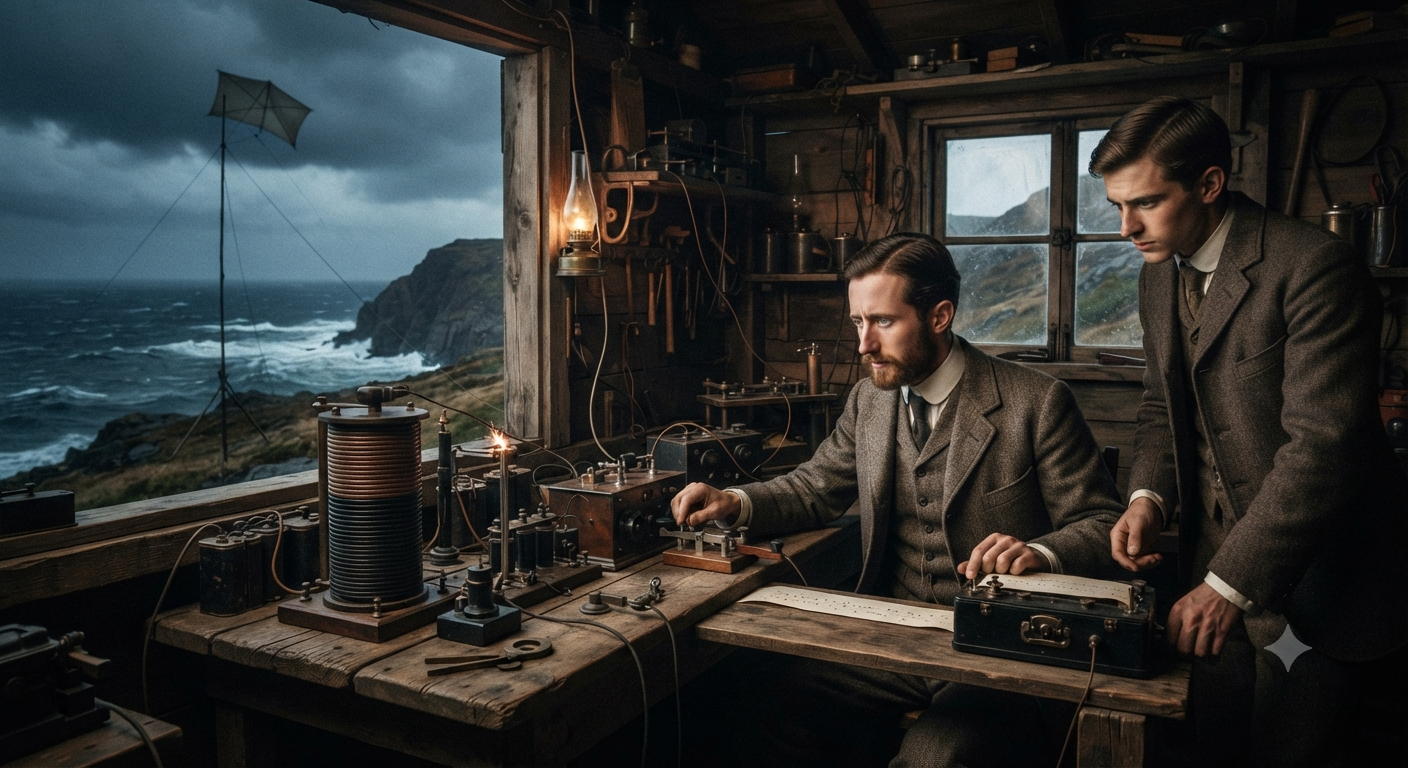
Continuous wave telegraphy, universally known among operators as CW, is often credited as the foundation of amateur radio culture. Ask any experienced ham whether CW shaped the hobby, and the answer is almost always yes. The more useful question is how much, and whether that influence still defines amateur radio today or belongs mainly to its history. This article examines both sides using verifiable regulatory and technical facts, with particular attention to the Malaysian context.
CW as the Original Operating Mode
Morse telegraphy predates voice radio by decades and was the only practical mode available when amateur radio began developing as an organized hobby in the early twentieth century. Because CW was the default and, for many years, the only permitted mode on the lower HF bands internationally, the operating conventions built around it became the operating conventions of amateur radio as a whole.
Q-codes are the clearest surviving example. These three-letter abbreviations beginning with Q were created to compress common radio phrases into fast Morse exchanges. Terms every ham still uses today such as QRZ, QSL, QTH, and QRP originated specifically to solve a CW problem: sending full sentences by hand key is slow, so operators needed shorthand. That shorthand carried over into voice and digital operating and remains standard vocabulary across the hobby regardless of mode.
Procedural discipline is another CW legacy. The structured exchange of callsign, signal report, and confirmation that hams use in nearly every mode today traces its structure back to telegraphic practice, where every unnecessary word cost time and bandwidth.
The Regulatory Turning Point: WRC-03
For most of amateur radio’s history, demonstrating Morse code proficiency was a mandatory international requirement for HF operating privileges. Article 25 of the ITU Radio Regulations required that anyone seeking a licence to operate an amateur station prove they could send and receive Morse code by hand and ear, with individual administrations permitted to waive this only for stations restricted to frequencies above 30 MHz.
This changed at the World Radiocommunication Conference of 2003 (WRC-03), held in Geneva from 9 June to 4 July 2003. The conference revised Article 25 so that each national administration could independently decide whether to require Morse proficiency for licensing, rather than being bound by an international mandate. The effect was that Morse code testing became optional worldwide rather than compulsory.
National regulators moved to drop the requirement over the following years. The FCC eliminated the Morse examination for all United States amateur licence classes in February 2007. Ofcom in the United Kingdom, Canada’s licensing authority, Japan’s JARL, and most other national regulators removed their requirements within a similar timeframe.
The Malaysian Context
Malaysia followed the same international trajectory. The Malaysian Communications and Multimedia Commission (MCMC) restructured the amateur radio licensing system effective January 2023, introducing a new entry-level Class C alongside the existing Class B and Class A structure. As part of this restructuring, the CW examination previously required to upgrade to Class A was replaced with a computerised multiple-choice technical examination. MCMC stated the changes were intended to align Malaysian certification with international practice and to encourage participation in STEM fields, with the broader goal of growing a pool of licensed operators able to assist during disasters.
This means that, as in most other countries, a Malaysian amateur can today hold the highest licence class without ever having passed a Morse test. CW remains available and respected, but it is no longer a gatekeeping requirement.
Why CW Still Matters Technically
Despite losing its regulatory mandate, CW retains a genuine technical advantage that keeps it relevant, particularly for DXing, contesting, and low-power (QRP) operating.
A CW signal occupies roughly 150 Hz of bandwidth, compared to approximately 2.4 kHz for a typical single-sideband voice signal. That concentration of transmitter power into a much narrower slice of spectrum, combined with the ability of a trained ear (or a narrow CW filter) to isolate a steady tone from noise, gives CW an estimated 10 to 14 dB signal-to-noise advantage over voice on the same path. In practical terms, a CW signal can often be copied where an SSB signal on the same power and antenna cannot be understood at all.
CW also functions as a genuinely universal mode. Because it does not depend on spoken language, two operators who share no common tongue can still complete a full contact using standard procedural conventions and Q-codes. This is one reason CW segments of the bands remain active among DXers and contesters, and why organisations such as FISTS, SKCC, and CWops continue to actively recruit and train new CW operators.
The Rise of Digital Modes
While CW retains its niche, the operating pattern of amateur radio today is shaped more heavily by digital modes, particularly FT8. FT8 was released on 29 June 2017 by Joe Taylor, K1JT, and Steve Franke, K9AN, as part of the WSJT-X software suite. Within roughly two years of release, FT8 became the most widely used digital mode reported by automatic spotting networks such as PSK Reporter.
PSK Reporter, which aggregates reception reports from operators worldwide, had logged more than 20 billion reception records by 2021, with the overwhelming majority of that traffic being FT8. This scale of adoption reflects a fundamental shift: FT8 allows weak-signal, low-power contacts under conditions where neither voice nor unassisted CW would succeed, using software that can decode signals far below the noise floor. For many contemporary operators, especially those in electrically noisy urban environments or operating with compromise antennas, FT8 and related WSJT-X modes have become the practical entry point into HF DXing that CW once was.
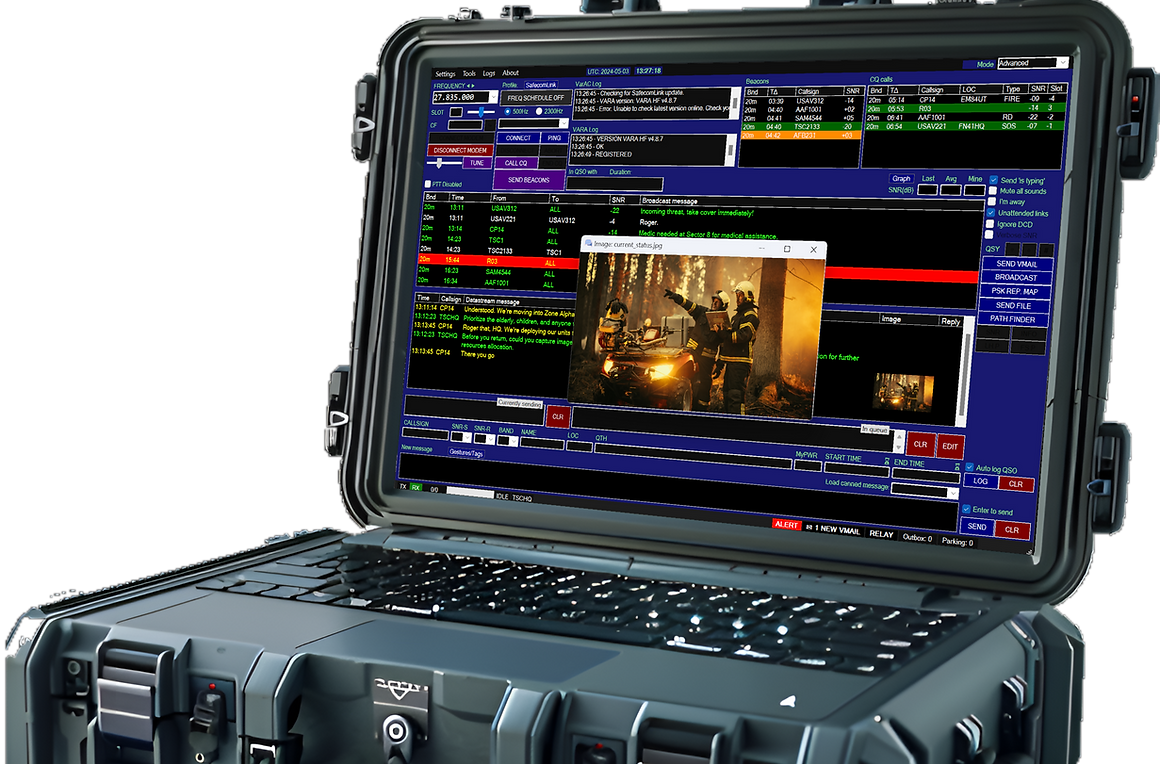
This same pattern extends beyond weak-signal DX modes. Emergency communications and packet-style traffic today rely heavily on digital infrastructure such as Winlink, VARA, and APRS rather than manual CW traffic handling, reflecting how emcomm operating culture has also shifted toward digital tools.
Conclusion: Foundation Versus Present-Day Practice
The evidence supports a qualified agreement with the premise that CW shaped amateur radio. CW built the procedural language, operating discipline, and much of the cultural identity of the hobby, and its Q-codes and exchange conventions remain embedded in every mode used today. Technically, it remains unmatched in bandwidth efficiency and weak-signal performance for a manually operated mode.
However, the regulatory record is equally clear that CW’s mandatory role ended with WRC-03 in 2003, and Malaysia’s own MCMC restructuring in January 2023 confirms that Morse proficiency is no longer a barrier to entry even at the highest licence class. In terms of day-to-day operating volume, digital modes such as FT8 have measurably overtaken CW since 2017, based on spotting network data.
A fair summary: CW shaped the foundation and etiquette of amateur radio, but digital modes are shaping how amateur radio is actually practised today.
References
- IARU Region 1, “Operating Abroad” (WRC-03 Morse code requirement removal): https://www.iaru-r1.org/reference/operating-abroad/
- Federal Communications Commission, FCC 06-178, Report and Order on Morse code examination removal: https://docs.fcc.gov/public/attachments/FCC-06-178A1.txt
- Radio Society of Great Britain, “Morse”: https://rsgb.org/main/operating/morse/
- CEPT T/R 61-01, Edition of 16 October 2003: https://www.qsl.net/yu1bbv/ra_medija/ra_pravila/TR6101.pdf
- ICQ Amateur/Ham Radio Podcast, “Malaysian Communications and Multimedia Commission Changes to the Amateur Radio,” 15 January 2023: https://www.icqpodcast.com/news/2023/1/15/malaysian-communications-and-multimedia-commission-changes-to-the-amateur-radio
- MCMC, “Guide to Obtaining an Amateur Radio License in Malaysia” via HamRadio.my: https://hamradio.my/guide-to-obtaining-an-amateur-radio-license-in-malaysia/
- Wikipedia, “FT8”: https://en.wikipedia.org/wiki/FT8
- Wikipedia, “PSK Reporter”: https://en.wikipedia.org/wiki/PSK_Reporter
- MorseKit, “Morse Code for Ham Radio: CW Guide & Q-Codes” (CW bandwidth and SNR figures): https://morsekit.com/en/morse-code-for-ham-radio

Post Comment