amateur radio
ham radio
lid
radio amatur
amateur radio lid meaning, amateur radio slang, cw operator lid, dunning kruger effect ham radio, dx pileup etiquette, elmer lid ham radio, good radio operator practices, ham radio etiquette, ham radio jargon, ham radio lid definition, ham radio terms explained, history of telegraph lid, morse code history, morse code lid slang, origin of lid radio lingo, tobacco can lid telegraph, what is a lid in radio
9M2PJU
0 Comments
The Anatomy of a Lid: History, Psychology, and Evolution of Amateur Radio’s Ultimate Insult
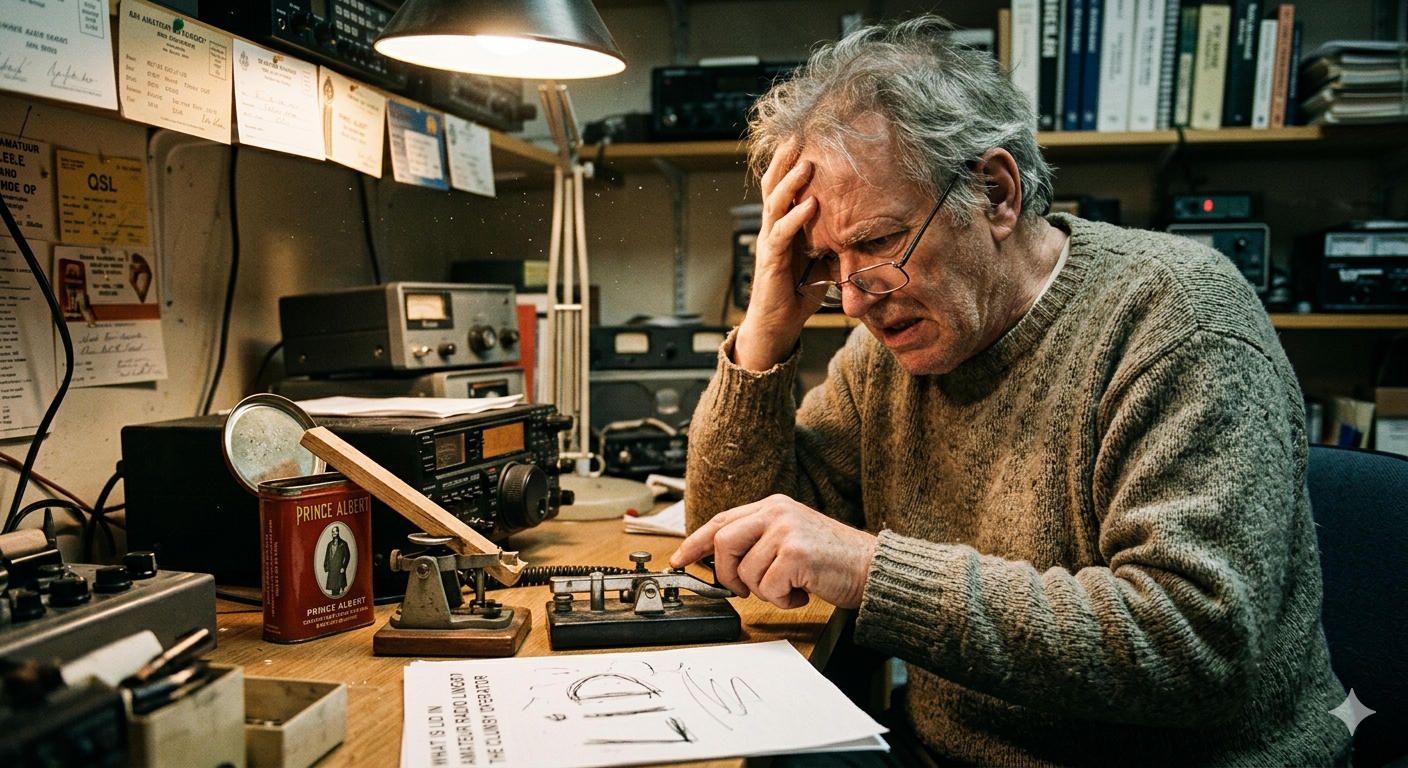
In the close-knit world of amateur radio, reputation is currency. Across the bands, operators are judged not by the cost of their transceivers or the height of their towers, but by the precision of their operating etiquette. In this subculture, there is no greater stain on an on-air reputation than being branded a “lid.”
To the uninitiated, the word sounds benign. To an amateur radio operator, particularly those who hunt rare DX or operate continuous wave (CW), it is the ultimate pejorative. It is a title reserved for the sloppy, the undisciplined, and the willfully ignorant.
The line between a beginner and a lid has nothing to do with technical skill. A newcomer who operates with humility, listens twice as much as they transmit, and learns from mistakes is highly respected. A lid is defined by an attitude of impatience, arrogance, or a complete lack of situational awareness.
The Industrial Birth of the Lid
Long before the first amateur radio spark-gap transmitter crackled to life, the term was forged in the high-pressure environment of 19th-century commercial landline telegraphy.
In the 1800s, telegraph companies like Western Union ran the central nervous system of global commerce and rail safety. Telegraph offices in major cities were deafening caverns filled with the relentless clicking of dozens of brass sounders. Senior telegraphers possessed an extraordinary auditory acuity. They could listen to a single sounder amidst a sea of noise, copying code flawlessly at high speeds while carrying on a face-to-face conversation.
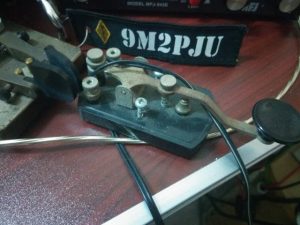
Into this high-speed environment walked the student operators. These apprentices lacked the timing, speed, and rhythm required to keep up with the mainline wires. Their sending was agonizingly disjointed. To help their untrained ears catch the faint clicks of the incoming Morse code, these clumsy operators would wedge a piece of tin, frequently the metal lid of a Prince Albert tobacco tin, between the electromagnets and the sounding board of their telegraph key.
This crude hack amplified the sound, transforming a sharp, professional click into a loud, tinny, annoying clack. Senior operators instantly knew when an amateur was on the wire the moment they heard that metallic resonance. The culprit was dismissively labeled a tobacco-can lid, which fast-talking operators quickly shortened to simply: lid.
The Rail Dispatcher’s Analogy
A secondary, parallel origin from the railroad telegraph system suggests that when a reckless operator botched train orders or jammed up a busy line with endless requests for repeats, a senior dispatcher would intentionally break the circuit to silence them. This act of cutting off a disruptive operator was referred to as putting a lid on them, treating the operator like a boiling pot that needed to be contained.
The Myth of the Backronym
As the term migrated from commercial telegraph lines to wireless amateur radio in the early 1900s, its original context was slowly lost to time. This gave rise to several modern backronyms. You will still occasionally hear hams claim that LID stands for Least Impressive Dot, Lazy Incompetent Dummy, or Leased-line Incompetent Dispatcher. While clever, these are historical revisionism. The true origin belongs to the overworked telegraphers of the Gilded Age.
The Transition to Wireless: Why Lids Became Dangerous
When amateur radio exploded in popularity after the turn of the 20th century, early hams inherited the slang of the commercial telegraphers. On the airwaves, a lid was no longer just a nuisance to a single office. They were a threat to the entire spectrum.
Early spark-gap transmitters were notoriously broad. A single transmission could wipe out massive swaths of the radio spectrum across an entire city. If an operator had erratic, unreadable spacing and lacked the discipline to listen before transmitting, they could blind critical maritime distress frequencies or ruin communications for dozens of other stations.
Technology has evolved from spark gaps and vacuum tubes to software-defined radios and digital modes, but the psychology of the lid remains remarkably unchanged. Today, being a lid is manifested through a persistent lack of operating ethics and situational courtesy.
The Dunning-Kruger Lid: The Dangerous “Expert”
The most destructive type of lid in the amateur radio community is the self-confident operator with poor knowledge who genuinely believes they are an expert. This is the Dunning-Kruger effect in action on the HF bands.
This operator possesses just enough technical capability to get on the air and speak or send with absolute conviction. Because they sound polished or authoritative, they end up spreading technical misinformation, practicing terrible operating habits, and worse, mentoring a new generation of hams to repeat those exact same mistakes. In ham radio circles, this specific brand of self-confident, poorly informed mentor is often referred to as an “Elmer-Lid.”
Characteristics of the Authoritative Lid
- Spreading Flawed Doctrine: They confidently explain technical concepts on local repeaters or online forums, giving advice on antenna tuning, shack grounding, or digital software configuration that relies on completely flawed logic or debunked myths.
- The “Years in the Log” Defense: If a seasoned operator gently corrects them about a bad habit, such as over-modulating audio, splattering across adjacent channels, or improper split-operation during a DX pileup, they become defensive. They mistake their years of holding a license for actual technical competence.
- Creating Lid Clones: Because new hams naturally gravitate toward confident, vocal personalities for guidance, this operator becomes an accidental mentor. They pass down their shortcuts, poor etiquette, and bad technical habits, effectively multiplying their negative impact across the bands.
Modern Manifestations Across Modes
Lid behavior is not restricted to any single mode. It adapts to whatever technology the operator is using.
1. CW (Morse Code)
- Professional Etiquette: Sends at a speed they can cleanly control, matches the speed of the station they are calling, and maintains immaculate character spacing.
- Lid Behavior: Sends at 25 words per minute but can only copy 12 words per minute. Runs characters together into an unreadable string and refuses to send a clean correction character after making an error.
2. DX and Pileups
- Professional Etiquette: Listens intently to determine if the DX station is operating split. Transmits their callsign exactly once and waits patiently for a response.
- Lid Behavior: Transmits simplex directly on top of the DX station. Ignores explicit instructions like “Asia Only” or “Listening 5 Up” and continuously blind-calls, destroying the pileup for everyone else.
3. Phone (SSB and FM)
- Professional Etiquette: Explicitly asks if the frequency is in use before transmitting. Carefully configures microphone gain and compression to avoid splattering into adjacent frequencies.
- Lid Behavior: Tunes an antenna tuner or whistles a long carrier directly over an ongoing conversation. Drops carriers on repeaters without identifying, and over-modulates their audio until it bleeds into adjacent channels.
4. Digital Modes (FT8 and APRS)
- Professional Etiquette: Ensures computer time synchronization is perfect. Monitors band conditions and adjusts power levels down to prevent receiver overloading.
- Lid Behavior: Runs 100 watts of power on FT8 into a crowded watering hole, creating massive RF harmonics that blind other receivers. Floods packet networks with high-rate, redundant automatic beacons that clog the local frequency.
The Ultimate Antidote
The line between a true beginner and a lid is entirely psychological. Every ham starts out slow, nervous, and prone to mistakes. The community embraces newcomers who want to learn. The transition into a lid happens when an operator prioritizes their own desire to transmit over the collective health of the band, operating with arrogance instead of situational awareness.
The best defense against becoming a lid is centuries old, inherited directly from the landline telegraphers who pioneered the craft: Listen, listen, and when you think you are done, listen some more.
More reading material:


Post Comment