Best Radio Test Equipment for Amateur Radio
Good radio test equipment helps you understand what is happening in your station. Without test gear, you are often guessing. With the right tools, you can check power, find bad cables, tune antennas, test batteries, see audio problems, and troubleshoot radio faults much faster.
You do not need a professional laboratory to enjoy amateur radio. A few basic tools can solve most common ham radio problems. The key is buying the right tools in the right order.
This guide explains the most useful radio test equipment for amateur radio in simple terms.
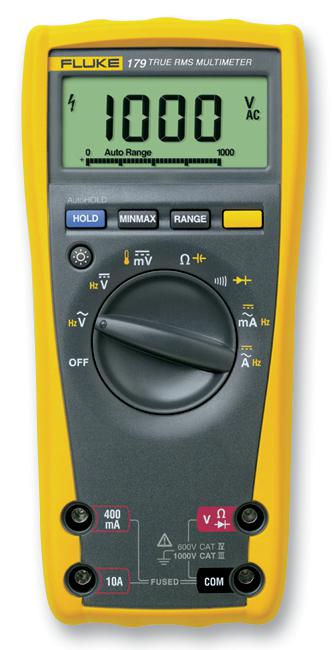
1. Digital Multimeter
If you buy only one test tool first, buy a digital multimeter.
A multimeter measures basic electrical values such as:
- voltage
- current
- resistance
- continuity
- diode test
In amateur radio, a multimeter is useful for checking:
- power supply voltage
- battery voltage
- blown fuses
- broken power cables
- bad connectors
- speaker wiring
- microphone wiring
- continuity in coax shields or center pins
- DC current draw
Example:
Your radio does not turn on. Before blaming the radio, use a multimeter to check:
Is there 13.8 V at the power plug?
Is the fuse good?
Is the power cable broken?
Is the polarity correct?
Many “radio problems” are actually power problems. A multimeter finds those quickly.
Beginner hint:
Learn to measure DC voltage and continuity first.Those two functions alone solve many station faults.
2. SWR and Power Meter
An SWR/power meter is one of the most common ham radio test tools.
It measures:
- transmitter output power
- reflected power
- SWR
SWR means Standing Wave Ratio. In simple terms, it tells you how well your antenna system matches your radio.
Low SWR usually means the radio can deliver power safely into the antenna system. High SWR means some power is being reflected back.
General guide:
| SWR | Meaning |
|---|---|
1.0:1 | perfect match |
1.5:1 | very good |
2.0:1 | usually acceptable |
3.0:1 | high, check antenna/feedline |
An SWR meter is useful when:
- installing a new antenna
- checking coax and connectors
- tuning an antenna
- checking transmitter output power
- watching for antenna problems during operation
Beginner hint:
An SWR meter tells you there is a mismatch. It does not always tell you why.For deeper antenna work, use an antenna analyzer or VNA.
3. Dummy Load
A dummy load is a fake antenna that does not radiate much signal.
It usually has a 50 ohm load inside and converts RF power into heat.
Why is it useful?
A dummy load lets you transmit safely for testing without putting a signal on the air.
Use a dummy load when:
- testing transmitter power
- adjusting microphone gain
- testing digital mode audio
- checking a repaired radio
- testing a tuner
- troubleshooting without causing interference
Example:
If your radio produces full power into a dummy load but not into your antenna, the radio is probably fine. The problem is likely the antenna, coax, connectors, or tuner.
Beginner hint:
Use a dummy load rated for your power level.A small dummy load may handle 5 W or 10 W. A bigger one may handle 100 W or more, but sometimes only for short periods.
4. Antenna Analyzer or VNA
For many Amateur radio operators, an antenna analyzer or VNA is the most useful antenna tool.
A simple SWR meter tells you the match is good or bad. An antenna analyzer tells you much more.
It can show:
- SWR
- impedance
- resistance
- reactance
- resonance frequency
- feedline problems
- antenna bandwidth
A VNA, such as a NanoVNA-style device, can also show a Smith chart and sweep across a range of frequencies.
In layman terms:
An SWR meter says, “The antenna is not matched.”
An antenna analyzer says, “The antenna is too short, too long, too low in resistance, or too reactive.”
This is very useful when tuning:
- dipoles
- vertical antennas
- mobile antennas
- end-fed antennas
- Yagis
- magnetic loops
- portable antennas
- traps and coils
Beginner hint:
Do antenna measurements at low power with an analyzer, not by repeatedly transmitting full power.This is safer for your radio and more polite on the bands.
5. Oscilloscope
An oscilloscope lets you see voltage changing over time.
A multimeter gives you a number.
An oscilloscope shows the shape of the signal.
For amateur radio, an oscilloscope is useful for checking:
- microphone audio
- digital mode audio
- power supply ripple
- CW keying
- PTT switching
- relay timing
- oscillator signals
- modulation envelope
- homebrew circuits
Example:
Your transmitted audio sounds distorted. With an oscilloscope, you may see the audio waveform has flat tops. That means the audio is clipping.
Another example:
Your power supply reads 13.8 V on a multimeter, but your radio has hum. An oscilloscope can show ripple or noise riding on the DC voltage.
Beginner hint:
Do not connect transmitter RF output directly to an oscilloscope.Use a dummy load, attenuator, or RF sampler. Full transmitter power can damage the oscilloscope.
6. Spectrum Analyzer
A spectrum analyzer shows signal strength across frequency.
An oscilloscope shows voltage over time.
A spectrum analyzer shows what frequencies are present.
For amateur radio, it is useful for checking:
- harmonics
- spurious emissions
- transmitter cleanliness
- filter performance
- local interference
- oscillator output
- RF noise sources
- signal bandwidth
Example:
Your transmitter may look okay on a wattmeter, but a spectrum analyzer can show whether it is also producing unwanted signals on other frequencies.
This is important because unwanted emissions can cause interference.
Beginner hint:
A spectrum analyzer input is sensitive. Never feed transmitter power directly into it.Use proper attenuation, a sampler, or very low-level signals.
7. Signal Generator
A signal generator creates a known test signal.
It is very useful for receiver testing and radio repair.
Use it to test:
- receiver sensitivity
- filters
- audio stages
- IF stages
- squelch operation
- frequency response
- alignment
Example:
If a receiver is deaf, a signal generator lets you inject a known signal and find where the signal disappears inside the radio.
For basic amateur radio use, a simple RF signal generator is helpful. For serious repair work, a calibrated signal generator is much better.
Beginner hint:
A signal generator is more useful when you repair or build radios.If you mostly operate and tune antennas, buy an antenna analyzer before a signal generator.
8. Frequency Counter
A frequency counter measures frequency.
It is useful for checking:
- oscillator frequency
- transmitter frequency
- signal generator accuracy
- VFO drift
- repeater equipment
- homebrew transmitters
- calibration sources
Many modern radios are accurate enough for normal operating, but a frequency counter is still useful for building, repairing, and aligning equipment.
For better accuracy, some operators use a GPS-disciplined oscillator, often called a GPSDO, as a frequency reference.
Beginner hint:
A frequency counter is only as accurate as its timebase.A cheap counter with a poor reference may not be very accurate.
9. LCR Meter
An LCR meter measures:
- inductance
- capacitance
- resistance
This is useful when working with components.
Use it for:
- loading coils
- traps
- filters
- tuners
- unknown capacitors
- unknown inductors
- homebrew circuits
- repairing old equipment
Example:
You are building an antenna trap and need a coil close to a certain value. An LCR meter helps confirm the actual inductance.
Beginner hint:
An LCR meter is very helpful for builders, but not essential for every operator.10. Field Strength Meter or RF Sniffer
A field strength meter or simple RF sniffer detects nearby RF energy.
It can help answer:
- Is the transmitter producing RF?
- Is this antenna radiating?
- Is RF leaking from this cable?
- Which device is producing interference?
- Is the signal stronger here or there?
It is not usually a precision instrument, but it is useful for quick checks.
Beginner hint:
Use it for comparison, not exact measurement.For example, compare one antenna position to another, or check whether RF is present at all.
Best Buying Order for Beginners
If you are new to amateur radio, buy tools in this order:
- Digital multimeter
- SWR/power meter
- Dummy load
- Antenna analyzer or VNA
- Oscilloscope
- Signal generator
- Spectrum analyzer
- Frequency counter
- LCR meter
This order gives you the most practical value early.
Best Equipment for Common Ham Radio Jobs
For Antenna Tuning
Best tools:
- antenna analyzer or VNA
- SWR/power meter
- dummy load
- multimeter
The antenna analyzer is the star tool here.
For Radio Repair
Best tools:
- multimeter
- oscilloscope
- signal generator
- frequency counter
- dummy load
- service manual
If you repair radios often, a service monitor is excellent, but expensive.
For Transmitter Testing
Best tools:
- dummy load
- wattmeter
- spectrum analyzer
- oscilloscope with RF sampler
- frequency counter
Always test into a dummy load when you do not need to radiate.
For Digital Modes
Best tools:
- oscilloscope
- multimeter
- dummy load
- audio test cables
- computer sound level tools
Clean audio is very important for digital modes.
For Portable and Emergency Radio
Best tools:
- multimeter
- small SWR meter
- compact antenna analyzer
- battery meter
- dummy load
- spare adapters
For field use, small and rugged tools are better than big lab equipment.
What Is the Single Best Tool?
After a multimeter, the best test tool for most amateur radio operators is:
Antenna analyzer or VNAWhy?
Because many ham radio problems come from antennas, coax, connectors, matching, and SWR. An analyzer helps you understand those problems without guessing.
It can show whether the antenna is resonant, whether the impedance is close to 50 ohms, and whether the system is capacitive or inductive.
Final Advice
You do not need to buy everything at once.
Start with the tools that solve the most common problems:
Multimeter
SWR/power meter
Dummy load
Antenna analyzer
With those four tools, you can handle many everyday amateur radio problems.
Then add an oscilloscope if you want to work on audio, digital interfaces, power supplies, kits, and homebrew circuits.
Add a signal generator and spectrum analyzer when you become more serious about radio repair, filters, transmitters, and RF cleanliness.
Good test equipment saves time, protects your radio, improves your signal, and helps you learn. In amateur radio, that is the real value: not just owning more tools, but understanding your station better.

Post Comment