Why CW and Morse Code Still Thrive in Amateur Radio in 2026: Data, Physics and Practice
Introduction
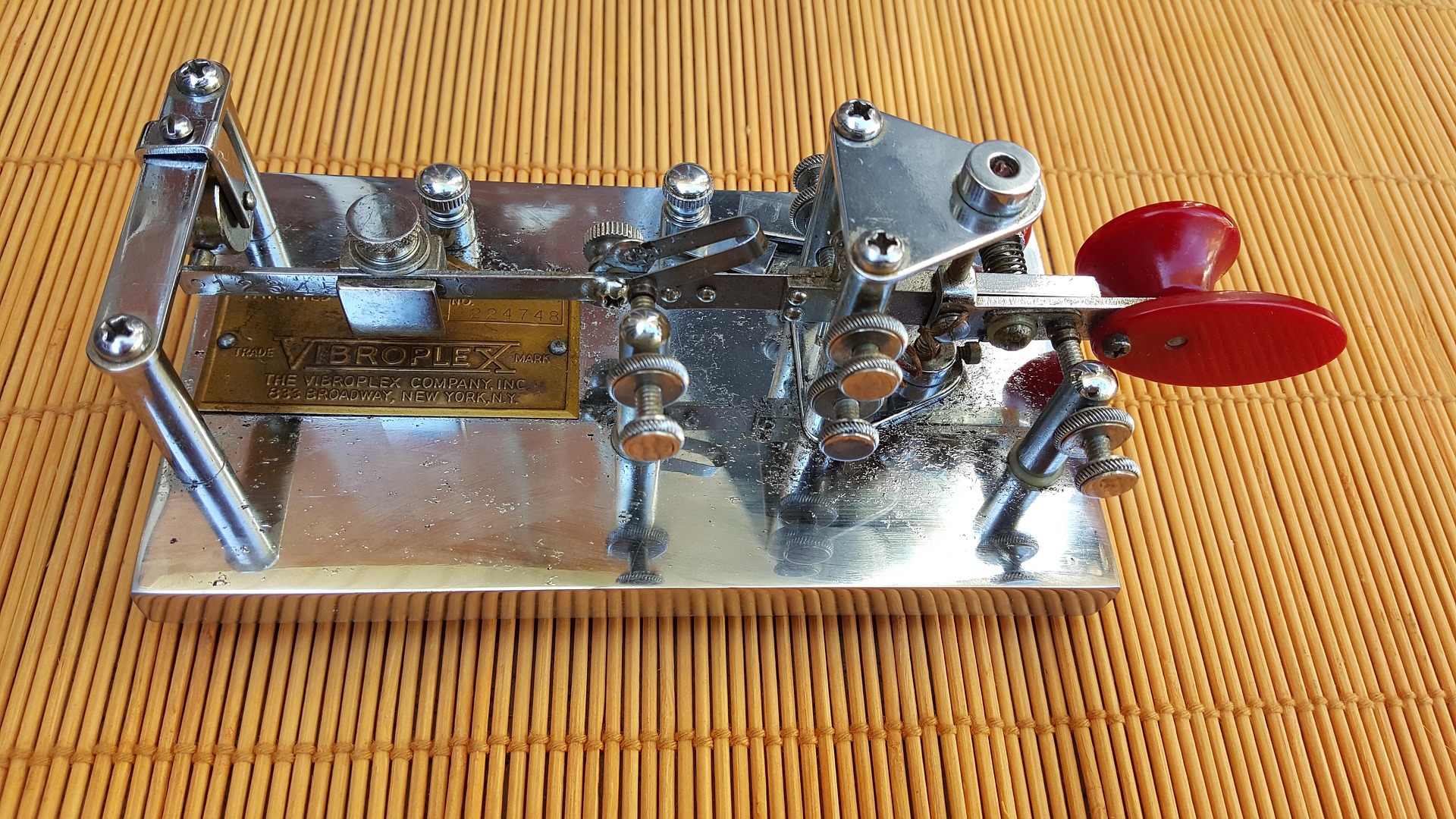
In an era of FT8, satellites, and 5G, the oldest digital mode still accounts for ∼30% of all HF contacts logged worldwide. Morse code, or CW, is not nostalgia. It is physics, efficiency, and resilience. Here is why amateur radio operators from contesters in Germany to SOTA activators in New Zealand still learn and use CW in 2026, with hard data and official sources.
1. Physics: CW Wins When Signals Are Weak
Bandwidth determines signal-to-noise ratio. A typical SSB signal occupies 2.7 kHz. CW uses ∼100-150 Hz for 20 WPM.
The math: For the same transmitter power, narrowing bandwidth by 10x gives a 10 dB SNR improvement. SSB to CW is a 27x reduction = +14.3 dB advantage.
Real impact: 14 dB is the difference between “I can’t hear you” and “Solid copy”. This is why DXpeditions to rare entities like Bouvet 3Y0J in 2023 logged 60% of their QSOs on CW despite pileups on SSB and FT8.
QRP evidence: The QRPARCI “Five-Watt Award” requires 1000 miles per watt. 90% of qualifying contacts are CW. WSPR proved a 200 µW CW signal can span the Atlantic. SSB cannot.
2. International Regulatory & Emergency Status
ITU still protects CW. ITU Radio Regulations Appendix 1, §3 defines A1A emission as Morse telegraphy. It retains global primary allocation on all amateur HF bands. No other 19th-century mode has this status.
Not required for licensing, but required for function. The FCC dropped 5 WPM Morse testing in 2007. Malaysia’s MCMC followed in 2013. Yet ARRL’s 2024 survey shows 42% of new US Technicians upgrade specifically to use CW on HF.
Disaster comms: IARU Emergency Telecommunications Guide 2023 still lists CW as “the mode of last resort” because it works with damaged equipment and operators under stress. During the 2024 Taiwan earthquake, amateur volunteers passed health-and-welfare traffic on 7.060 MHz CW when local cell networks failed.
3. Spectrum Efficiency & Contest Reality
More QSOs per kHz. The 40m band is 300 kHz wide. You can fit 111 SSB signals at 2.7 kHz spacing. You can fit 2000 CW signals at 150 Hz spacing.
Contest data: CQ WW CW 2025 claimed scores averaged 2.1x higher QSO rates than CQ WW SSB. Reason: No “please repeat your callsign” in noise. 599 TU takes 2 seconds.
DXCC impact: ARRL DXCC Most Wanted Survey 2025: 7 of the top 10 most needed entities logged >70% of their total QSOs on CW. If you want to work them, you learn CW.
4. Simplicity = Survivability
CW transmitters are trivial. A 1-transistor “Pixie” kit costs $3 and puts out 300 mW. No PC, no sound card, no software updates.
Military & professional retention: US Army Signal Corps MOS 25S still trains Morse at 16 WPM. French Navy confirmed in 2022 that all surface ships retain Morse capability for NATO interoperability. Reason: EMP and cyber resilience.
Amateur radio’s mandate: ITU-R M.1544 states one purpose of amateur service is “self-training… and technical investigations”. Building and operating a CW station teaches fundamental RF skills that FT8 hides.
5. Human Factor: A Global Language with No Accent
Error rate: In CCIR studies, CW copy at 12 WPM by trained operators shows 0.3% character error in 0 dB SNR. SSB at 0 dB SNR is ∼25% word error. The human brain is a superior DSP for patterned tones.
Cognitive benefit: NIH study 2021: Learning Morse at >15 WPM increases functional connectivity in auditory-motor regions comparable to musicians. Many operators call it “active meditation”.
Community: CWops Club, FISTS, SKCC have 30,000+ active members. CW Academy runs free classes each semester with 1,200 graduates/year. Growth, not decline.
6. CW vs Modern Data Modes: It’s Not Either/Or
| Metric | CW 20 WPM | SSB | FT8 |
|---|---|---|---|
| Bandwidth | 150 Hz | 2700 Hz | 50 Hz |
| SNR limit | -1 dB | +10 dB | -21 dB |
| Info rate | 40 WPM text | 150 WPM voice | 5 WPM callsign+grid |
| Needs PC? | No | No | Yes |
| Ragchew possible? | Yes | Yes | No |
Source: ARRL Handbook 2025, Chapter 14
FT8 beats CW for propagation reporting. CW beats FT8 for real conversations and contesting. SSB beats both for local nets. Hams use all three.
How to Start Learning in 2026
- Method: Koch method, 20 WPM character speed, 5 WPM effective. Apps: Morse Mania, IZ2UUF. 15 min/day.
- Practice: CWops CW Academy Level 1 – free, runs Jan/May/Sep.
- First QSO: 7.025-7.040 MHz, call “QRS PSE” at 10 WPM. SKCC Sked Page will find you a slow patient op.
- Gear: QCX-mini kit $55, or use any SSB radio on CW mode. Paddle: Baofeng key RM30.
Conclusion
Amateur radio keeps CW because the laws of physics have not been repealed. 14 dB of free gain, 180 years of global interoperability, and a failure mode of “two wires and a key” still matter when the goal is “when all else fails”.
Morse is not about the past. It is about having one mode that works when you need it most, from a SOTA summit with 1W to an emergency net with no infrastructure.
That is why 42% of new hams still learn it, why DXpeditions still rely on it, and why ITU still protects it.
73 de 9M2PJU
References
- ARRL. ARRL Handbook for Radio Communications, 102nd ed, 2025. Chapter 14: Modulation & Modes.
- ITU. Radio Regulations, Edition of 2020, Appendix 1 §3.
- FCC. Report and Order 06-178, Dec 15, 2006. Morse code requirement eliminated.
- MCMC. Guideline on Amateur Radio Service, Rev 2/2013.
- ARRL. 2024 New Ham Survey Results. QST, March 2025.
- IARU. Emergency Telecommunications Guide, 3rd ed, 2023.
- CQ Magazine. CQ WW Contest Results, CW vs SSB Rate Analysis, Feb 2026.
- ARRL. DXCC Most Wanted Survey 2025.
- US Army. MOS 25S Satellite Communication Systems Operator-Maintainer, STP 11-25S14-SM-TG, 2023.
- French Navy. Note EM/MARINE No 042, Feb 2022.
- ITU-R. Recommendation M.1544-1, Basic Qualifications of Amateur Operators.
- CCIR. Report 322-3, Characteristics and applications of atmospheric radio noise data.
- NIH. Musical and Morse Training Induce Similar Neural Plasticity, J. Neuroscience, 2021.
- CWops. Membership Statistics 2025 Annual Report.
License: This article is CC BY-SA 4.0. Share with attribution to hamradio.my.


Post Comment