9M2MT – History Of Malaysian Royal Signals Regiment Amateur Radio Club Station
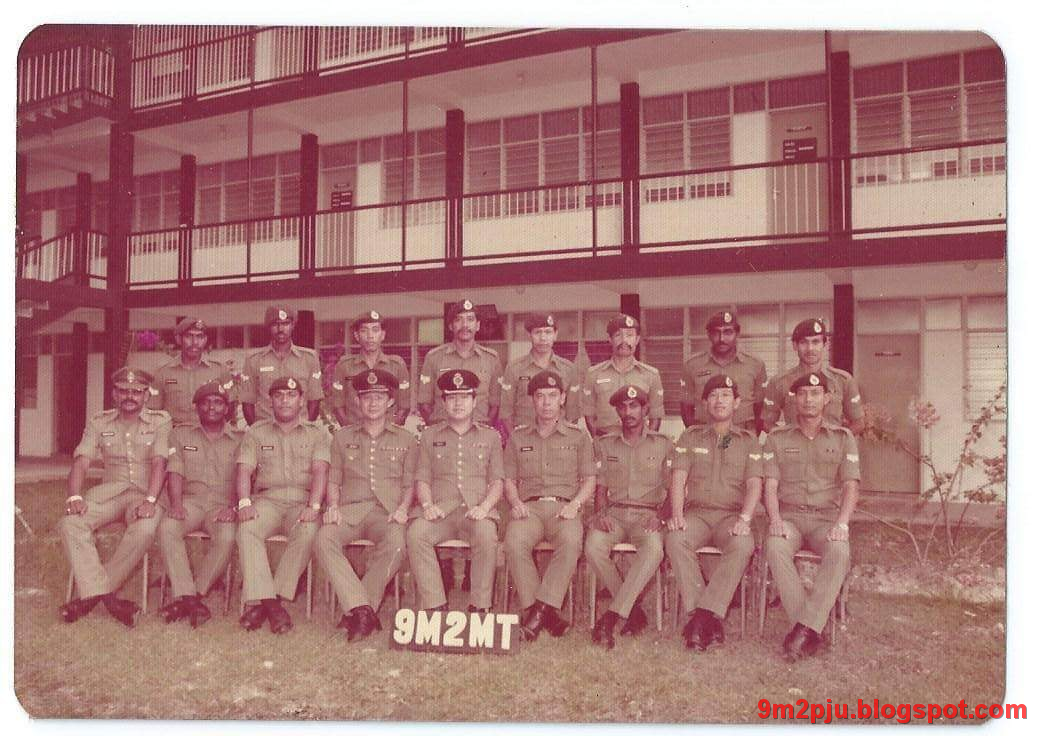
Long before smartphones and tactical data networks, the Malaysian Army’s signals soldiers were also some of the country’s most active amateur radio operators. This is the story of 9M2MT, the amateur radio club station of the Malaysian Royal Signals Regiment (Rejimen Semboyan Diraja), operated from Sungai Besi Camp in Kuala Lumpur in the late 1970s and 1980s, and of the family of military club callsigns that followed it.
9M2MT, The Malaysian Royal Signals Regiment Amateur Radio Club Station
9M2MT was established as the amateur radio club station of the Malaysian Signals Regiment, stationed at Sungai Besi Camp in Kuala Lumpur. The club was founded as an initiative to promote amateur radio activity among Signals personnel and to give soldiers a regulated environment for experimentation and exploration on the HF, VHF and UHF bands.
For a military signals unit, an amateur radio club station served three purposes at once:
- Training, operators could practise Morse code, propagation judgement, weak-signal work and antenna theory on air, in a way that classroom instruction alone could not match.
- Technical experimentation, the club gave Signals personnel a sanctioned space to build, test and characterise antennas, transceivers and feedlines, knowledge that fed directly back into their professional communications role.
- International goodwill, like every other amateur station, 9M2MT exchanged QSL cards with stations around the world, quietly building Malaysia’s reputation on the HF bands.
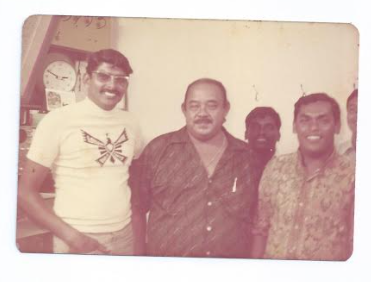
The photos below, taken at the club station in its active years, show the operating position, the equipment in use and the personnel who kept 9M2MT on the air.



A QSL Card from 1976: 9M2MT to 9V1OD
The strongest single piece of evidence that 9M2MT was an active, working club station is a QSL card that surfaced in Singapore decades later. My friend Jaya, 9W2BUG, found the card while visiting Singapore.
The card confirms a contact between 9M2MT in Kuala Lumpur and 9V1OD in Singapore, dated 21 March 1976. According to the details on the card, an operator named Nicholas worked with Tan, who lived in Singapore. Nicholas was running a Collins KWM-2A transceiver into a two-element quad antenna, a classic HF combination of the era, capable of solid worldwide contacts on 10 through 80 metres.
The Collins KWM-2A was a premium transceiver for its day, and a two-element quad was a serious home-built HF antenna. That a Malaysian military club station was making confirmed international contacts with this level of equipment in 1976 says a great deal about the standard of the 9M2MT operation.


From 9M2MT to 9M2IEC: The Evolution of Royal Signals Callsigns
Amateur radio callsigns in Malaysia are administered by the Malaysian Communications and Multimedia Commission (MCMC), and club stations attached to military units have historically been issued callsigns that reflect the unit’s identity. As the Signals School at Sungai Besi was reorganised and renamed over the decades, the club callsign moved with it.
In the 1990s, the Signals School changed its name to the Army’s Communications and Electronics Institute. The club callsign was correspondingly changed from 9M2MT to 9M2IEC, reflecting the new institute initials.
As cellular communication became widespread in Malaysia through the late 1990s and 2000s, the impetus to keep a military amateur radio club station on the air faded. There was no direct continuation of the club station after that point, and 9M2IEC, like 9M2MT before it, eventually went silent.
History of the Royal Signals Regiment (Rejimen Semboyan Diraja)
To understand why a Signals unit would run an amateur radio club in the first place, it helps to know the lineage of the regiment itself. The Royal Signals Regiment is the communications arm of the Malaysian Army, and its history runs parallel to the development of military communications in the country.
1949, Communications Troop, Port Dickson
The Royal Signals Regiment has its roots with the formation of a “Communications Troop” at the Training Depot of the Malay Regiment in Port Dickson in 1949. The Communications Troop was formed by centralising the radiomen of the signals platoons of the 1st, 2nd and 3rd Battalions of the Royal Malay Regiment (Rejimen Askar Melayu).
Federation Signals Squadron
With the expansion of size and roles given and undertaken by the Communications Troop, the unit was renamed the Federation Signals Squadron. The squadron was tasked with the responsibility of meeting all communications requirements of all operational units of the Malay Regiment.
1952, Federation Brigade Signals Squadron
With the formation of the Federation Army Brigade in 1952, the Federation Brigade Signals Squadron was formed. It was later known as the Malaysian Signals Regiment. The date of the formation of the Federation Brigade Signals Squadron is the official date of the formation of the Royal Signals Regiment.
6 June 1992, Bestowed the “Royal” Title
For its services rendered to King and country, the Malaysian Signals Regiment was bestowed the title “Royal” on 6 June 1992 and was henceforth known as Rejimen Semboyan Diraja (Royal Signals Regiment).
Signals School at Sungai Besi Camp → IKED
All recruits do their basic military training at an Army Training Centre in Port Dickson. Special-to-arm training is carried out at the Signals School (Sekolah Semboyan) at Sungai Besi Camp. The school is now known as the Institut Komunikasi dan Elektronik Tentera Darat (IKED), the same institute whose initials gave 9M2IEC its callsign.
Royal Signals Amateur Radio Club Callsigns (1980s-1990s)
The callsign history below is taken from the old Malaysian Amateur Radio Transmitters Society (MARTS) callbooks, covering the 1980s through the 1990s. My thanks to Aziz, 9M2AU, for preserving and sharing this material.
The QSL cards and callbook pages below document a family of Royal Signals and related military amateur radio club callsigns that were active in Malaysia during this period, including:
- 9M2MT, Malaysian Signals Regiment club station, Sungai Besi Camp
- 9M2IEC, Army Communications and Electronics Institute club station (successor to 9M2MT)
- 9M2CK, 9M2HE, 9M2HP, 9M2KT, 9M2KT2, 9M2KTC, other Signals and military-associated club callsigns of the era
- 9M6EC, 9M6RN, Sabah-based military-associated club callsigns
These cards and callbook scans are the primary historical record of military amateur radio in Malaysia. If you hold any QSL cards addressed to or from these callsigns, please consider sharing them, every card adds a data point to the story.


Why the Club Station Faded
The decline of 9M2MT and its successor 9M2IEC was not unique to Malaysia. Across many militaries in the 1990s and 2000s, the rise of cellular telephony, satellite communications, encrypted tactical networks and (later) MANET radios reduced the perceived need for a dedicated amateur radio club station inside a signals unit.
Amateur radio, however, was never really about replacing tactical communications. Its value was always in training operators, building antenna and propagation intuition, and fostering a culture of experimentation. Those benefits are arguably more relevant today than ever, as interest in resilient, off-grid and electromagnetic-spectrum-aware communications grows among both civilian hams and defence communicators.
Preserving Malaysian Amateur Radio History
Posts like this one exist because people like Jaya 9W2BUG and Aziz 9M2AU took the trouble to keep old QSL cards, callbooks and photographs. Malaysian amateur radio history is still largely an oral tradition, preserved in shoeboxes and filing cabinets rather than in any central archive.
If you have material that belongs in this record, QSL cards, photographs, callbooks, logbooks or stories about 9M2MT, 9M2IEC or any of the other Royal Signals club callsigns, please get in touch. Every scan helps.
Related Reading and Sources
- Guide to Obtain an Amateur Radio License in Malaysia, on HamRadio.my
- About 9M2PJU, Malaysian Amateur Radio Operator, on HamRadio.my
- Malaysian Ham Radio Callsign Search, on HamRadio.my
- Malaysian Amateur Radio Transmitters Society (MARTS), the national amateur radio society of Malaysia
- Malaysian Communications and Multimedia Commission (MCMC), callsign administration
- Collins KWM-2A transceiver, equipment reference (Collins Radio Association)




3 comments