The Zippo Lighter: Vietnam War Icon, Limited Edition Collectibles, and the Brand Today
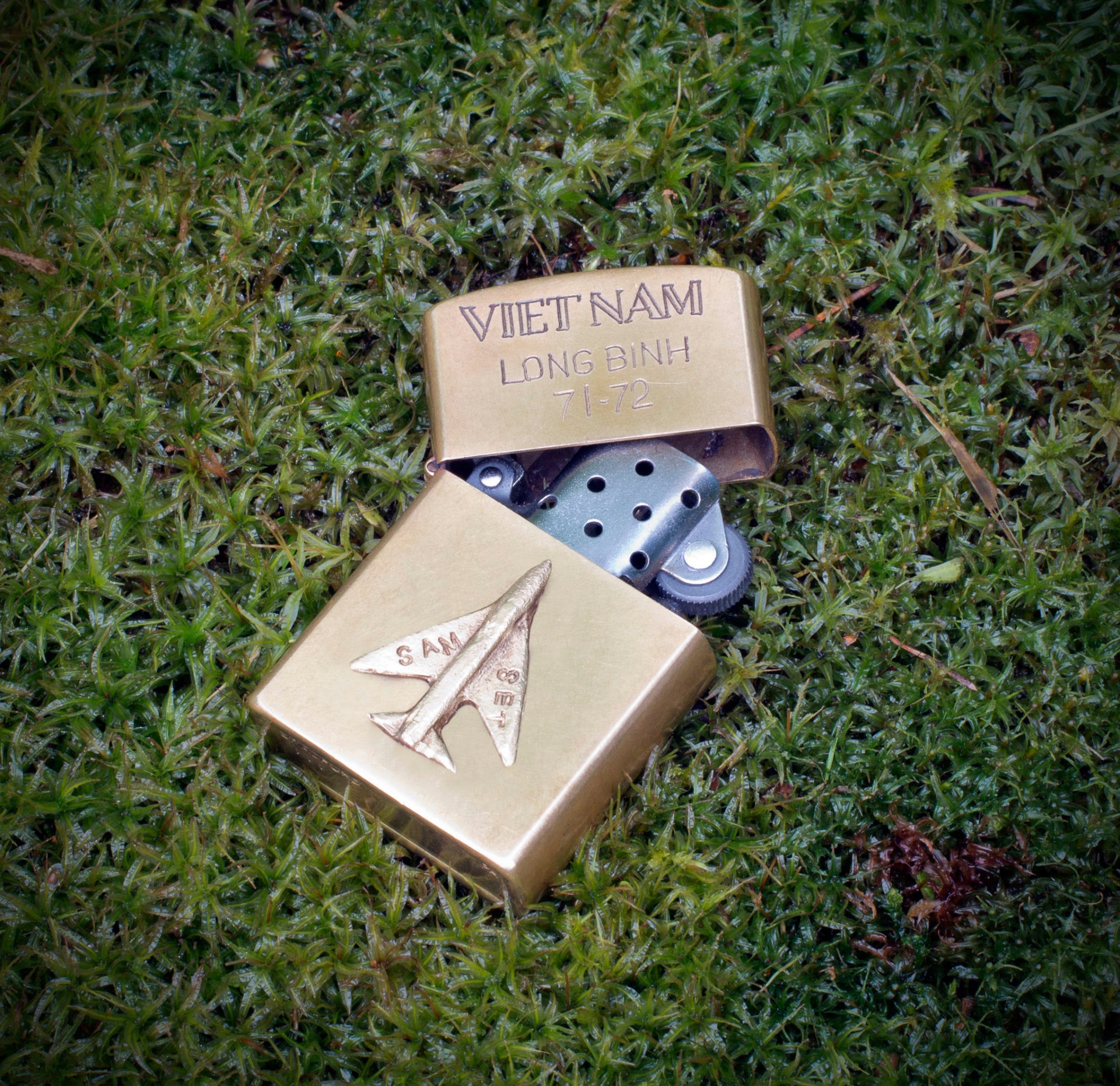
There are a handful of objects so closely tied to a moment in history that you cannot picture the era without picturing them. The M1 steel helmet with an ace of spades tucked into the band. The olive drab field jacket. And tucked into the breast pocket of nearly every American serviceman who set foot in Southeast Asia between 1965 and 1973, a small chrome plated brass rectangle with a hinged lid that went click.
That rectangle was the Zippo windproof lighter, and during the Vietnam War it became something far bigger than a way to light a Lucky Strike. It became a talisman, a diary, a protest sign, a unit badge, and, decades later, one of the most collected pieces of military trench art in the world.
This article is a look at where the Zippo came from, why it became inseparable from the Vietnam War, what the limited edition and special release Zippo market looks like today, and how a 93 year old company in Bradford, Pennsylvania is reinventing itself for a generation that, by and large, no longer smokes.
A Brief History of the Zippo Lighter
The Zippo was born in 1932 in Bradford, Pennsylvania, a small town in the northwestern corner of the state, deep in oil country. George G. Blaisdell was running a struggling oil equipment business during the Great Depression when he spotted an Austrian cigarette lighter called the Windproof. It was clever, all metal, and worked in a breeze, but it was ugly and awkward to operate with one hand. Blaisdell borrowed the windproof concept, redesigned the case into a clean rectangular oblong with a cam springed hinged lid, gave it a modern sounding name inspired by the recently invented zipper, and started selling the result in 1933 for $1.95.
The original Zippo was a modest seller. What turned it into an American institution was the Second World War. After Pearl Harbor, Blaisdell, like many American manufacturers, stopped production for the consumer market entirely and dedicated the whole factory to the U.S. military. From 1943 to 1945, every Zippo made was shipped directly to post exchanges (PXs) and Navy ships around the world. Because brass was rationed, wartime Zippos were made of steel and finished with a black crackle coating. That rough porous finish, as the company archivists later realised, was easy for GIs to scratch their names, units, and sketches into. The first true Zippo trench art was born in the Pacific theater, not Vietnam.
Two things from this era defined the brand forever. First, the lifetime guarantee: “It works or we fix it free.” Second, the unmistakable Zippo click of the lid snapping open and shut, a sound so distinctive it has been trademarked and used as a sensory cue in hundreds of films.
Why the Zippo Became the Icon of the Vietnam War
Zippo had been a military favourite since World War II, so it was already in the pockets of career soldiers when the first large scale U.S. combat units deployed to Vietnam in 1965. But the Vietnam War gave the Zippo a cultural weight it had never carried before, and probably will never carry again. Several things converged to make that happen.
1. Almost everyone smoked
In the 1960s, roughly half of adult American men smoked, and the military shipped cigarettes to troops in C rations and via the Red Cross. A reliable windproof lighter was not a luxury, it was daily equipment. The Zippo, refillable from a small tin of fluid and tough enough to survive a monsoon, was the default choice.
2. The environment punished every other lighter
Vietnam’s humidity, rain, mud, and dust killed disposable lighters and matches in hours. The Zippo’s sealed windproof chimney, cotton wad fuel reservoir, and flint ignition kept working when nothing else would. There was a second, less advertised reason it was loved in the field: it would burn almost anything. The official line from Bradford was that you should only use Zippo premium lighter fluid, but a GI who had run dry could top up the cotton wad with whatever flammable liquid was lying around the base, jeep petrol, diesel, kerosene, and most famously JP-4, the wide cut jet fuel used by U.S. Army helicopters and Air Force aircraft. JP-4 was everywhere in Vietnam, and a Zippo filled with it would still light, albeit with a smellier flame and a faster evaporation rate. In a war where resupply was not always guaranteed, that fuel flexibility mattered.
3. A multi purpose field tool
Outside the base, a Zippo was not just a lighter, it was a piece of kit. Soldiers used it to:
- Heat C ration cans when no stove was available, balancing the tin on the chimney or holding the flame underneath.
- Sterilise a folding knife blade or a medical needle before field dressing a wound or picking out shrapnel.
- Light fuses on M18A1 Claymore mines, smoke grenades, and trip flares, where a match in a monsoon was useless and a Zippo was not.
- Signal by catching the sun on the polished chrome lid and flashing it across a valley or to a helicopter.
- Act as a makeshift torch when checking a VC tunnel, the chimney flame held low in one hand while the other worked the pistol.
It was also used for the small cruelties of the war: burning leeches off the skin, sealing the ends of nylon cord, and, in the grim vocabulary of the conflict, igniting Zippo raids on suspected Viet Cong villages. During Search and Destroy operations, U.S. troops used Zippos to set fire to the thatched huts of villages believed to harbour Viet Cong guerrillas. The practice was so common that journalists and soldiers alike gave it a name: “Zippo Missions” or “Zippo Raids”. (The M132 armoured flamethrower track, nicknamed the “Zippo” by GIs, shares only a name with the pocket lighter, but both were part of the same vocabulary of fire in Vietnam.)
4. Street engravers were everywhere
Unlike the European theater of WWII, where the front line was the front line, Vietnam was a war of base camps and R&R towns. Zippos were sold cheap at every military Post Exchange (PX), and a GI on leave could walk into Saigon, Hue, Da Nang, or Bangkok and find a street vendor with a hand engraving machine who would cut any text he wanted into the side of his lighter for a few dollars. The result was an explosion of customised Zippos that doubled as personal artefacts: name, service number, unit, dates of tour, a scratched map of Vietnam, a tally of days left in country, girlfriend’s name, hometown, and, famously, slogans. Each one was, in effect, a mini diary carried in a breast pocket.
5. The slogans became the war’s voice
This is the part that turned the Vietnam Zippo into a collectible category of its own. The engraved slogans fall into a few rough families:
- Patriotic and unit proud: “U.S. Marine Corps, 1st Marine Division, Vietnam 1968,” unit crests, rank and serial number. The career NCOs tended toward this.
- Dark humour and fatalism: “If I had a choice I’d rather be fishing,” “When I die I will go to heaven because I already served my time in hell,” “Yea though I walk through the valley of the shadow of death I will fear no evil for I am the evilest son of a bitch in the valley,” and the one that turns up most often in collections, “When I die bury me face down so the whole world can kiss my ass.”
- Anti war and disillusioned: Vietnam was the first major U.S. conflict with mass domestic opposition, and the troops themselves were not immune. Lighters engraved with “We are the unwilling, led by the unqualified, doing the unnecessary for the ungrateful” survive in collections as small metal protests.
- Love and home: “To Mary from Tom, Da Nang 1969.” The most human category, and often the saddest.
Collectors and historians like Bradford Edwards (whose collection was documented in Sherry Buchanan’s 2007 book Vietnam Zippos) and Jim Fiorella (The Viet Nam Zippo, 1933-1975, 1998) have argued that these lighters are “small, speaking, archaeological objects” that bear witness to heroism, pride, pain, and tragedy in a way no official record can. A Zippo in a museum vitrine with “When I die I will go to heaven…” cut into the chrome tells you more about the inner life of a 19 year old grunt in 1968 than most history books.
6. They were left behind
When U.S. forces withdrew and Saigon fell in 1975, thousands of engraved Zippos were left in base camps, bars, and PXs. For decades afterward, genuine wartime Zippos surfaced on the streets of Ho Chi Minh City as souvenirs, until the supply of real ones finally ran out and the market flooded with fakes. Authenticating a Vietnam War Zippo is now a sub hobby of its own, based on bottom stamp date codes, case style, and engraving wear.
Zippo Special and Limited Editions
The Vietnam era made the Zippo a canvas, and Zippo the company eventually figured out that the canvas itself was the product. Today the collectible Zippo market is enormous, with three main streams.
Collectible of the Year
Every year Zippo releases a numbered Collectible of the Year, an Armor case (about 1.5 times the wall thickness of a standard Zippo) decorated with the company’s most advanced processes. Recent examples:
- 2024 Collectible of the Year: Armor Black Matte case with the Venetian swirl pattern (a Florentine design first introduced in 1974), Laser Engrave, MultiCut pinstripes nodding to the first Deep Carve design of 2004, and a chrome insert. Consecutively numbered with a Luxury bottom stamp.
- 2025 Collectible of the Year: A revival of the Keeper of the Flame theme first used for the millennium collectible in 2000. For the first time Zippo combined Deep Carve and Photo Image 360 degrees on an Armor High Polish Chrome case with three colours of inlaid epoxy. Numbered, Luxury bottom stamp, gift boxed.
Founder’s Day Collectibles
An annual release honouring George G. Blaisdell. The 2024 piece (limited to 10,000) used a zipper motif, a nod to the word that inspired the brand name, in a first ever combination of Lustre and 540 Fusion processes on a Tumbled Brass case. The 2025 Founder’s Day piece is limited to 5,000 pieces with a 540 degree Art Nouveau botanical design, gold flashed insert, and consecutive numbering.
Licensed and Themed Limited Editions
This is where the catalog gets enormous. Zippo licenses designs for:
- Harley-Davidson (an annual Limited Edition Lighter of the Year; the 2025 model is Armor High Polish Chrome with a bar and shield logo in Deep Carve over black epoxy inlay, “2025 LIMITED EDITION” laser engraved on the side).
- Jack Daniel’s, Coca-Cola, John Deere, Marvel, Star Wars, NFL, MLB, NHL, and hundreds of other brands.
- Military and veterans’ editions for every branch of the U.S. armed forces, NATO units, and individual regiments, a direct continuation of the Vietnam era custom engraving tradition, now done at the factory.
- Cannabis Collection (a newer line aimed at the legal market, including the limited edition Iridescent Green Single Torch Butane Insert released for 4/20 in 2025).
Decoration Techniques
Part of what makes a modern limited edition Zippo collectible is the decoration process used. Zippo has built up a vocabulary of techniques that collectors learn to identify:
- Deep Carve (debuted 2004): recessed engraving that catches shadow.
- 540 Fusion / 540 degree: decoration that wraps continuously around all sides of the case.
- Photo Image 360 degrees: full colour photographic wrap.
- Laser Engrave, MultiCut, Lustre, Venetian, Armor, Black Ice, High Polish Chrome, Tumbled Brass: case finishes and processes that each define a sub category of the catalog.
The Bottom Stamp Date Code
Every Zippo carries a bottom stamp with the word BRADFORD, PA, a month code letter (A through L), a year code (two digits), and since the 1980s dots and slashes indicating the production run. Collectors use this to date any Zippo to within a few years, and for Vietnam era lighters it is the primary tool for spotting fakes. A genuine 1968 combat Zippo should have a bottom stamp consistent with 1968 manufacture, and the case style and hinge should match.
Zippo Today: Beyond the Flame
The existential problem for Zippo is obvious: fewer Americans smoke every year. Cigarette smoking among U.S. adults has fallen from around 42 percent in 1965 to under 12 percent today. A company whose flagship product is a cigarette lighter cannot ride that curve forever.
Zippo’s answer has been to lean hard on three things.
1. Stay in Bradford, stay American made, keep the guarantee
Every Zippo lighter still carries “Bradford, Pennsylvania” on the bottom, and the company says it always will. The Bradford factory, with around 700 employees, stamps, shapes, polishes, and plates roughly 40,000 lighters a day. Over 650 million Zippos have been made since 1933. The lifetime “it works or we fix it free” guarantee is unchanged. That continuity is the brand’s core asset in a market full of disposable butane lighters.
2. Diversify the product line
The Zippo of 2025 is no longer just a lighter company. The catalog now includes:
- Hand warmers (refillable fluid and rechargeable models) for hunters, skiers, and stadium crowds.
- Candle lighters and utility lighters with the same windproof engineering.
- FireFast Bellows and other fire starting tools for bushcraft and survival use.
- Camping and outdoor gear under the Zippo Outdoor line.
- Sunglasses and reading glasses.
- Leather goods and men’s apparel.
- Inserts that turn a Zippo case into something else entirely: single and double torch butane inserts, a Bit Safe Screwdriver Insert (an American made pocket tool with bits stored inside a Zippo case, refreshed in October 2025 and now sold preconfigured in its own case), and even a pipe lighter insert.
The parent company, Zippo Manufacturing Company, also owns W.R. Case and Sons Cutlery Company (premium American folding and fixed blade knives, bought in 1993) and the Ronson brand, giving the group a footprint in knives and entry level lighters as well.
3. Lean into pop culture and collectibility
Zippo’s marketing team is unusually open about the fact that product placement in films and TV is a core strategy. The Zippo click is a sensory shortcut for “tough, American, reliable,” and the company works to keep the lighter visible on screen. The limited edition program, with hundreds of new numbered designs a year, keeps the collector market fed and gives every hobby, fandom, and military unit a Zippo with their logo on it.
The result is a company that is privately held, profitable, still family influenced, still manufacturing in the same small Pennsylvania town it was founded in, and selling in over 160 countries, with reported annual revenue around $230 million. Not bad for a Depression era oil equipment salesman’s side project.
Why the Zippo Still Belongs in an EDC Kit
For the ham radio, bushcraft, and everyday carry crowd, the Zippo is worth a second look even if you do not smoke. The case for it is the same one GIs made in 1968:
- Windproof by design. The chimney and wick arrangement will hold a flame in a breeze that snuffs a Bic.
- Refillable forever. A small tin of Zippo fluid lasts dozens of refills. In a long power outage or field deployment, that matters.
- Repairable. Flints, wicks, and felt pads are user replaceable. The lifetime guarantee covers everything else.
- Multi purpose. Beyond lighting things, a Zippo will seal cord, shrink heat shrink tubing, light a camp stove, and (carefully) warm a frozen lock or radio knob.
- The click. It is, genuinely, a useful fidget and a morale item, and morale is an underrated survival tool.
The downside is real: Zippo fluid evaporates through the seal over a couple of weeks, so a Zippo left in a drawer for a month will not light until refilled. For a true always ready emergency lighter, a Bic in a sealed bag is hard to beat. The honest EDC answer is to carry both: the Bic as the backup, the Zippo as the windproof workhorse.
Closing Thoughts
The Zippo is one of those rare objects that started as a product and became a language. In World War II it was a brass and steel tool that worked when it was raining. In Vietnam it became a small metal diary that 19 year olds engraved with their hopes, their jokes, and their fear, and then left in the mud of a country they were not sure they would ever leave alive. Today it is a numbered collectible, a movie prop, a hand warmer, a screwdriver, and still, underneath all of it, the same windproof lighter George Blaisdell sketched in Bradford, Pennsylvania in 1932.
Not many objects carry that much weight in a breast pocket. The Zippo does. And it still goes click.








Post Comment