Falconclaw FC-PTT: The Modular Tactical Push-to-Talk That Solves Headset Compatibility
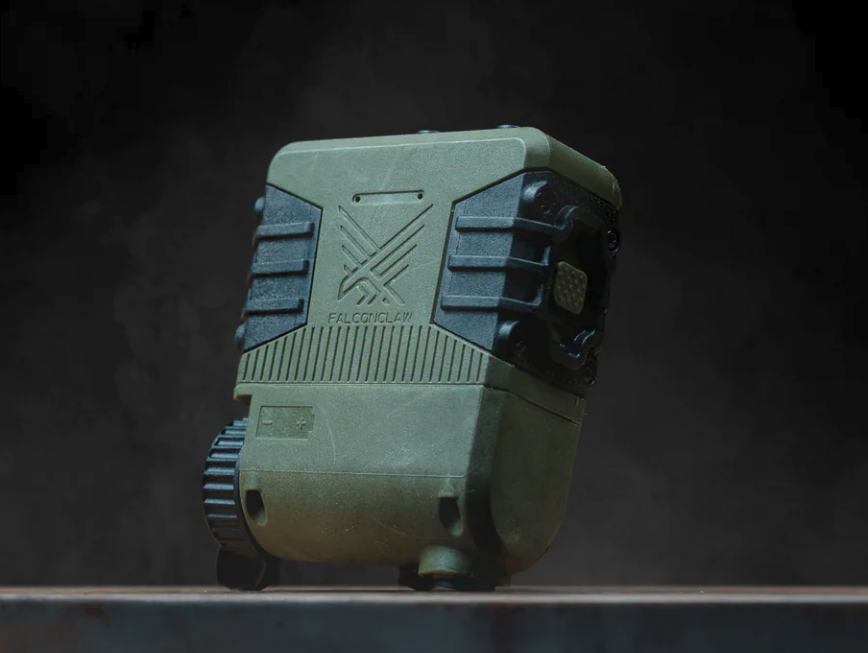
If you have ever tried to connect a set of tactical hearing protection (like 3M Peltor ComTacs, Ops-Core AMPs, or MSA Sordin Supreme Pro-X) to a civilian ham radio or commercial transceiver, you have almost certainly encountered the notorious “tactical comms compatibility wall.”
You plug a military-surplus U-94 push-to-talk into an Anytone, Baofeng, or Yaesu handheld, key the mic, and get dead silence. Or you purchase an aftermarket PTT from eBay, and discover that the audio is wired in standard NATO configuration while your headset is wired in Peltor/commercial standard, routing your microphone line directly to your ear cups. Or worse: your military dynamic microphone produces a signal so faint and muffled that repeater squelches do not even open because the civilian radio is looking for an amplified electret microphone bias.
For over a decade, solving these problems meant owning a confusing drawer full of custom-soldered adapters, dedicated amplified PTT boxes for every single radio brand, and third-party boom mic retrofit kits.
The Falconclaw FC-PTT (Falconclaw Push-to-Talk), engineered and manufactured by FALCONCLAW OU in Tallinn, Estonia, was created specifically to eliminate this entire class of problems. Priced at €181.04 and available directly from falconclaw.eu, the FC-PTT combines an instant NATO/Peltor wiring switch, integrated dynamic mic amplification, swappable radio downlead cables supporting over 1,200 radio models, an onboard chassis microphone for headsets without boom mics, and a CR123A-powered Bluetooth module for smartphone, Zello, and ATAK integration – all inside an IP65 ruggedized, failsafe enclosure.
This comprehensive guide breaks down the engineering behind the Falconclaw FC-PTT, explains the underlying electrical reasons why tactical headsets fail on standard radios, explores how the FC-PTT solves each interface bottleneck, and evaluates how it fits into amateur radio, emergency communications (EmComm), tactical training, and field operations.
Why Tactical Comms Are So Difficult: The Three Classic Compatibility Traps
To appreciate why the Falconclaw FC-PTT is such a significant quality-of-life upgrade for radio operators, one must first understand the three distinct technical barriers that plague tactical audio setups:
1. The Wiring Pinout Trap (NATO vs. Commercial / Peltor)
Both military and civilian tactical headsets typically use the 4-pole Nexus TP-120 (also known as the U-174/U, U-93A/U, or Nexus 7.1mm plug). While the physical 4-conductor jack looks identical across all headsets, the internal electrical pinouts differ fundamentally between standards:
- US NATO Military Standard (U-174 Pinout):
- Tip (1): Ground / Mic –
- Ring 1 (2): Earphone + (Right / Mono Audio)
- Ring 2 (3): Mic +
- Sleeve (4): Earphone – / Audio Ground
- Commercial / Peltor EU Standard:
- Tip (1): Earphone – / Audio Ground
- Ring 1 (2): Mic +
- Ring 2 (3): Earphone +
- Sleeve (4): Mic – / Ground
If you plug a commercial EU-wired Peltor headset into a standard military NATO PTT, the radio output audio is dumped across the microphone pins, while your voice transmissions go nowhere. Fixing this historically required cutting and resoldering the heavy polyurethane Nexus cable or carrying dedicated polarity-reversing pigtail adapters that add weight and fail in wet conditions.
2. The Microphone Impedance and Bias Trap (Dynamic vs. Electret)
Military tactical headsets (such as genuine issue Peltor ComTac III/V/VI, Racal Frontier, and Thales headsets) were engineered for combat vehicles and military transceivers (such as the AN/PRC-148 MBITR and AN/PRC-152 Falcon III). These radios interface with low-impedance dynamic microphones (typically 150 ohms). Dynamic mics generate tiny millivolt-level electrical currents via electromagnetic induction and require no external bias voltage.
Civilian and amateur handheld radios (Anytone, Baofeng, Quansheng, Wouxun, Yaesu, Icom, and Kenwood) and public safety radios (Motorola APX, XPR, DP4000) are engineered for high-impedance electret condenser microphones (typically 1.5 kOhm to 2.2 kOhm). These radios send a 3.3V to 5V DC bias voltage down the mic line to power the internal JFET amplifier inside the electret capsule.
When a standard low-impedance military dynamic microphone is connected to a civilian radio without an active preamplifier circuit:
- The DC bias voltage from the radio can saturate or damage the dynamic mic coil.
- The microphone output level is so minuscule that your transmission volume is virtually inaudible (a whisper beneath loud carrier noise).
3. The Radio Lock-in Trap
Traditional tactical PTTs (such as standard Peltor FL5000 series, TEA E-Switch, or Nexus U-94 units) are hard-wired to a single radio connector. If your agency, club, or search-and-rescue team uses Kenwood 2-pin handhelds today, but switches to Motorola MotoTRBO XPR digital handhelds or Icom airband gear tomorrow, your €150-€300 PTT becomes completely useless.
Anatomy and Hardware Features of the Falconclaw FC-PTT
The Falconclaw FC-PTT was built by operational engineers in Estonia who set out to build a single, modular hardware hub that directly addresses every single one of these compatibility bottlenecks.
+-------------------------------------------------------------------+
|                       FALCONCLAW FC-PTT                           |
|                                                                   |
|   [ Nexus TP-120 Jack ] <=====> Accepts NATO & Peltor Headsets    |
|             |                                                     |
|             +---> [ A-B Polarity Switch ] (Peltor / NATO Wiring)  |
|             |                                                     |
|             +---> [ Mic Amp Circuit ] (Dynamic / Low-Z Boost)     |
|             |                                                     |
|   [ Integrated PTT Chassis Mic ] <==> For Non-Comms Ear Protection|
|   [ Mic Source Toggle Switch ]   <==> (Headset Boom vs Body Mic)  |
|                                                                   |
|   [ Oversized High-Tactile PTT Button with Anti-Snag Collar ]     |
|                                                                   |
|   [ CR123A Battery Bay ] =====> Powers Bluetooth Module           |
|             |                   (Zello / ATAK / Smartphone Calls) |
|             v                                                     |
|   [ Failsafe Analog Audio ] ==> 100% Passive Radio PTT if Dead    |
|                                                                   |
|   [ Modular Quick-Disconnect Downlead Connector ]                 |
|             |                                                     |
|             +---> Swappable Cables (Kenwood, Motorola, Icom, etc) |
+-------------------------------------------------------------------+
Key Technical Specifications
- Manufacturer: FALCONCLAW OU (Tallinn, Estonia, European Union).
- SKU: FC-PTT-BLK (Tactical Black) / FC-PTT-GRN (Adaptive Green / Ranger Green).
- Headset Interface: Standard 4-Pole 7.1mm Nexus TP-120 / U-174 / U-93 socket with heavy spring-tension brass contacts.
- Wiring Standards: User-selectable via toggle switch (Standard NATO US vs Standard Peltor EU).
- Microphone Compatibility: Dynamic 150-ohm military mics (with included modular amplification adapter) and civilian electret condenser mics.
- Onboard Microphone: Integrated omnidirectional electret condenser microphone built directly into the top edge of the PTT housing.
- Microphone Selector: Physical toggle to choose between Headset Boom Mic and Onboard PTT Chassis Mic.
- Radio Interface: Threaded, keyed modular multi-pin downlead connector with quick-swap locking collar.
- Radio Compatibility: Over 1,200 radio models across 25+ swappable downlead cable options.
- Secondary Connectivity: Bluetooth 5.0 Low Energy / High Definition Voice for iOS and Android.
- Bluetooth App Support: ATAK (Android Tactical Assault Kit), Zello Walkie Talkie, Discord, standard cellular voice calls, and phone media audio.
- Power Source: 1x CR123A 3.0V Lithium battery (or rechargeable 3.7V 16340 cell).
- Failsafe Architecture: 100% passive analog radio transmission and reception when the battery is dead, depleted, or removed.
- Environmental Sealing: IP65 dust-tight and water-jet resistant; internal printed circuit board protected with military-grade conformal silicone coating.
- Mounting Hardware Included: Stainless steel 360-degree rotating clothing/vest clip, MOLLE-compatible Malice clip (3-row backplate mount), and amplification module adapter.
The Breakthrough Features: How the FC-PTT Operates
1. Instant A/B Standard Switching (Peltor vs. NATO)
Underneath the protective housing or accessible via the external mode selector, the FC-PTT incorporates a dual-pole routing switch:
- Mode A (Peltor Standard): Configures Ring 1 for Mic + and Tip for Audio Ground, matching standard European commercial hearing protection (Peltor ComTac XPI, Sordin Supreme Mil CC with standard factory wiring, etc.).
- Mode B (NATO Military Standard): Configures Ring 2 for Mic + and Tip for Mic -, matching standard United States Department of Defense issue headsets, Ops-Core AMP tactical headsets, and military-spec communications arrays.
This feature alone saves operators from purchasing separate €80 polarity switcher pigtails that dangle awkwardly from chest rigs and introduce audio crackle.
2. Built-in Dynamic-to-Electret Impedance Amplification
The FC-PTT includes an amplification module engineered to interface directly with low-output 150-ohm dynamic microphones. The circuit taps a small amount of bias current (or internal circuit power) to boost the low-millivolt output of military microphones up to the standard line-level electret voltage expected by civilian ham radios, Baofeng/Anytone transceivers, and commercial Motorola/Kenwood fleets.
The audio output curve is tuned specifically for voice clarity, cutting out low-frequency rumble (such as diesel engine noise or wind turbulence) while boosting the 1.5 kHz – 3.5 kHz vocal presence band for maximum readability over narrow-band FM, DMR, and P25 repeaters.
3. Swappable Downlead Cables for Over 1,200 Radios
Instead of hard-wiring the downlead cable into the PTT body like legacy military U-94 boxes, Falconclaw uses a ruggedized, multi-pin quick-disconnect connector on the base of the unit.
| Connector Type | Compatible Transceivers & Radio Families |
|---|---|
| Kenwood 2-Pin (K1) | Baofeng UV-5R/BF-F8HP, Anytone AT-D878UVII Plus, Quansheng UV-K5, Wouxun, Kenwood TK-2170/TK-3170/TH-D72 |
| Motorola Multi-Pin (M12 / APX) | Motorola APX 6000/7000/8000, XPR 6350/6550/7350/7550, DP4400/DP4800 series, DGP8550 |
| Motorola 2-Pin (M1) | Motorola CP200, CP200d, GP300, BPR40, PR400 |
| Icom Multi-Pin / 2P | Icom IC-F3001/F4001, IC-F3400/F4400, Icom marine/airband handhelds |
| 6-Pin Military NATO (U-283 / U-329) | AN/PRC-148 MBITR, AN/PRC-152 Falcon III, AN/PRC-163, Harris Falcon II/III tactical military manpacks |
| 3.5mm Threaded / 1P | Yaesu FT-60R, FT-70DR, VX-6R (waterproof single-pin) |
When you transition from operating a club amateur radio net on a dual-band DMR Anytone handheld to running a search-and-rescue operation using county-issued Motorola APX portables, you simply unscrew the K1 cable and screw on the M12 APX cable. Your headset, PTT positioning, belt clips, and muscle memory remain completely unchanged.
4. The Chassis Microphone: Turning Non-Comms Ear Protection into Comms Gear
One of the most practical and cost-saving features of the Falconclaw FC-PTT is the built-in chassis electret microphone.
Millions of shooters, hunters, and radio operators own hearing protection without a boom mic – such as the ubiquitous Howard Leight Impact Sport, Walker’s Razor Slim, or entry-level MSA Sordin Supreme Pro-X (3.5mm AUX version). Historically, adding two-way communications to these headsets required buying aftermarket boom mic retrofit kits, 3D-printed brackets, and messy splitters that cost more than the headset itself.
The Falconclaw FC-PTT solves this with a simple setup:
- Connect a short 3.5mm-to-Nexus adapter cable between the headset’s standard AUX audio input and the FC-PTT’s Nexus jack.
- Toggle the PTT mic switch to Chassis Mic.
- Incoming radio transmissions are heard in crystal-clear stereo/mono through your hearing protection.
- When you push the FC-PTT button, you speak directly toward the PTT unit mounted on your chest or shoulder. The sensitive onboard electret mic picks up your voice clearly without needing any boom microphone hanging in front of your mouth.
If you later upgrade to a full ComTac or Ops-Core headset with an integrated noise-cancelling boom mic, simply flip the switch back to Headset Mic.
5. Bluetooth Integration: Hybrid Comms with Zello, ATAK, and Mobile Phones
While the wired radio path is entirely independent of battery power, inserting a CR123A 3V Lithium cell activates the FC-PTT’s internal Bluetooth subsystem.
This bridges your tactical hearing protection directly to your iOS or Android smartphone:
- ATAK Voice over IP / CoT Integration: Transmit and receive team voice channels over cellular LTE or Wi-Fi data links using the Android Tactical Assault Kit without removing your helmet or earmuffs.
- Zello Network PTT: Use the FC-PTT as a wireless push-to-talk controller for regional Zello emergency dispatch groups.
- Phone Calls & SOTA/Field Navigation: Monitor GPS audio prompts, listen to dispatch phone briefings, or answer incoming cellular calls hands-free while maintaining situational awareness through your electronic hearing protection.
       [ Handheld Two-Way Radio ]           [ Smartphone (ATAK / Zello / Call) ]
                   |                                       |
        (Heavy-Duty Downlead Cable)                  (Bluetooth 5.0 LE)
                   |                                       |
                   +---------------> [ FC-PTT ] <----------+
                                         |
                            (Nexus TP-120 Connection)
                                         |
                                         v
                         [ Tactical Comms Headset / Ear Pro ]
                         (Peltor / Sordin / AMP / Impact Sport)
6. True Passive Failsafe Operation
A major flaw with all-in-one wireless PTT hubs is that if their internal lithium battery discharges in cold weather or runs out during a multi-day disaster deployment, you lose your primary communications lifeline.
Falconclaw engineered the FC-PTT with a hardwired, fully isolated passive bypass circuit for the primary radio channel:
- If the CR123A battery is removed or 100% drained, the Bluetooth subsystem powers down.
- However, the physical PTT button, headset microphone circuit, audio earphone drivers, and wired radio downlead continue to function with zero degradation.
- The primary radio transceiver supplies the mic bias and handles RF transmit switching purely through mechanical relay/PTT continuity, exactly like a rugged military U-94 PTT.
Detailed Comparison: Falconclaw FC-PTT vs. Alternatives
To see where the Falconclaw FC-PTT sits in the current tactical communications ecosystem, let us compare it against other prominent PTT solutions on the market:
| Feature | Falconclaw FC-PTT | Disco32 Discus | TEA E-Switch | Cheap Clone U-94 |
|---|---|---|---|---|
| Retail Price (EUR) | ~€181.04 | ~€280.00 | ~€320.00 | ~€25 – €45 |
| Country of Origin | Estonia (EU) | USA | USA / UK | China |
| Wiring Switch (NATO vs Peltor) | Yes (Instant A/B) | No (Fixed Model) | No (Special Order) | No (Single Spec) |
| Swappable Downleads | Yes (1200+ Radios) Quick-Disconnect | No (Hardwired) | Yes (Select Models Multi-Pin) | No (Hardwired) |
| Integrated Dynamic Mic Amplification | Yes (Included Module) | Yes (Built-in) | Optional (Cost add ~€70) | No (Unamplified or Poor Quality) |
| Onboard Chassis Mic for Non-Boom Kits | Yes (Direct on PTT body) | No | No | No |
| Bluetooth Comms (ATAK / Zello / Phone) | Yes (CR123A powered) | Yes (CR123A powered) | No (Pure Analog) | No |
| 100% Battery-Free Radio Failsafe | Yes (Passive Bypass) | Yes (Passive Bypass) | Yes (No Battery Required) | Yes (Passive Only) |
| Ingress Protection | IP65 Sealed, PCB Coated | IP67 Submersible | Mil-Spec Sealed | Unrated (Prone to Corrosion) |
| Mounting Options Included | Steel Belt Clip + Malice MOLLE Clip | MOLLE Clip | Alligator Clip / MOLLE | Flimsy Plastic Clip |
Practical Deployment Scenarios
1. Amateur Radio & SOTA / POTA Expeditions
Amateur radio operators running Summits on the Air (SOTA) or Parks on the Air (POTA) frequently operate in noisy, windy mountain environments. Pairing an active hearing protection headset (like Sordins or ComTacs) with the Falconclaw FC-PTT provides significant advantages:
- Electronic ambient pass-through hearing protects your ears against harsh wind gusts while amplifying distant bird calls or approaching hikers.
- The noise-cancelling boom microphone cuts out 90% of background wind flutter, delivering clean SSB or FM audio to your handheld transceiver.
- The swappable downlead allows you to use the same headset setup whether you are operating a VHF/UHF handheld (Anytone/Kenwood) or plugging into a field HF transceiver (such as an Elecraft KX2, Icom IC-705, or Lab599 Discovery TX-500 with custom downleads).
2. Emergency Communications (EmComm) & Disaster Relief
During severe weather emergencies, EmComm teams often need to coordinate between multiple frequency domains simultaneously:
- Local tactical simplex on VHF/UHF amateur frequencies.
- Public safety or agency interoperability channels via commercial transceivers.
- Cellular dispatch groups over Zello or ATAK data servers.
The FC-PTT lets an operator monitor the primary emergency radio traffic through the hardwired downlead while keeping their mobile phone connected via Bluetooth for Zello coordination or ATAK CoT positional updates. If the phone battery dies, the emergency VHF/UHF radio link remains 100% active.
3. Tactical Training, MilSim, and Airsoft
For tactical shooters and dynamic range training, hearing protection is non-negotiable. The FC-PTT eliminates the hassle of purchasing multiple dedicated PTTs:
- You can start with a basic €60 pair of Howard Leight or Walker’s ear muffs using the FC-PTT’s integrated chassis microphone.
- When you upgrade to tactical boom-mic headsets, the FC-PTT adapts with a flip of a switch.
- The oversized, tactile push button is easy to locate and actuate even with thick Nomex or Mechanix tactical gloves, and the raised shroud prevents accidental hot-mic transmissions when shouldering a rifle.
Ergonomics and Mounting: Rigging Your Kit
Falconclaw provides multiple mounting solutions directly in the box:
- The Heavy-Duty 360-Degree Steel Clip: Best for attaching the PTT to shoulder straps, jacket lapels, or standard EDC belts.
- The Polymer Malice Clip: Bolts securely across 3 rows of standard 1-inch MOLLE/PALS webbing on chest rigs, plate carriers, or battle belts, ensuring the unit cannot be yanked free during movement.
- The PTT Wing (Optional Accessory): An offset mounting bracket that places the PTT button angled slightly outward next to the magazine pouches, right where your non-dominant thumb naturally rests when indexing a chest rig.
       [ Chest Rig / Plate Carrier ]
      +-----------------------------+
      |  [Mag]  [Mag]  [Mag]        |
      |                             |
      |   (PTT Wing Bracket)        |
      |         |                   |
      |         v                   |
      |   [ FC-PTT Body ]           |  <--- Positioned at natural thumb index
      |         |                   |
      |         +---> Downlead to Radio in Side Radio Pouch
      +-----------------------------+
Honest Practical Notes & Things to Keep in Mind
To ensure maximum operational longevity, keep the following real-world practicalities in mind:
- Downlead Cable Selection: When ordering from Falconclaw, always specify your exact radio model. For example, while Baofeng and Anytone both use the “Kenwood 2-pin” (K1) form factor, some waterproof radios require deeper pin recesses or gasketed collar clearance.
- Bluetooth Audio Latency: Bluetooth audio inherently introduces a tiny latency (typically 30ms to 80ms depending on phone OS codecs). For phone calls and media this is unnoticeable; for fast-paced Zello PTT interactions, always remember to press the PTT button for half a second before speaking to ensure your first syllable is not clipped by Bluetooth sleep states.
- Battery Choice: Use high-quality CR123A Lithium (Li-MnO2) 3.0V cells for long shelf life and extreme temperature stability (-40 deg C to +60 deg C). Rechargeable RCR123A / 16340 3.7V cells are supported, but standard disposable lithium cells provide the longest continuous Bluetooth standby time.
- Nexus Socket Maintenance: As with all military TP-120 sockets, keep the jack free of sand and mud. An occasional puff of compressed air or a quick swab with DeoxIT contact cleaner ensures optimal microphone and audio contact resistance over years of hard field abuse.
Summary and Verdict
For years, the tactical communications market was divided into two extremes: cheap, unshielded Chinese PTT replicas that failed after three range sessions, or wildly expensive, proprietary military systems that required custom wiring and worked with only a single radio model.
The Falconclaw FC-PTT bridges this divide brilliantly. By combining:
- Instant NATO / Peltor pinout selection,
- Built-in dynamic microphone amplification,
- Modular downleads for 1,200+ radios,
- An integrated chassis mic for non-comms hearing protection, and
- CR123A-powered Bluetooth with 100% passive radio failsafe,
FALCONCLAW OU has delivered arguably the most versatile, cost-effective tactical push-to-talk system on the market today. Whether you are an amateur radio operator heading into the backcountry, an EmComm volunteer running cross-agency nets, or a tactical shooter looking to streamline your plate carrier comms, the FC-PTT earns a permanent spot on your rig.
The Falconclaw FC-PTT (in Tactical Black or Adaptive Green) and its full ecosystem of modular radio downlead cables can be ordered directly from falconclaw.eu.
References and Authoritative Resources
- Falconclaw Official Product Page: Falconclaw FC-PTT Black
- MIL-STD-810H: Environmental Engineering Considerations and Laboratory Tests for Military Communications Equipment.
- Nexus TP-120 / U-174 Specifications: Amphenol Nexus Technologies Standard Commercial and Military Audio Interconnect Specifications.
- 3M Peltor Tactical Comms Documentation: Technical Specifications for ComTac Series Electronic Headsets and FL5000 Series PTT Units.
- ATAK (Android Tactical Assault Kit): Open source geospatial situational awareness and collaborative communications suite for defense and emergency services.







Post Comment