Narcissism in Amateur Radio: Recognizing Toxic Traits, On-Air Dynamics, and Practical Coping Strategies
TL;DR: Narcissism in amateur radio refers to operators who exploit shared spectrum, repeaters, club leadership, and community channels to feed personal ego, demand constant praise, and marginalize peers without empathy. This dynamic shows up as repeater hogging, self-appointed “frequency policing”, gear elitism, intentional interference (QRO power battles), and club gatekeeping. Operators can safeguard community morale and personal peace of mind by enforcing clear boundaries, applying the psychological Grey Rock technique, spinning the VFO dial (QSY) instead of arguing on air, pursuing formal regulatory reporting, and returning to the foundational ethos of Paul M. Segal’s 1928 Amateur’s Code.
Amateur radio exists upon a foundation of goodwill, technical curiosity, voluntary public service, and equal access to the electromagnetic spectrum. Since the pioneering days of Guglielmo Marconi and Hiram Percy Maxim, the core principle that radio waves are a shared public trust has shaped national and international telecommunications law. On the airwaves, social status and professional rank dissolve: a ten-watt homebrew transceiver running off an improvised wire antenna shares identical operating rights with a multi-kilowatt contest station boasting commercial aluminum towers.
Yet, like any social collective, the amateur radio fraternity attracts a full cross-section of human personalities. One of the most destructive forces inside local radio clubs, regional repeater networks, and emergency communications groups is the presence of individuals displaying entrenched narcissistic traits.
When narcissistic behaviors take root within a radio community, frequencies intended for experimentation and emergency preparedness become personal arenas for ego gratification, administrative control, and relational sabotage. This guide examines the psychology of narcissism, details how these toxic patterns manifest across high frequency (HF) and very high frequency (VHF) bands, explores the damage done to club culture, and outlines actionable, psychology-backed strategies to defuse hostility and protect your operating experience.
Understanding Narcissism: From Mythological Roots to Modern Psychology
A narcissist is an individual characterized by an exaggerated sense of self-importance, an excessive need for external admiration, and a chronic inability or unwillingness to demonstrate empathy for others.
+-------------------------------------------------------------------------+
        THE NARCISSISM SPECTRUM: FROM HEALTHY EGO TO CLINICAL DISORDER
+-------------------------------------------------------------------------+

  [ HEALTHY CONFIDENCE ]       [ NARCISSISTIC TRAITS ]     [ CLINICAL NPD ]
  Pride in technical skill      Boastful on the airwaves    Chronic exploitation
  Listens and shares airtime    Resents technical correction Zero empathy for peers
  Respects spectrum rules       Attention-seeking behavior  Splits clubs & sabotages
  Mentors without condescension Monopolizes frequencies     Malicious interference

  <------------------------------------------------------------------------>
   Low Severity                 Moderate Severity           High (Clinical)
+-------------------------------------------------------------------------+
The concept originates in Greek mythology with Narcissus, an extraordinarily handsome hunter renowned for his disdain toward those who loved him. According to Ovid’s Metamorphoses, the nymph Echo fell deeply in love with Narcissus, only to be spurned and left to waste away until only her voice remained. As punishment for his cruelty, the goddess Nemesis lured Narcissus to a clear forest pool. Upon seeing his reflection in the water, he became captivated by his own image. Unable to pull himself away from the illusion, Narcissus eventually died of despair and starvation at the water’s edge.
In modern psychiatric clinical practice, narcissism exists on a continuum:
- Narcissistic Traits: Personality characteristics present in varying degrees across the general population. An individual with narcissistic traits may display defensive vanity, boast about achievements, or struggle with criticism, yet still retains sufficient emotional regulation and self-awareness to maintain collaborative relationships and respect social boundaries.
- Narcissistic Personality Disorder (NPD): A formal clinical diagnosis established under the American Psychiatric Association’s Diagnostic and Statistical Manual of Mental Disorders (DSM-5-TR). NPD represents an inflexible, pervasive pattern of grandiosity, entitlement, interpersonal exploitation, and severe lack of empathy that endures across time and impairs social, occupational, and organizational functioning.
Seven Core Narcissistic Traits and Their On-Air Manifestations
When an individual with strong narcissistic tendencies enters amateur radio, their psychological patterns don’t vanish behind a callsign. Instead, radio transceivers, repeaters, and volunteer committees serve as prime sources of what clinical psychologists term narcissistic supply (the constant stream of external attention, validation, and perceived authority required to prop up a fragile ego).
The following sections dissect seven primary traits of narcissism and their direct equivalents on the air:
1. Grandiosity and an Inflated Sense of Superiority
Narcissistic individuals harbor an unshakeable belief that they are exceptionally talented, brilliant, or authoritative, frequently without demonstrable technical output to justify that posture.
- On the Airwaves: They position themselves as infallible authorities on radio frequency (RF) engineering, antenna modeling, solar physics, or Morse code (CW) proficiency. Even when presented with verified empirical measurements or peer-reviewed engineering literature, they dismiss contrary evidence and claim that their personal intuition supersedes scientific law.
- Gear Elitism: They exhibit condescension toward newly licensed amateurs or operators using entry-level transceivers such as Baofeng or Quansheng handhelds. In their eyes, only operators possessing flagship transceivers and commercial linear amplifiers are legitimate radio enthusiasts.
2. Lack of Empathy
A core hallmark of the narcissistic personality is an unwillingness or incapacity to recognize and validate the rights, feelings, and operational needs of others.
- Repeater Hogging: On local VHF and UHF FM repeaters, narcissistic operators conduct unending, trivial ragchews for hours with a small clique. They treat community infrastructure funded and maintained by club dues as private intercom lines, ignoring nearby operators who may need to test equipment, conduct traffic nets, or monitor for severe weather.
- Elimination of the Pause: They key up instantly when the other station stops transmitting, intentionally bypassing the standard two-to-three-second pause required to let priority or emergency stations break into the conversation.
- Disregard for Weak Signals: On HF, they’ll fire up a legal-limit linear amplifier directly over low-power (QRP) or emergency operations, completely indifferent to the fact that their signal obliteration destroys an active contact.
3. Chronic Need for Admiration and Validation Fishing
Beneath grandiose behavior lies profound emotional fragility. Narcissists depend upon constant external praise to regulate their self-esteem.
- Performative Station Showboating: They flood social media forums and messaging groups with photos of their radio shacks, towering antenna arrays, or rare vintage gear. Rather than offering educational build notes or schematic analysis, the objective is exclusively to fish for compliments and elicit envy.
- Reliving Past Glory: Every conversation on the air pivots back to their personal contest records from twenty years ago, rare DX entities they worked in the 1980s, or executive offices they held in regional clubs.
4. An Exaggerated Sense of Entitlement
Narcissists operate under the assumption that they are uniquely entitled to special privileges, immediate deference, and unconditional priority over shared resources.
- Claiming Frequencies as Private Property: They behave as though specific HF channels (e.g., favorite spots on 40m or 80m) or simplex channels belong exclusively to them. When another station initiates a legal, lawful contact on “their” frequency, the entitled operator breaks in rudely, demanding that the other station vacate immediately.
- Disrupting DX Pileups: When a rare DXpedition operates on split frequencies, the entitled operator refuses to follow standard pileup discipline. They transmit out of turn, tune up carriers directly on the DX station’s operating frequency, or call continuously over the DX station while it works other callers.
5. Interpersonal Exploitation and Gaslighting
Narcissistic operators routinely take advantage of volunteer goodwill, club resources, and peer trust to advance personal interests while giving nothing back.
- Exploiting Volunteer Labor: They summon club members to perform arduous manual tasks, such as raising towers, running coax cables, or repairing transceivers, framing the request as “ham fraternity.” However, whenever those same volunteers request assistance with antenna projects, the narcissist is perpetually busy or completely unresponsive.
- Manipulative Gaslighting: When confronted about improper operating procedures or spectrum violations, they rewrite history. They insist that the complaining operator misheard them, claim the club rules are being invented on the spot to persecute them, and project their own infractions onto their accusers.
6. Hypersensitivity to Criticism and Narcissistic Rage
Because narcissists construct an idealized self-image, any objective critique, however polite, is perceived as an existential assault.
- Volatile Reactions to Signal Reports: If a courteous operator provides constructive feedback noting that their audio is over-deviated, clipping heavily, or creating splatter on adjacent channels, the narcissist reacts with fury. Rather than adjusting microphone gain or checking ALC levels, they attack the receiving station’s antenna, brand the listener as incompetent, or shout insults across the band.
- Malicious Retribution and Jamming: In severe scenarios, offended narcissistic operators turn into rogue operators (“lids”). They may engage in intentional carrier running, key their microphones over scheduled club nets, or mount sustained online smear campaigns against operators who challenged them.
7. Pervasive Envy and Persecution Narratives
Narcissists struggle to celebrate the accomplishments of peers and perceive others’ victories as direct diminutions of their own worth.
- Belittling Peer Achievements: If a fellow club member works a rare island station or constructs a high-gain Yagi antenna, the narcissistic operator immediately belittles the achievement, attributing it entirely to blind luck, atmospheric flukes, or dishonest operating.
- The Victimhood Defense: Concurrently, they maintain that any pushback from the local amateur community stems from “jealousy” over their superior gear, technical prowess, or station layout.
+-------------------------------------------------------------------------+
        COMMUNICATION DYNAMICS: TRUE AMATEUR ETHOS VS NARCISSISTIC DRIFT
+-------------------------------------------------------------------------+

  [ THE AMATEUR'S CODE (SEGAL) ]             [ THE NARCISSISTIC PATTERN ]

  The spectrum is a public commons.  ----->  "I own this specific frequency."
  Leaves gaps for emergency traffic. ----->  Keys mic instantly to block breaks.
  Patiently mentors newcomers.       ----->  Mocks budget radios and licenses.
  Welcomes honest signal critiques.  ----->  Retaliates with rage and insults.
  Operates with minimum power needed.----->  Cranks legal-limit amp to trample.
  Serves community and club mission. ----->  Captures executive roles for ego.

+-------------------------------------------------------------------------+
Club Politics, Toxic “Old Timer Syndrome”, and Gatekeeping
The negative impact of narcissism extends beyond RF spectrum into the governance of amateur radio clubs and emergency communication bodies. Because radio clubs rely heavily on voluntary participation, they are exceptionally vulnerable to capture by dominant, self-aggrandizing personalities.
The True Elmer vs The Toxic Gatekeeper
In amateur radio history, an experienced operator who mentors novices with patience, technical humility, and warmth is affectionately known as an Elmer. An Elmer delights in seeing a newcomer solder their first low-pass filter or make their first contact through an amateur satellite.
The narcissistic counterpart to an Elmer is the toxic gatekeeper:
– Technological Rejectionism: They dismiss modern advances such as digital voice protocols (DMR, D-STAR, System Fusion), low-cost microcontrollers, LoRa APRS, and weak-signal modes (FT8, WSPR) as “not real radio.”
– Licensing Elitism: They treat their vintage licensing class or CW code requirements as a permanent badge of nobility, arguing that anyone who entered the hobby under streamlined modern licensing regulations is an inferior operator.
– Zero Knowledge Transfer: Instead of teaching antenna theory, they withhold technical assistance to ensure that club members remain dependent upon them for repeater maintenance and station troubleshooting.
Committee Dysfunctions and Club Stagnation
Within club executive boards, narcissistic individuals pursue leadership offices (President, Repeater Trustee, or Net Manager) primarily to satisfy their appetite for control and public prestige. Common warning signs include:
1. Unilateral Decision-Making: Bypassing general membership votes or committee reviews to purchase equipment or alter repeater configurations to suit their personal station setup.
2. Triangulation and Factionalism: Pitting club members against one another, spreading rumors behind closed doors, and forming defensive inner circles to neutralize competent, forward-thinking members.
3. Driving Away Future Talent: Dynamic younger amateurs, STEM students, and new licensees quickly identify the toxic atmosphere and drift away. As a direct consequence, the club suffers aging rosters, declining membership, and intellectual stagnation.
Comparison Table: Ethical Operator vs Narcissistic Operator
Differentiating between a passionate, experienced operator and one driven by narcissistic patterns helps protect club health:
| Operating Dimension | Ethical Operator (True Amateur) | Narcissistic Operator (Toxic Lid) |
|---|---|---|
| Repeater Etiquette | Keeps transmissions concise; pauses 2-3 seconds for breaks. | Monopolizes repeaters for hours; ignores waiting or breaking stations. |
| Frequency Rights | Recognizes that nobody owns spectrum; yields cheerfully (QSY). | Claims frequencies as personal property; bullies other stations off the air. |
| Handling Signal Critiques | Welcomes constructive audio/RF feedback; adjusts drive levels. | Reacts with rage; blames the listener’s radio or alleges personal bias. |
| Attitude Toward Beginners | Welcomes new licensees; offers practical Elmer mentorship. | Mocks entry-level gear; ridicules lack of Morse code or theoretical gaps. |
| Transmitter Power Usage | Employs the minimum effective RF power required for clean copy. | Fires up excessive power (QRO) indiscriminately to drown out adjacent signals. |
| Club Participation | Volunteers quietly for field days, public service, and training. | Demands officer titles, mic-time glory, and public accolades. |
| Peer Achievements | Congratulates peers on DX contacts and custom station builds. | Belittles peer achievements as luck; claims personal superiority. |
Practical Strategies for Handling Narcissists on the Air and in Clubs
Dealing with a narcissistic personality on the radio can drain your passion for the hobby. Psychological consensus confirms that you can’t reform a narcissistic individual through logical debate. What you can control is your response, your emotional exposure, and your operational boundaries.
+-------------------------------------------------------------------------+
            ACTION PROTOCOL: MANAGING TOXIC BEHAVIOR ON THE BANDS
+-------------------------------------------------------------------------+

           +--------------------------------------------------+
           |           ON-AIR PROVOCATION / BULLYING          |
           |     (Frequency bullying, insults, ego bait)      |
           +--------------------------------------------------+
                                    |
                    +---------------+---------------+
                    |                               |
                    v                               v
         [ UNPRODUCTIVE ACTIONS ]          [ EFFECTIVE TACTICS ]
         - Arguing on the repeater         - Spin the VFO dial (QSY)
         - Ranting in WhatsApp groups      - Grey Rock: "59, thanks, 73"
         - Showing emotional upset         - Repeater time-out timers (TOT)
         - Feeding narcissistic supply     - Record audio & file complaints
                                    |
                                    v
           +--------------------------------------------------+
           |               DESIRED RESOLUTION                 |
           | - Deprived of an audience, harassment collapses. |
           | - Radio enjoyment and mental clarity preserved.  |
           +--------------------------------------------------+
+-------------------------------------------------------------------------+
Here are five proven tactics for mitigating narcissistic behavior in the amateur radio sphere:
1. Establish Firm Boundaries
Don’t permit a narcissistic operator to dictate your operating rhythm or force you into prolonged discussions.
– On the Air: Keep contacts short. Provide a standard signal report, exchange Maidenhead grid locators, and state clearly and politely: “Thank you for the contact; I need to step away from the shack / yield the frequency to others. 73.” Sign off immediately without opening room for debate.
– On Repeaters: Repeater trustees must implement strict time-out timers (TOT), typically set to 90 or 120 seconds per transmission, along with enforced anti-kerchunk and courtesy tone delays. Hardware-enforced limits remove the operator’s ability to hold the repeater indefinitely.
2. Implement the Grey Rock Technique
The Grey Rock method is a well-established psychological defense mechanism wherein you deliberately make yourself as uninteresting, unresponsive, and emotionally neutral as a dull gray rock.
– On the Airwaves: If a toxic operator attempts to bait you into an argument over club politics, technical credentials, or operating protocol, respond exclusively with detached, procedural statements: “Roger, thank you for the signal report. 73.” Withhold all emotional reactions, defensiveness, or reciprocal criticism.
– In Group Chats and Social Media: Refuse to engage with boasting or provocative remarks. Without emotional pushback or adulation, the narcissist can’t extract the psychological supply they crave and will look elsewhere.
3. Spin the VFO Dial (QSY)
The most potent defense against hostile behavior in amateur radio is the main tuning knob on your transceiver.
– Arguing on a frequency hands the narcissist exactly what they want: a captive audience and center-stage attention.
– When an operator becomes abusive, disruptive, or condescending, rotate the VFO knob to a clear frequency or power down your station for an hour. Deprived of a reactive sparring partner, the troll is left talking to static.
4. Document Infractions and Use Official Regulatory Channels
When an individual’s behavior escalates past bad manners into deliberate interference, foul language, or transmission of unmodulated carriers:
– Do Not Retaliate on Air: Yelling at an intentional jammer over the microphone validates their effort and often places you in technical violation of licensing rules regarding polite operating standards.
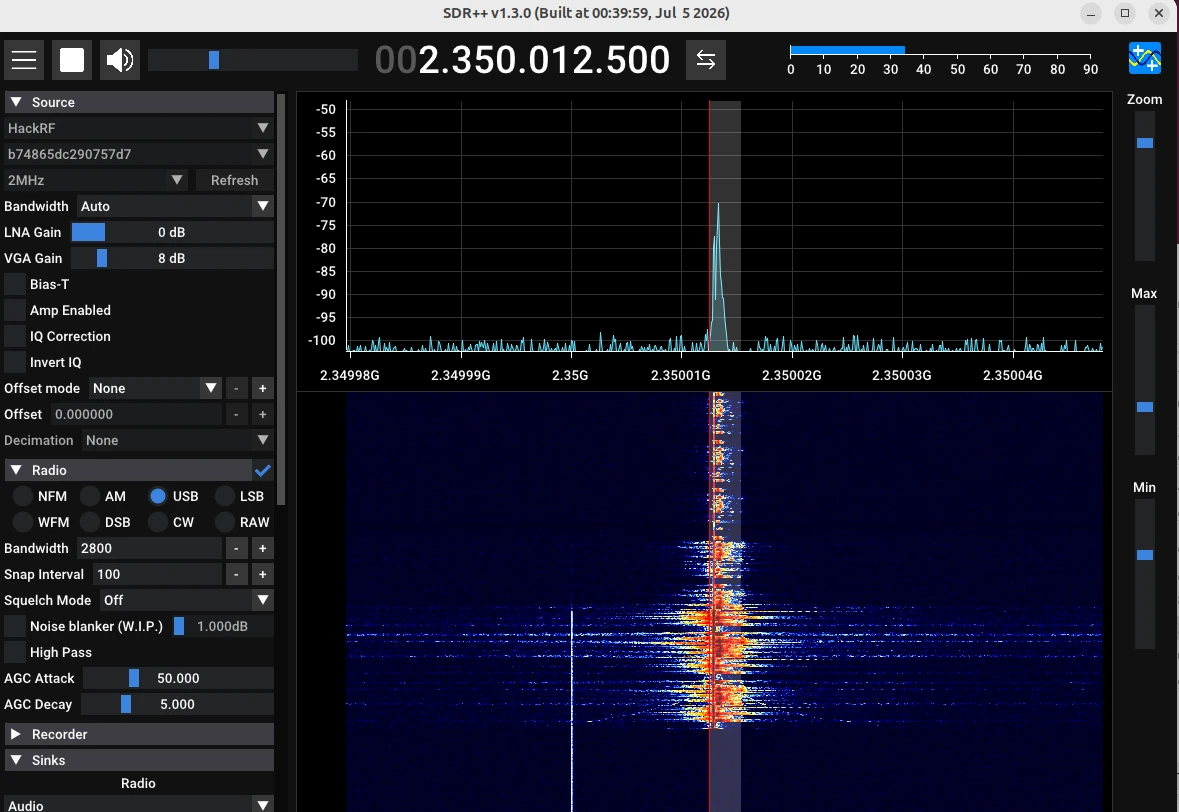
– Log and Record: Record calibrated audio clips, capture spectrum waterfall screenshots from a Software Defined Radio (SDR), and maintain detailed timestamps, frequencies, and direction-finding (DF) bearings.
– Submit Formal Reports: File structured complaints with your national telecommunications authority, such as the Federal Communications Commission (FCC) Enforcement Bureau in the United States, the Malaysian Communications and Multimedia Commission (MCMC), or equivalent spectrum regulators, citing statutory prohibitions against willful and malicious interference.
5. Protect Your Mental Wellbeing and Build Positive Sub-Communities
Never let a single toxic individual drive you away from an enriching, century-old technical hobby.
– Seek out disciplined traffic nets, community emergency teams, and clubs committed to professional conduct.
– Engage in operating activities that celebrate self-reliance and outdoor exploration, such as Summits on the Air (SOTA), Parks on the Air (POTA), amateur satellite tracking, or digital weak-signal modes. In these sub-disciplines, the focus centers squarely on scientific experimentation and supportive camaraderie.
The Antidote: Reviving Paul M. Segal’s Amateur’s Code (1928)
Amateur radio possesses a built-in cultural vaccine against narcissism, drafted nearly a century ago. In 1928, prominent communications attorney and ARRL Director Paul M. Segal (W9EEA) penned The Amateur’s Code. Its five core tenets remain the gold standard of operating etiquette:
- The Amateur is Considerate: He never knowingly uses the air in such a way as to lessen the pleasure of others.
- The Amateur is Loyal: He offers his loyalty, encouragement, and support to his fellow amateurs, his local club, and his national society.
- The Amateur is Progressive: He keeps his station abreast of science. It is built well and efficiently. His operating practice is clean and regular.
- The Amateur is Friendly: Slow and patient sending when requested, friendly advice and counsel to the beginner, kindly assistance and cooperation for the interest of others; these are marks of the amateur spirit.
- The Amateur is Balanced: Radio is his hobby. He never allows it to interfere with any of the duties he owes to his home, his job, his school, or his community.
By actively modeling Segal’s tenets in our local shacks, on the repeaters, and within club boards, the global amateur radio community can deny oxygen to destructive egos, ensuring that our shared bands remain welcoming to the next generation of radio communicators.
Frequently Asked Questions (FAQ)
What distinguishes an experienced Elmer from a narcissistic gatekeeper?
A genuine Elmer shares knowledge generously to empower new operators, celebrating their independent growth. A narcissistic gatekeeper uses technical knowledge as a tool of superiority, gatekeeping information to maintain personal control and demanding subservient deference from beginners.
Why should operators avoid arguing with a narcissist on a repeater?
Arguing on a repeater provides the narcissist with the drama, attention, and audience they crave. They won’t concede error, and prolonging the dispute degrades community spectrum, violates operating etiquette, and exhausts your emotional energy.
How does the Grey Rock method work during on-air contacts?
You deliver strictly factual, emotionless, and minimal responses (such as standard signal reports and polite sign-offs) without engaging in theoretical debates, validating personal boasts, or reacting to deliberate provocations on the frequency.
Is monopolizing an amateur radio frequency illegal?
Yes. International telecommunications regulations and national statutes establish that amateur frequencies are shared public resources. Blocking frequencies continuously without pause or intentionally precluding other stations from communicating constitutes unlawful spectrum monopolization and malicious interference.
What should you do if a toxic operator launches a smear campaign in a club?
Remain calm, document all written and digital correspondence objectively, avoid reciprocal personal attacks, and address the matter formally through your club constitution’s grievance procedures alongside impartial committee members.
Sources and Further Reading
- American Psychiatric Association. (2022). Diagnostic and Statistical Manual of Mental Disorders (DSM-5-TR). 5th ed., text rev. Washington, DC: American Psychiatric Publishing.
- Segal, Paul M. (W9EEA). (1928). The Amateur’s Code. American Radio Relay League (ARRL): https://www.arrl.org/amateurs-code
- International Amateur Radio Union (IARU). (2024). Ethics and Operating Procedures for the Radio Amateur. Devoldere, J. (ON4UN) & Demeuleneere, M. (ON4WW). IARU Region 1.
- Malkin, Craig. (2015). Rethinking Narcissism: The Bad-and Surprising Good-About Feeling Special. New York: HarperWave.
- Federal Communications Commission. (2024). 47 CFR Part 97 – Amateur Radio Service (Subpart B – Station Operation Standards). Washington, DC: US Government Publishing Office.
73,
9M2PJU
hamradio.my


Post Comment