Why Amateur Radio Buyers Ask If Gear Comes From a Non-Smoking Shack
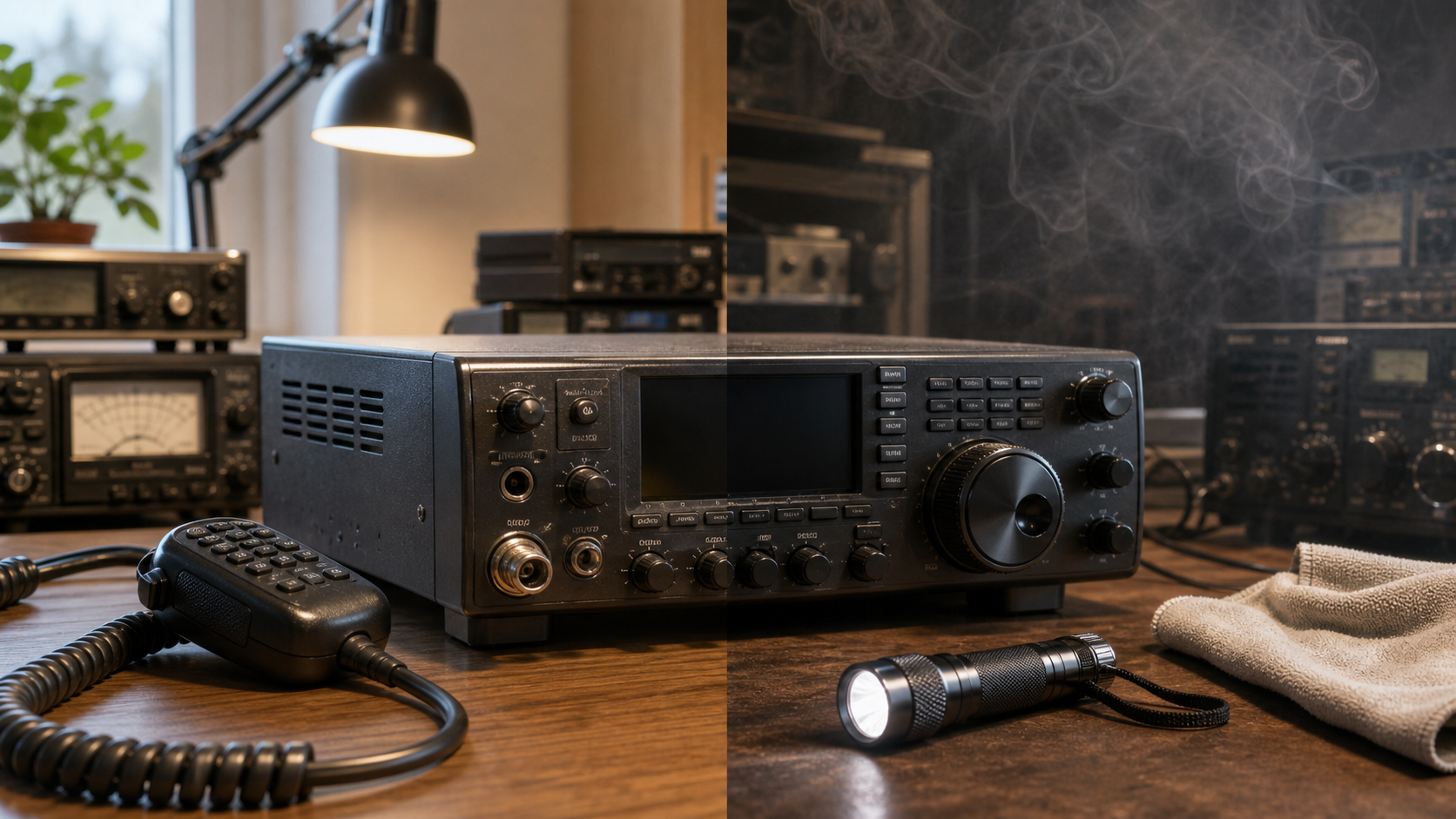
Learn why ham radio buyers ask whether used transceivers, microphones, and accessories come from a non-smoking shack, and how smoke affects condition, odor, reliability, and resale value.
If you spend enough time browsing amateur radio buy-and-sell groups, swap lists, online forums, or classified ads, you will eventually see one question appear again and again: “Is the seller a smoker?” Or, in a more common form: “Is this from a non-smoking shack?”
At first, this may sound strange. After all, a radio is not a sofa, a jacket, or a car interior. It is electronic equipment. If the transceiver powers on, transmits, receives, and looks clean, why should anyone care whether the previous owner smoked?
The answer is simple: cigarette smoke can affect radio equipment in ways that are not always visible in photos. It does not mean every radio from a smoker is bad. Many smoker-owned radios still work perfectly. But smoke exposure can affect smell, cleanliness, long-term reliability, and resale value. That is why careful buyers often ask before purchasing used amateur radio gear.
For Amateur radio operators, equipment is personal. A transceiver may sit directly in front of the operator for hours. The microphone is close to the face. The speaker is nearby. The radio may warm up during use. If the equipment carries a strong smoke odor, the buyer will notice it quickly. This is especially true in a small radio room, bedroom, apartment, vehicle, or portable station setup.
Smoke Leaves More Than Smell
Cigarette smoke is not just air that disappears after a few minutes. It contains tiny particles, tar, nicotine, oils, ash, and chemical compounds. When someone smokes regularly in a room, these materials settle on surfaces. They attach to walls, curtains, furniture, computer keyboards, audio equipment, and radio gear.
A radio sitting in a smoking environment can slowly collect this residue. The outside may look acceptable after a quick wipe, but smoke can enter through ventilation slots, cooling fans, speaker grilles, microphone openings, and small gaps around buttons and knobs. Over time, the residue may build up inside the equipment.
This residue is often slightly sticky. It can attract dust. When dust sticks to nicotine and tar film, it becomes harder to clean than ordinary household dust. Instead of being a dry layer that blows away easily, it can become a brownish or yellowish grime.
That is one reason buyers care. A clean-looking radio in a photo may still have contamination inside.
The Odor Problem
For many buyers, the biggest issue is smell.
Smoke odor can be very persistent. It can remain in plastic, rubber, foam, cloth, cardboard, and dust. Microphones are especially vulnerable because many have foam windscreens or internal acoustic material. Speakers may also hold odor because of paper cones, cloth covers, or foam parts.
Even if a radio does not smell strongly when cold, it may release odor when it warms up. Many transceivers generate heat during operation. Power supplies, amplifiers, and radios with internal fans can warm the air inside the case and push that air into the room. If smoke residue is inside the equipment, the smell may become more noticeable after the gear has been running for a while.
Some buyers are very sensitive to smoke odor. Others may have allergies, asthma, or family members who cannot tolerate it. For them, this is not just a matter of preference. It can determine whether the equipment is usable in their home.
This is why the phrase “from a non-smoking shack” is often included in listings. It reassures buyers that the equipment was not kept in a room where smoke regularly circulated.
Sticky Controls and Dirty Contacts
Amateur radio equipment has many mechanical parts: knobs, switches, buttons, relays, connectors, variable controls, and sometimes cooling fans. Smoke residue can contribute to problems with these parts.
For example, potentiometers and rotary controls can become scratchy or noisy if contamination enters them. Switch contacts can become less reliable when dirt and residue build up. Push buttons may feel sticky or less crisp. Connectors may become dirty and require cleaning.
Of course, smoke is not the only cause of these problems. Age, dust, humidity, poor storage, and normal wear can also affect controls. But smoke adds another layer of contamination, especially when combined with dust and moisture.
In radio equipment, small contact problems can be annoying. A dirty volume control may produce crackling audio. A contaminated microphone connector may cause intermittent transmit audio. A sticky push button may make the radio feel poorly maintained. These issues may be repairable, but they still affect buyer confidence.
Cooling Fans Can Spread the Problem
Many modern HF, VHF, and UHF transceivers use cooling fans. Linear amplifiers, power supplies, and some tuners also use fans. A fan pulls air through the equipment. If that air contains cigarette smoke, it carries smoke particles into the case.
Inside the radio, the particles settle on circuit boards, heatsinks, fan blades, filters, and internal wiring. The fan itself may become coated with a sticky layer that catches more dust. Over time, airflow can be reduced if dust builds up heavily.
Heat and contamination are not a good combination. Radios need proper cooling, especially during long transmissions, digital modes, contesting, or repeater operation. A dirty fan or dusty heatsink can make equipment run hotter. Again, this does not mean every smoker-owned radio has cooling problems. But it is one more reason buyers ask about the environment where the radio was used.
Corrosion and Long-Term Reliability
Smoke residue can attract moisture and dust. In humid climates, this matters even more. Moisture plus contamination can increase the chance of corrosion on metal parts, connectors, shielding, screws, and circuit board surfaces.
Amateur radio operators in tropical or coastal areas already deal with humidity, salt air, and oxidation. Add smoke residue, and the equipment may age less gracefully. Contacts and connectors may need more cleaning. Metal surfaces may show discoloration. Internal parts may look dull or grimy instead of clean.
This is especially relevant for older radios. Vintage transceivers, receivers, amplifiers, and accessories may already have aging capacitors, switches, relays, and wiring. Smoke contamination can make restoration more unpleasant and sometimes more difficult.
Collectors often care about condition beyond basic function. A rare radio that smells strongly of smoke or has yellowed plastic may be less desirable than the same model from a clean environment.
Microphones Are a Special Case
If there is one item where smoke exposure matters a lot, it is the microphone.
A microphone is handled often and used close to the mouth. Smoke odor, skin oils, dust, and moisture can collect around the grille, foam, cable, and push-to-talk switch. If the operator smoked while operating, the microphone may absorb much more odor than the radio itself.
Some buyers will replace the microphone or at least clean it deeply. Foam windscreens may need replacement. Microphone grilles may need careful cleaning. Cables can also hold smell, especially rubber or soft plastic cables.
For hygiene reasons alone, buyers often pay close attention to microphones. A radio body may be acceptable, but a smoky microphone can be unpleasant to use.
Yellowing and Cosmetic Condition
Smoke can discolor plastics and labels over time. White, gray, or beige equipment may become yellowish or brownish. Clear display covers can become dull or stained. Rubber feet, knobs, and buttons may feel grimy.
Cosmetic condition affects price. In used radio sales, buyers often judge by photos first. But photos do not always show odor or sticky residue. That is why they ask direct questions.
A seller may honestly say, “Works 100%,” and that may be true. But buyers also want to know whether the radio is pleasant to own, display, and use.
Does Smoking Always Ruin Radio Equipment?
No. This point is important.
A radio from a smoker is not automatically bad. It may work perfectly. It may have been kept covered. The owner may have smoked outside most of the time. The radio may have been cleaned well. Some equipment is only lightly exposed and has no noticeable odor.
The concern is about risk and condition, not moral judgment. Buyers are not necessarily criticizing the seller as a person. They are trying to understand the environment where the equipment lived.
Used radio equipment is often bought remotely. The buyer cannot smell it, touch it, inspect the inside, or test every control before paying. So questions about smoking, pets, humidity, storage, modifications, repairs, and power output are all part of normal due diligence.
Why Sellers Mention “Non-Smoking Shack”
When sellers write “from a non-smoking shack,” they are adding a condition statement. It is similar to saying:
- never mobile mounted
- no modifications
- original box included
- no blown finals
- low hours
- clean display
- stored indoors
- no corrosion
- from pet-free home
It helps buyers feel more confident. It can also increase resale value. A clean, odor-free radio is easier to sell than one with unknown exposure.
In amateur radio culture, “shack” simply means the radio operating area. So “non-smoking shack” means the radio was kept and used in a room where people did not smoke.
What Buyers Should Ask
If you are buying used amateur radio equipment, it is reasonable to ask:
“Is the equipment from a non-smoking environment?”
You can also ask:
“Any smoke smell?”
“Has it been used in a smoking shack?”
“Are the controls clean and smooth?”
“Any sticky residue on the case, knobs, or microphone?”
“Can you send close-up photos of the vents, microphone, and rear connectors?”
For expensive gear, you may ask whether the seller can remove the top cover and provide internal photos. A clean interior is a good sign. Heavy brown dust, sticky fan blades, or stained surfaces may indicate smoke exposure or poor storage.
Be polite. The goal is not to insult the seller. The goal is to understand the condition.
What Sellers Should Do
If you are selling equipment, be honest. If the radio came from a smoking environment, say so. Many buyers will still consider it if the price is fair and the condition is clear.
You can write something like:
“Radio works well. It was used in a smoking environment years ago, but has been cleaned and has no strong odor to me.”
Or:
“Non-smoking shack, clean radio, no noticeable odor.”
Do not hide smoke exposure if the smell is obvious. A buyer will find out when the package arrives, and it may lead to a dispute, return request, or bad reputation.
Before selling, wipe the exterior carefully with suitable electronics-safe cleaning methods. Clean knobs and buttons gently. Replace microphone foam if needed. Blow out loose dust carefully, but avoid damaging components. Do not spray harsh cleaners into switches, displays, or circuit boards unless you know what you are doing.
Can Smoke Smell Be Removed?
Sometimes, partially. But it can be difficult.
Exterior cleaning helps. Replacing microphone foam helps. Cleaning cables, knobs, and plastic surfaces can reduce smell. Letting equipment air out in a dry, ventilated place may help.
But if smoke residue is deep inside a radio, transformer, speaker, foam, or cable jacket, the odor may remain. Ozone treatment is sometimes used for odor removal, but it can damage rubber and some materials if done incorrectly. Strong perfumes or deodorizing sprays are not a good solution because they may create a worse smell and can harm electronics.
For valuable equipment, careful disassembly and proper cleaning may be needed. That takes time and skill. This is another reason buyers prefer gear that never had the problem in the first place.
Conclusion
Amateur radio buyers ask whether equipment comes from a smoker because smoke exposure can affect more than appearance. It can leave persistent odor, sticky residue, dirty controls, contaminated fans, stained plastics, and possible corrosion concerns. It can also reduce resale value and make the equipment unpleasant for sensitive users.
At the same time, a smoker-owned radio is not automatically defective. Condition matters. Exposure level matters. Cleaning matters. Honesty matters.
The phrase “from a non-smoking shack” has become common because amateur radio equipment often sits close to the operator, warms up during use, contains fans and vents, and includes microphones and speakers that can absorb odor. For a buyer, asking the question is simply part of checking the real condition of used gear.
In short: people ask because they want a clean, reliable, odor-free radio that they will enjoy using in their own shack.




Post Comment