Soviet Amateur Radio Call Signs: USSR Prefixes from 1926-1991
The history of amateur radio call signs in the Soviet Union is complicated because the system changed several times. Different periods used different formats, and some call signs were connected not only with ordinary amateur stations, but also with club stations, shortwave listeners, remote islands, polar expeditions, Antarctic bases, cosmonauts, and special operating licenses.
This article summarizes the known information from the provided QSL-card material, with cautious wording where the exact meaning of a prefix still requires further confirmation.
Early Soviet Call Signs, 1926-1928
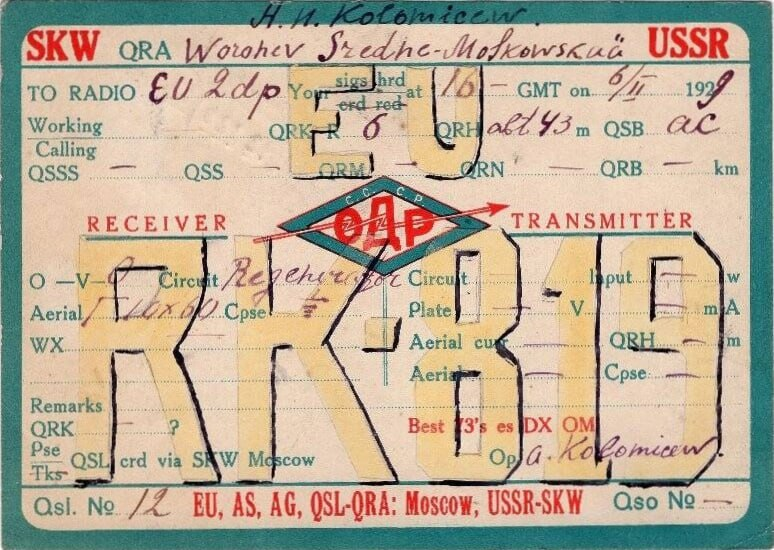
Before the Second World War, Soviet shortwave listeners used call signs in the RK-[number] series, regardless of which Soviet republic they were from. One known example is RK-819.
The first legal amateur radio operators appeared on the air in the U.S.S.R. in October 1926. This followed a decision by the People’s Commissariat of Posts and Telegraphs of the U.S.S.R., which legalized amateur radio operation in Soviet territory.
Until the end of October 1928, individual amateur operators received call signs from the so-called “digital series.” These call signs used numbers from 01 to 99, followed by the suffix RA. After 99RA had been issued, the system moved into the RB series, and later into the RW series.
Georgia, then the Georgian Soviet Socialist Republic, gives a useful example of how this early system looked in practice. Some of the first Georgian amateur operators in 1928 were:
05RB– Aghamalyan M.T., Tiflis, now Tbilisi, laterau7AB69RB– Akimov Sergey Yakovlevich, Tiflis, latereu7AE10RW– Zelik Ya.M., Poti, laterau7AH33RW– Barbaumov F.P., Tiflis, laterau7AN41RW– Gupenets A.G., Sagarejo, laterau7AO59RW– Kvernadze A.D., Tiflis; until 1929 illegal asRTRL, laterau7AR69RW– Zakharov M.L., Tiflis, laterau7ARandU6SF70RW– Bering V.E., Tiflis, laterau7AT76RW– Osepyan, Tiflis, laterau7AU
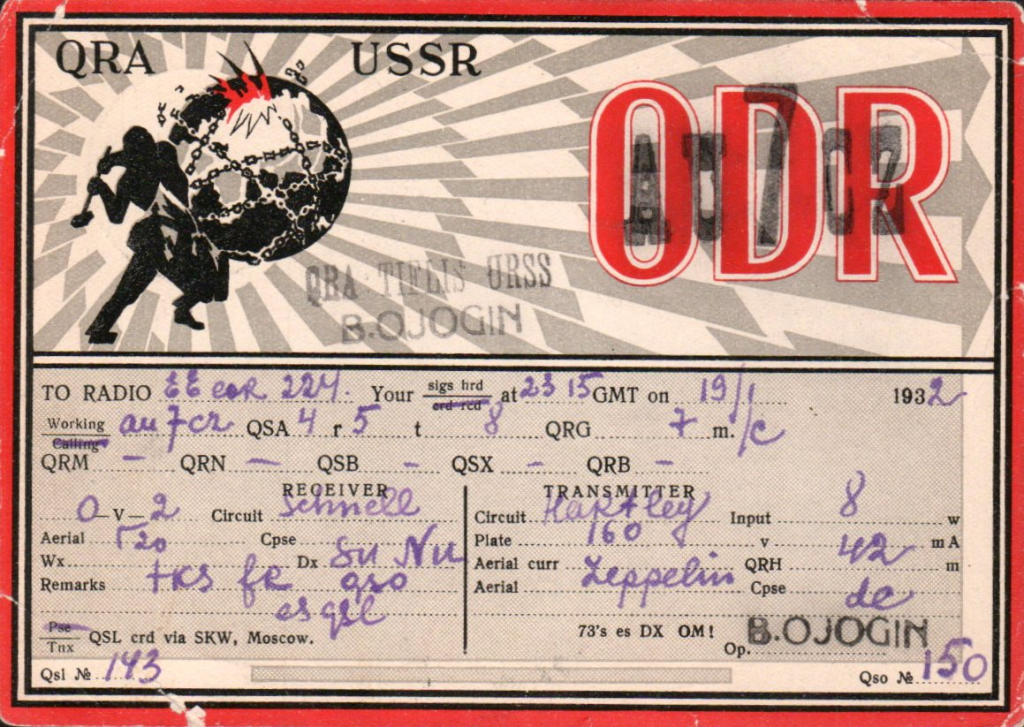
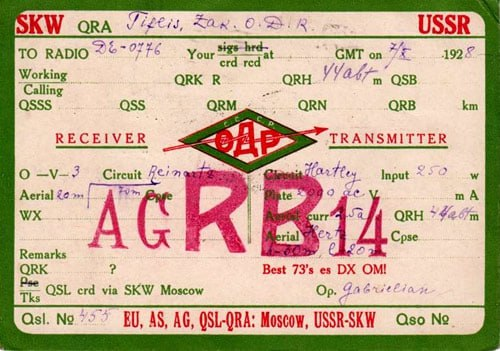
Club stations also appeared during this period. In the digital series, club stations used the same RA, RB, and RW prefixes as individual operators, but with numbers as suffixes instead of prefixes (for example, RA54, RA69, RA73 in Belarus). In the Georgian records, club stations appear with an ag designation, which likely indicated the Georgian Short Wave Section. Examples include:
agRB14– Tiflis, central club station of the Georgian Short Wave Section, laterau7KADagRB26– Manglisi settlement, Regiment Club, laterau7KAEagRB27– Tiflis Polytechnic Institute, laterau7KAFagRB54– Tiflis, laterau7KAH
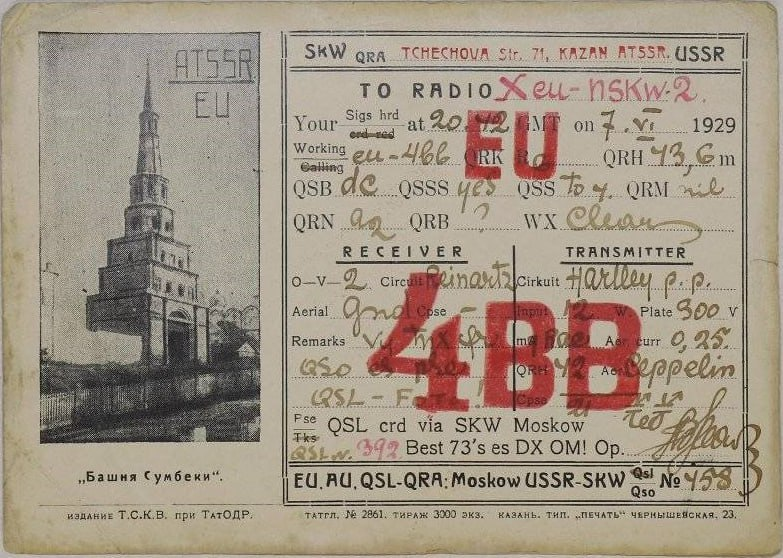
At that time, Soviet amateur operators usually signed QSL cards with their surnames rather than their first names. This practice continued for some time after the Second World War, but by the 1960s first-name signatures had become normal.
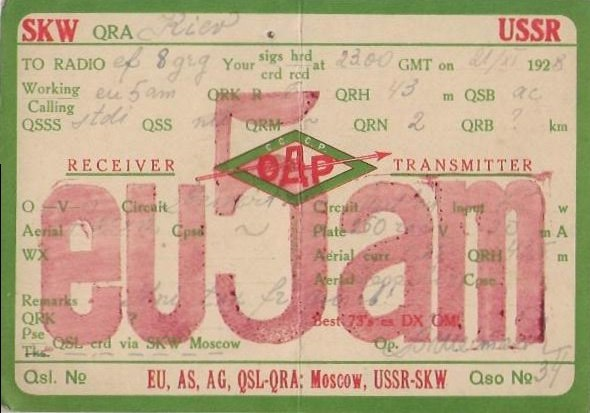
The 1928-1933 Regional System
On October 20, 1928, the People’s Commissariat of Posts and Telegraphs (NKPiT) introduced a new call-sign system, known as the “Second Call Sign System.” The territory of the U.S.S.R. was conditionally divided into nine regions. The European part used the prefix eu, while the Asian part used au. This system was subsequently ratified at the First All-Union Shortwave Conference held in December 1928, which gathered 116 delegates from 59 local shortwave clubs.
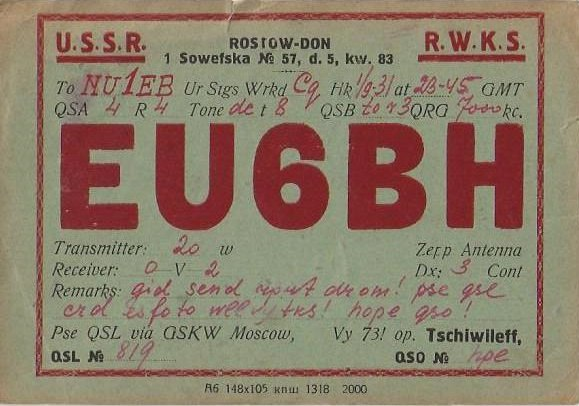
The known regional assignments were:
eu2– Central Industrial Region of the Russian S.F.S.R.eu3– North-Western Region of the Russian S.F.S.R.eu4– Volga Region of the Russian S.F.S.R.eu5– Ukrainian Soviet Socialist Republiceu5– Crimean Autonomous Soviet Socialist Republiceu5– Moldavian-related Soviet territory; the term “Moldavian SSR” should be avoided for 1928-1933, because the Moldavian SSR was not established until 1940eu6– North Caucasus, Russian S.F.S.R.eu9– Bryansk and Smolensk regions of the Russian S.F.S.R.eu9– Belorussian Soviet Socialist Republicau1– Siberia, Russian S.F.S.R.au4– Far East, Russian S.F.S.R.au7– Republics of Transcaucasiaau8– Central Asian republics
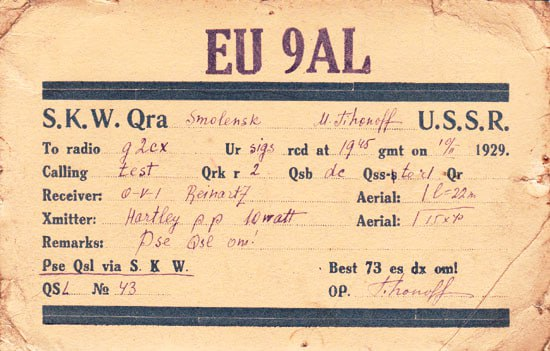
The two-letter prefix could appear on QSL cards in either uppercase or lowercase, although lowercase was more common. In some cases, the letters were not printed at all.
In the regional system, club stations were identified by the letter K in their suffix (for example, eu9KAA, au7KAD). This system shows how Soviet amateur radio administration tried to organize a large and diverse country into a regional structure. It also explains why some operators who began with early call signs such as 05RB or 10RW later appeared with au7 call signs.
Special U.S.S.R. Prefixes, 1946-1991
After the Second World War, Soviet amateur radio included many special prefixes. Some were connected with ordinary administrative geography, but others were linked to unusual places or activities: polar stations, Antarctic bases, remote islands, special licenses, and cosmonauts.
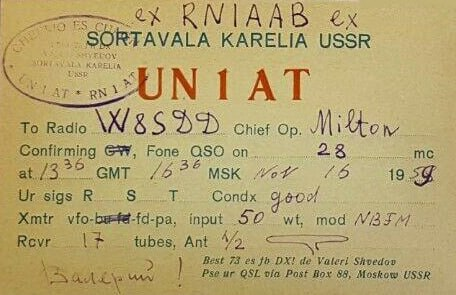
One listed prefix is UN1, associated with the Karelo-Finnish Republic. This republic existed from 1940 until 1956, so the assignment fits within the early post-war Soviet period.
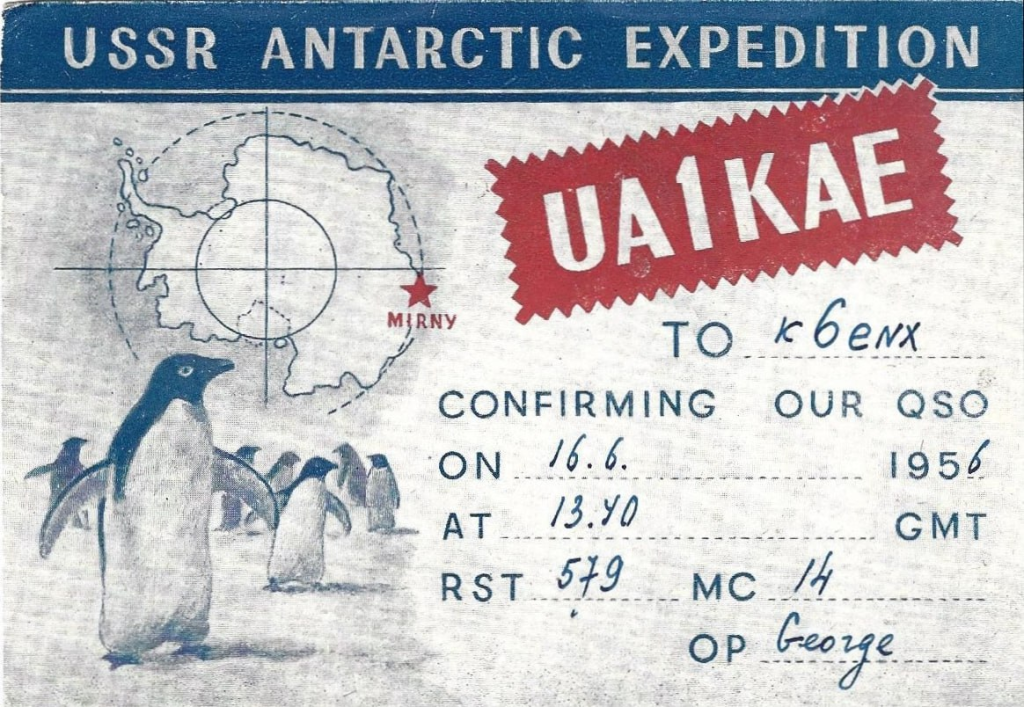
The prefix 4K1, together with some uses of UA1K, is listed for Soviet Antarctic bases.
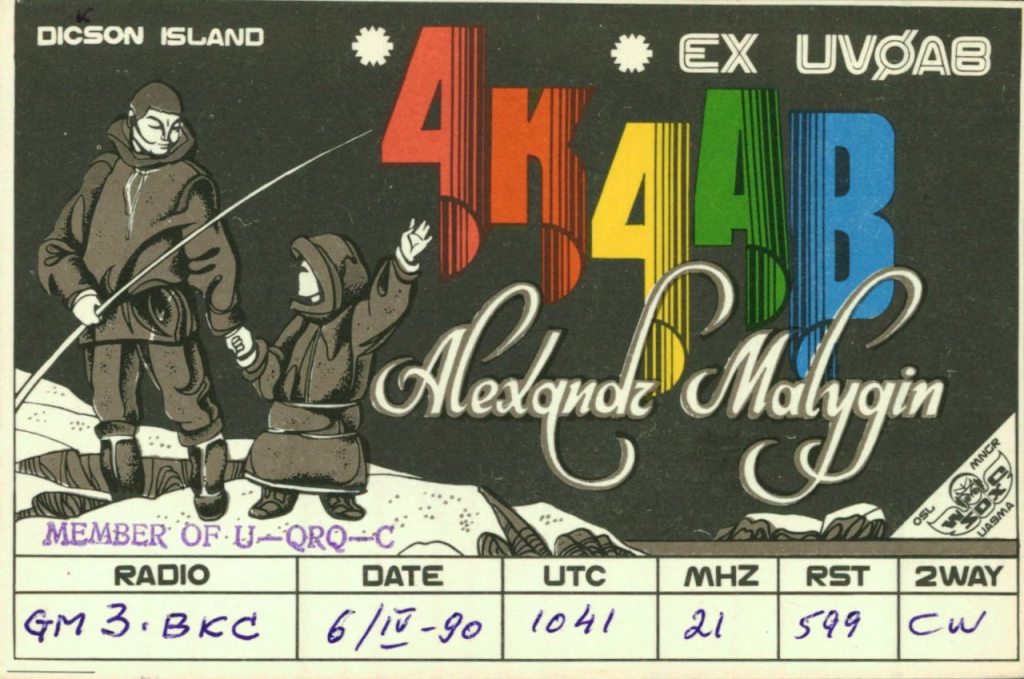
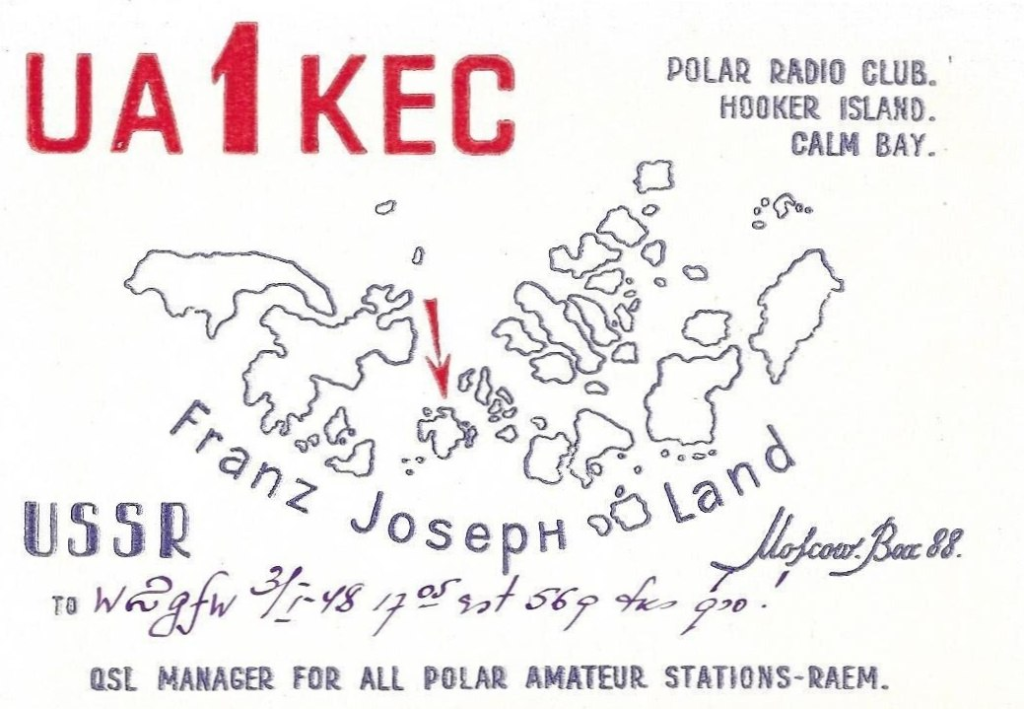
Franz Josef Land is represented by 4K2 and by some examples of UA1K, UA1O, UA1P, UK1P, and UK1Z.
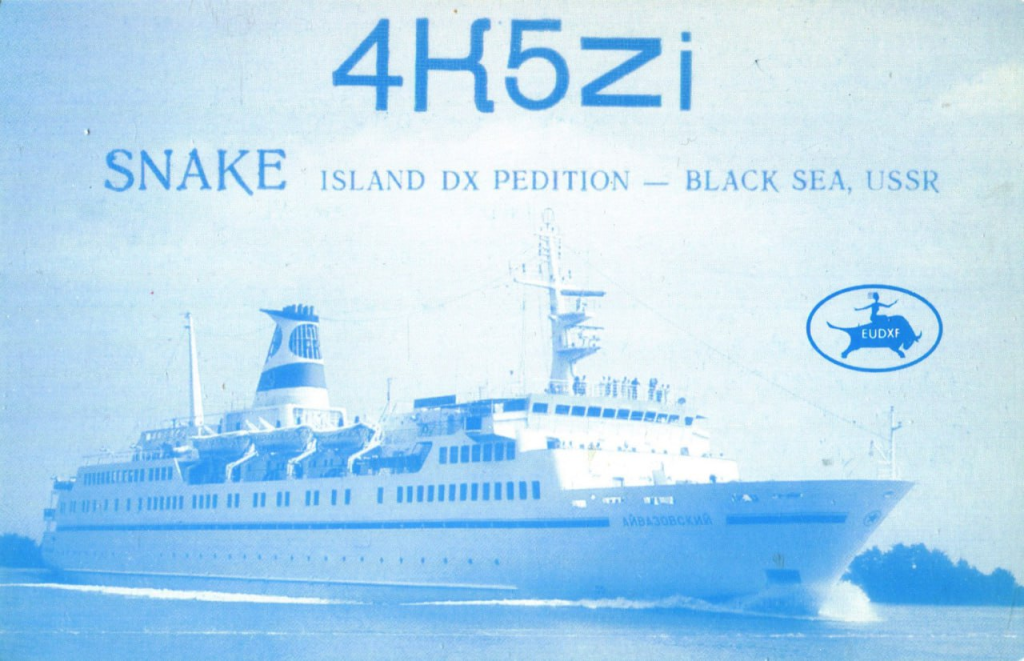
Other Arctic islands are listed under 4K3 and 4K4. Black Sea islands are listed under 4K5.
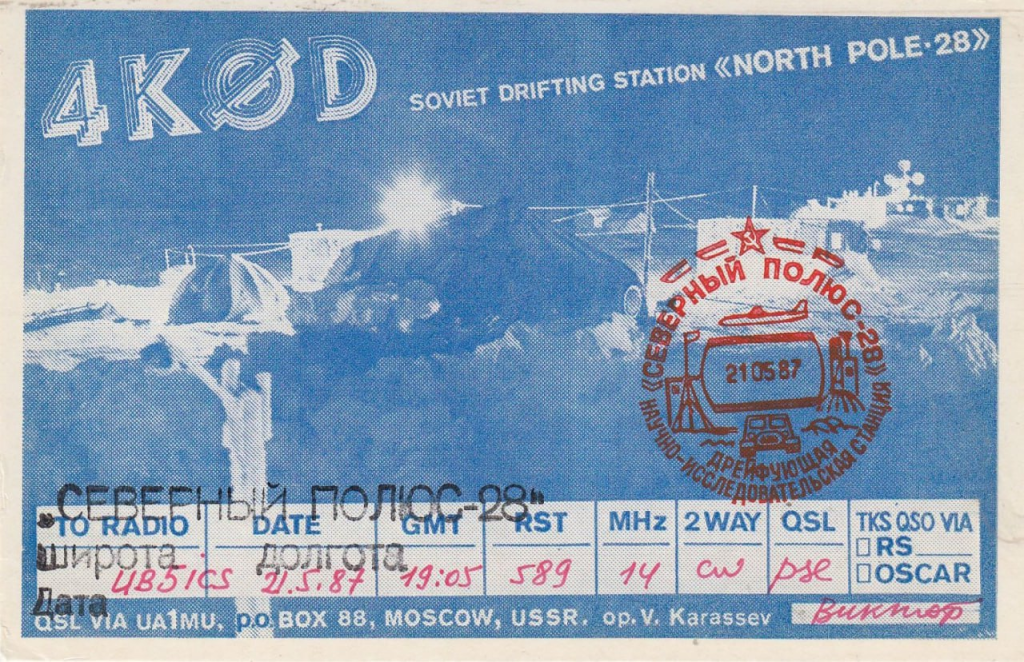
North Pole drifting stations used special identifiers including UPOL-# and 4K0. These were not ordinary fixed regional call signs in the usual sense, because they were connected with drifting polar stations.
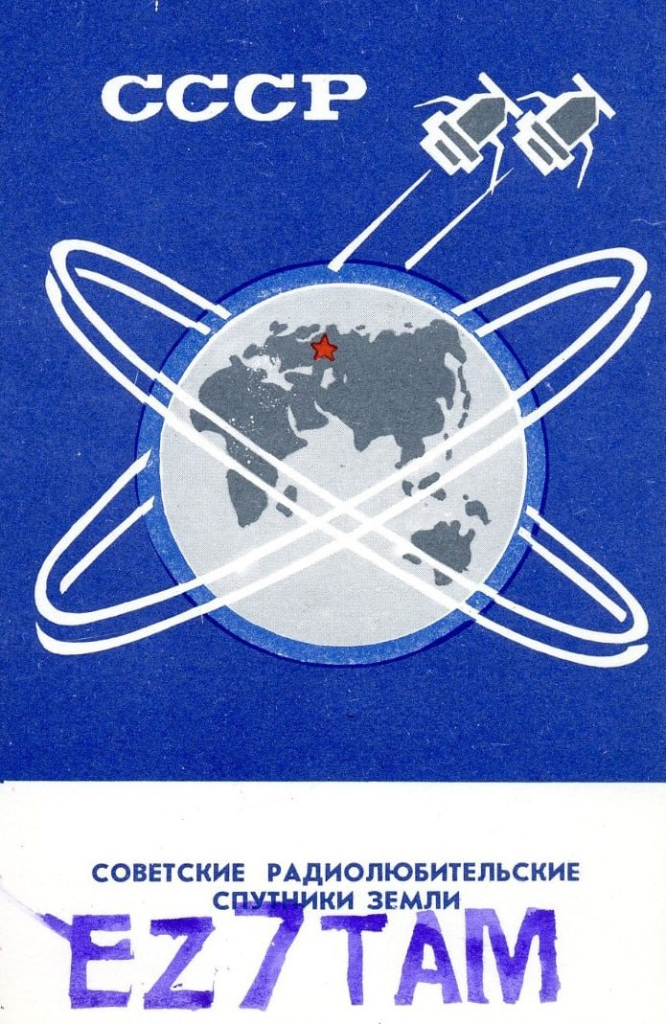
The EZ series is listed for 160-meter licenses. Examples include EZ1, EZ2, EZ3, EZ4, EZ5, EZ6, EZ7, EZ8, EZ9, and EZ0.
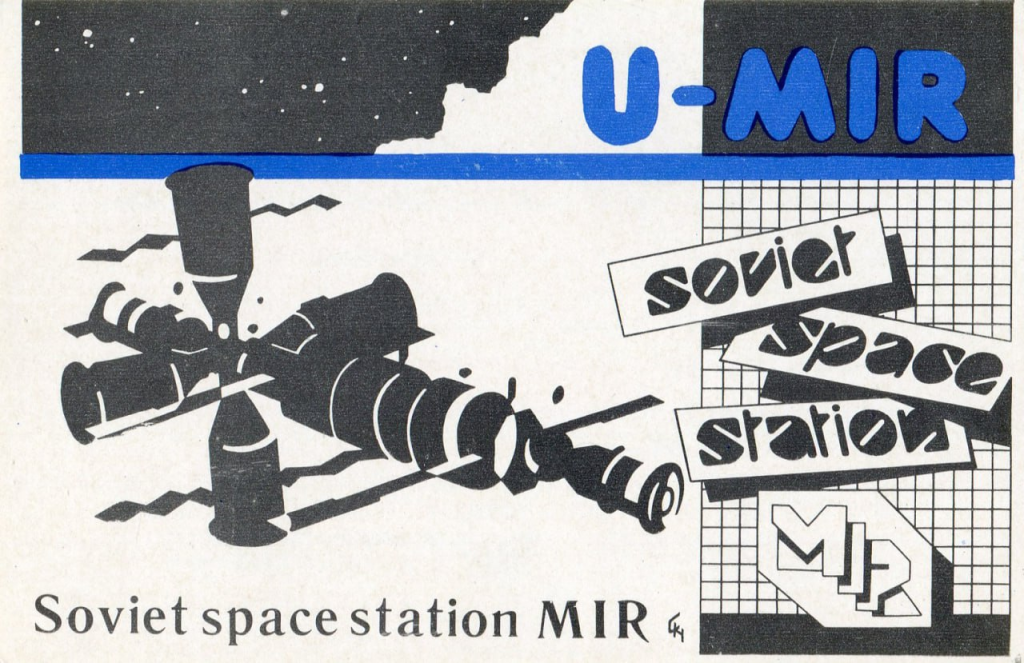
The Soviet space program also appears in the call-sign record. The provided list includes U1, U2, U3, U4, U5, U6, and U7 with the suffix MIR, connected with Soviet cosmonauts. Other MIR call signs are also known, so this should be read as part of the broader MIR cosmonaut call-sign group rather than necessarily the complete list.
The ongoing post-war list also includes many additional prefixes and examples:
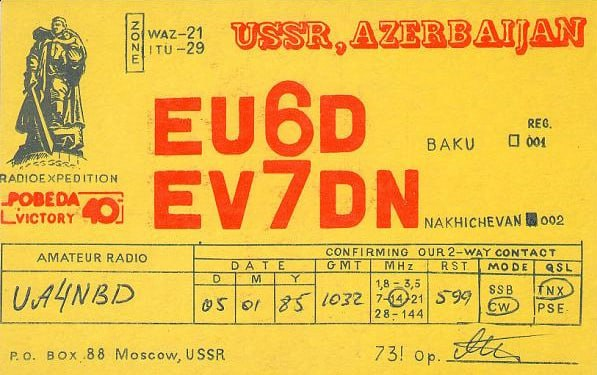
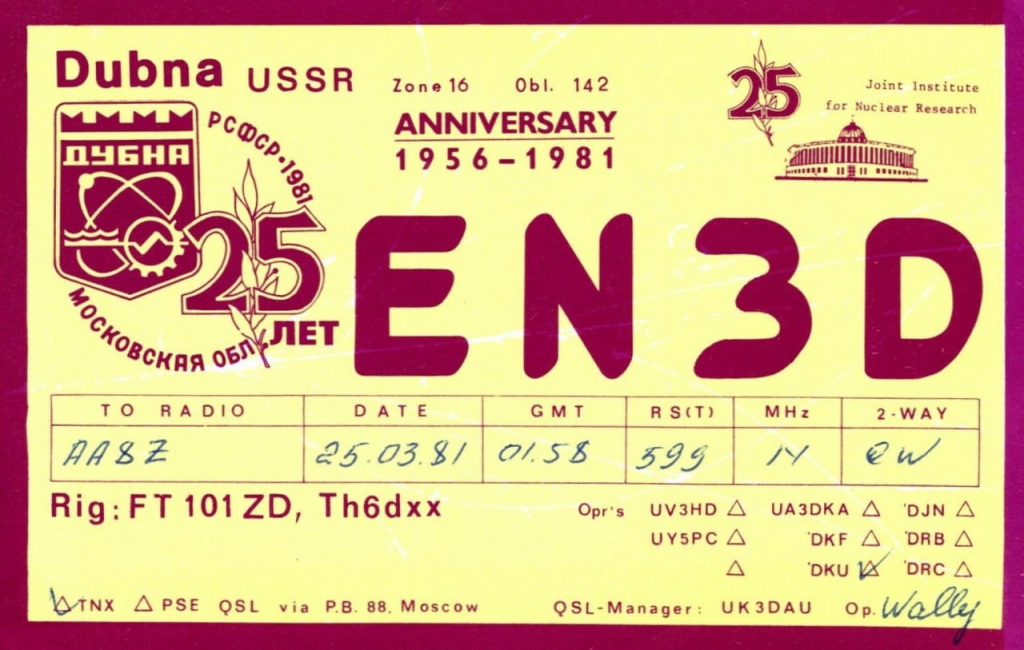
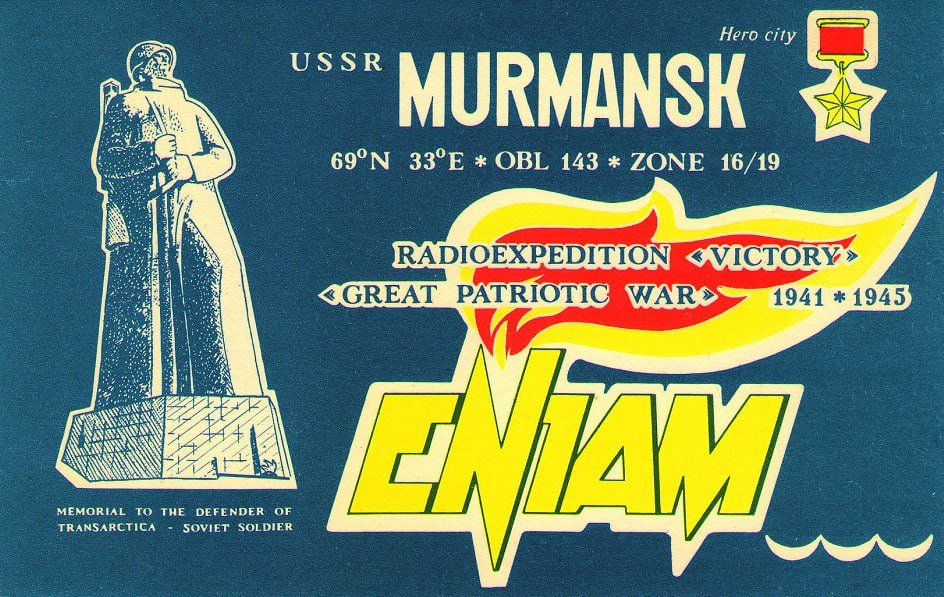
EK1, EK3, EK5, EK8, EK9, EK0, EM1, EM6, EN1, EN3, EO1, EO3, EU8, EU9, EV1, EV4, EV7, EV9, EX0, EX5, EY2, EZ0, and RT0.
The exact meaning of every one of these examples is not specified in the provided material, so they should be treated as documented QSL-card examples rather than fully explained prefix categories.
Why QSL Cards Are Important
QSL cards are especially valuable for Soviet amateur radio history because the call-sign system changed repeatedly. A prefix might be regional in one context, special in another, or connected with a temporary activity. Some call signs were used by individual operators, others by clubs, polar stations, Antarctic bases, or cosmonauts.
The Georgian examples show this clearly. Operators who began with call signs such as 05RB, 10RW, and 33RW later appeared with au7 call signs. Club stations using agRB identifiers later became au7KAD, au7KAE, au7KAF, and au7KAH.
The same caution applies to the post-war prefixes. A QSL card can help confirm that a particular call sign was actually used, where it was used, and what activity it represented.
Conclusion
Soviet amateur radio call signs developed through several stages. In the earliest legal period, beginning in 1926, operators used digital-style call signs in the RA, RB, and RW series, while shortwave listeners used the separate RK-[number] system. In 1928, a regional structure was introduced, using eu for the European part of the U.S.S.R. and au for the Asian part.
After the Second World War, the system became even more varied. From 1946 to 1991, special prefixes were used for the Karelo-Finnish Republic, Antarctic bases, Franz Josef Land, Arctic and Black Sea islands, North Pole drifting stations, 160-meter licenses, and Soviet cosmonauts.
Because some assignments were temporary, partial, or special-purpose, surviving QSL cards remain one of the best ways to reconstruct how these Soviet call signs were actually used.
References
- QRZ.ru – Anniversary of Legalization of Shortwave Movement in USSR (in Russian) – Documents the February 1926 decree and October 1926 first licenses, with list of first 13 licensed amateur stations.
- DeltaClub – Pre-war Shortwave Operators of Belarus (in Russian) – Documents the digital series (RA/RB/RW), the October 20, 1928 regional system, and Belarusian operators with eu9 prefixes.
- DeltaClub – Amateur Radio Conferences (Retro Chronicle) (in Russian) – Documents the December 1928 First All-Union Shortwave Conference with 116 delegates, and confirms the regional prefix assignments.
- RUQRZ – Origin of Amateur Radio Call Signs (in Russian) – Documents the 1926-1928 digital series and the 1928 regional system introduction.
- RadioLamp – Year of Great Achievements (1927-1928) (in Russian) – Documents the November 1928 introduction of new call signs and the nine-region division.
- MyTashkent – Pre-war Shortwave Operators of Central Asian Republics (in Russian) – Confirms the October 20, 1928 introduction of the Second Call Sign System and the au8 prefix for Central Asian republics.
- Wikipedia – Call Signs in Russia – Overview of Russian/Soviet call sign history including the 1927 ITU Washington Conference allocation of the RAA-RZZ block to the USSR.
- AC6V – Amateur Radio Old Prefixes & Deleted Entities – Confirms 4K1 (USSR Antarctic), 4K2 (Franz Josef Land), 4K3, 4K4 prefixes.
- RA-QSO-RK No.1, 1928 – List of Registered Shortwave Transmitters in USSR (in Russian) – Original 1928 list of registered amateur transmitters with digital series call signs.

Post Comment