Radio Garden: Explore the World Through Live Global Broadcast Radio on an Interactive 3D Globe
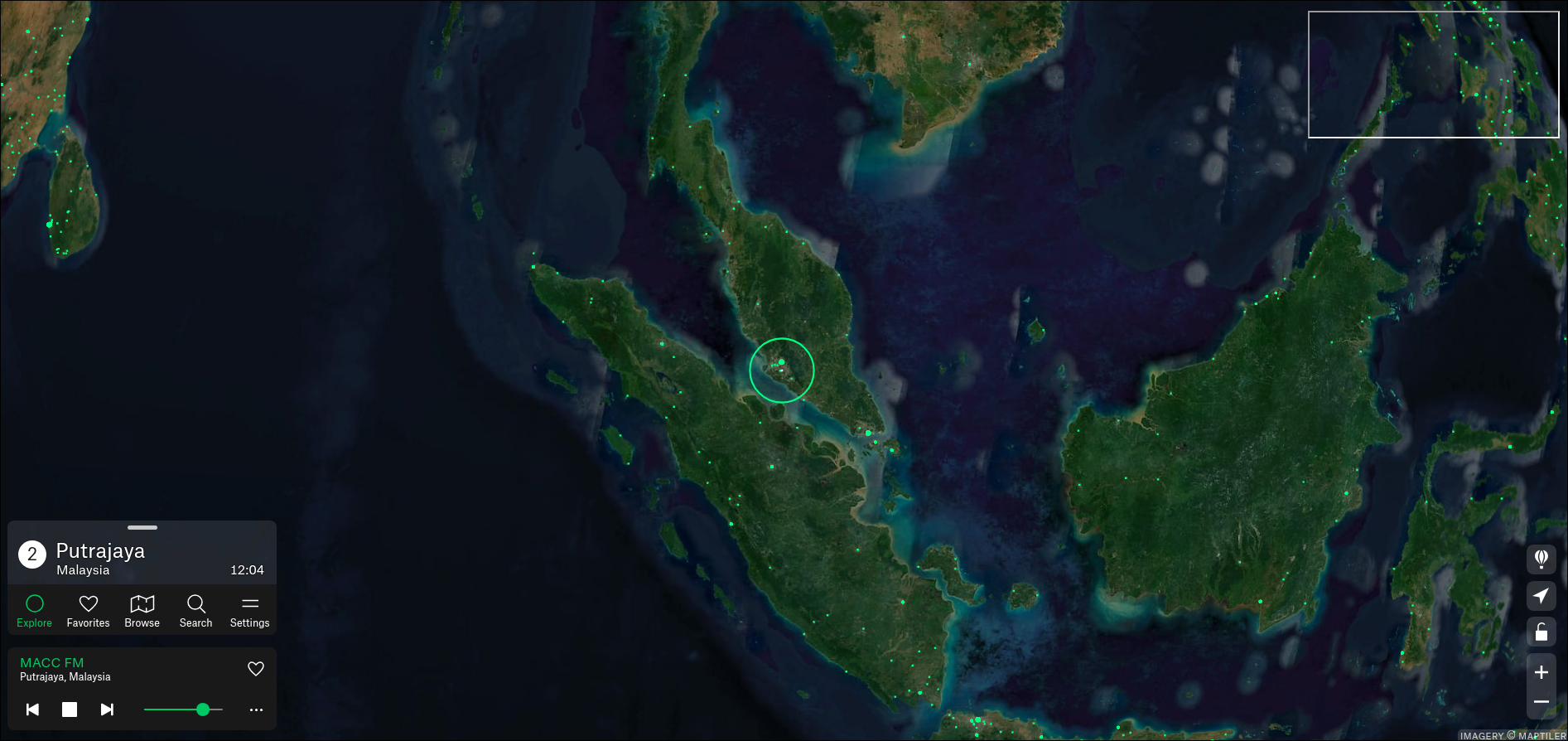
TL;DR: Radio Garden is a free, interactive web and mobile application that plots live broadcast radio streams on a 3D satellite globe. Developed originally by Studio Puckey and Moniker for the Netherlands Institute for Sound and Vision, it lets users explore tens of thousands of local radio stations worldwide with a simple spin of the planet.
What Is Radio Garden?
Radio Garden is a free, interactive web-based 3D globe and mobile application that aggregates and streams tens of thousands of live broadcast radio stations from every continent in real time. By transforming standard internet radio streams into an intuitive, geographic interface, the platform allows listeners to tune into local culture, regional music, and community broadcasts across the globe without borders or subscription fees.
       .---.
     .'     '.
    /   (*)   \    <-- Glowing green dots represent live radio clusters
   |  .-----.  |   <-- Spin the 3D globe to tune across continents
    \  '---'  /
     '.     .'
       '---'
Traditional radio listeners and shortwave enthusiasts spent decades tuning dials across high-frequency bands to pull distant signals out of atmospheric noise. Radio Garden recreates the magic of global discovery through modern web technologies, providing instant access to hyper-local broadcasts from Tokyo to Timbuktu.
Origins: The Transnational Radio Encounters Project
Radio Garden started in 2016 as an exhibition project commissioned by the Netherlands Institute for Sound and Vision (Nederlands Instituut voor Beeld en Geluid). It was developed as part of the European research initiative known as Transnational Radio Encounters (TRE), which investigated how radio broadcasts bridge cultural divides and shape transnational identities.
The concept and technical architecture were created by Jonathan Puckey and Luna Maurer at the Amsterdam-based design studio Moniker, in collaboration with designer Philip Buhrer. Following its viral global launch in December 2016, ongoing maintenance and software development transitioned to Studio Puckey, where Jonathan Puckey continues to expand the platform.
The original project mission was straightforward yet profound: challenge political and geographical borders by treating sound and spoken voice as universal human experiences. Instead of navigating drop-down menus or text directories, users interact with the planet as a continuous sphere of sound.
Under the Hood: The Technical Architecture
Radio Garden achieves its smooth, responsive performance by pairing advanced geospatial rendering engines with standard internet radio streaming protocols.
+-------------------------------------------------------+
|                   Radio Garden Web Client             |
|  +-------------------------+  +--------------------+  |
|  |   CesiumJS WebGL Globe  |  |  Preact + Redux UI |  |
|  | (ArcGIS Satellite Map)  |  | (Search/Favorites) |  |
|  +-------------------------+  +--------------------+  |
+---------------------------+---------------------------+
                            | Direct Stream Connection
                            v
+-------------------------------------------------------+
|           Global Radio Broadcast Streams              |
|   Icecast Server  |  SHOUTcast Server  |  HLS Stream  |
|     (MP3/AAC)     |     (MP3/AAC)      |  (Segmented) |
+-------------------------------------------------------+
1. Geospatial 3D Engine (CesiumJS and WebGL)
The core visual interface is built on CesiumJS, an open-source JavaScript library engineered for high-performance 3D mapping and planetary-scale geospatial visualization. Utilizing hardware-accelerated WebGL directly in the browser, Cesium renders a 3D Earth textured with high-resolution satellite imagery provided by ArcGIS.
2. Coordinate Clustering and Signal Mapping
Every station in the Radio Garden database is tagged with precise geographic coordinates (latitude and longitude). The application groups nearby transmitters into glowing green cluster dots. As you zoom closer to a specific city or region, these clusters expand to reveal individual broadcasting studios and transmitter locations.
3. Lightweight User Interface
The user interface layers on top of the WebGL canvas using Preact and Redux. Preact delivers a lightweight, high-speed virtual DOM footprint, ensuring that station searching, playlist browsing, and bookmarking do not stutter while the 3D globe spins at 60 frames per second.
4. Audio Streaming Pipeline
Radio Garden acts as a stream directory and client, rather than an audio relay server. When you center the reticle over a station dot:
- The web client queries the Radio Garden API for the station metadata and direct stream URI.
- The browser connects directly to the broadcaster stream endpoint (typically an Icecast, SHOUTcast, or HTTP Live Streaming / HLS server).
- The stream is decoded natively using the HTML5 Audio API, supporting standard codecs such as MP3, AAC, and Ogg Vorbis.
Why Radio Enthusiasts and DXers Love Radio Garden
For amateur radio operators, Shortwave Listeners (SWLs), and audio enthusiasts, Radio Garden offers a modern digital equivalent to traditional DXing (distance listening).
+------------------------------------------------------------------------+
|                          The Modern DX Gateway                         |
+-----------------------------------+------------------------------------+
| Traditional Shortwave / AM DXing  | Radio Garden Virtual DXing         |
+-----------------------------------+------------------------------------+
| Requires large outdoor antennas   | Runs in any modern web browser     |
| Subject to solar cycles & QSB     | Crystal-clear digital audio        |
| Limited to powerful HF stations   | Access to tiny community FM rigs   |
| Hours spent tuning noisy dials    | Instant geographical hopping       |
+-----------------------------------+------------------------------------+
Serendipitous Cultural Immersion
Unlike algorithm-driven music streaming platforms that lock listeners into personalized echo chambers, Radio Garden invites random exploration. You can drop into:
- Isolated island stations in the South Pacific playing local island reggae.
- Indigenous community stations in the Andes broadcasting in Quechua.
- Arctic municipal stations in Tromso or Svalbard delivering maritime weather updates.
- Hyper-local Malaysian community and campus radio stations across Kuala Lumpur, Penang, and Sabah.
Real-Time Global Pulse
During major international events, natural disasters, or elections, tuning into local radio stations provides unfiltered insight into local sentiment before international wire services produce summaries.
Core Features and How to Navigate the Platform
Radio Garden combines minimalist design with practical search and discovery tools:
- Interactive 3D Globe Navigation: Click and drag to spin the globe; scroll or pinch to zoom into cities and transmitters.
- Tuning Reticle: A green circular sight in the center of the screen automatically locks onto the nearest broadcast station as you move.
- Search and Filter: Search directly by station name, city, province, or country to pinpoint specific broadcasts.
- Favorites and Custom Bookmarks: Save preferred stations to your personal favorites list for quick recall during future sessions.
- Mobile Applications: Dedicated native apps for iOS and Android support background audio playback, lock-screen controls, and car infotainment integration.
- Broadcaster Submissions: Station operators and web radio projects can submit their live stream URLs directly to the Radio Garden curation team to appear on the globe.
Platform Comparison
The table below outlines how Radio Garden compares with other popular listening and radio monitoring tools:
| Feature / Metric | Radio Garden | WebSDR / KiwiSDR | TuneIn Radio | Traditional SWL / DX |
|---|---|---|---|---|
| Primary Focus | Global broadcast radio via 3D globe | Raw RF spectrum monitoring (HF/VHF) | Commercial internet radio directory | Over-the-air HF/MW/FM reception |
| Interface | Interactive 3D WebGL satellite globe | Waterfall display and frequency dial | Text lists, categories, search menus | Physical radio dial and S-meter |
| Audio Source | Broadcaster IP streams (Icecast/HLS) | Real remote SDR receivers and antennas | Broadcaster IP streams and podcasts | Atmospheric RF electromagnetic waves |
| Amateur Radio Bands | No (Broadcast only) | Yes (Full amateur HF/VHF coverage) | No (Commercial broadcast only) | Yes (CW, SSB, AM, FM, Digital) |
| Hardware Required | Web browser or smartphone | Web browser or smartphone | Web browser or smartphone | HF/MW Receiver and outdoor antenna |
| Cost | Free (Optional mobile app purchase) | Free (Community hosted) | Freemium (Ad-supported / Premium tier) | Receiver, coax, antenna hardware |
| Audio Quality | High (Direct digital stream) | Variable (Subject to real RF conditions) | High (Direct digital stream) | Variable (Subject to ionospheric propagation) |
Legal Realities and Licensing Considerations
Radio Garden operates strictly as an interactive search index and player. The platform does not host, duplicate, or re-encode audio content on its servers. Instead, it provides direct links that instruct the listener client browser to connect to the broadcaster public stream URL.
In 2022, regulatory and licensing complexities caused Radio Garden to restrict access for listeners located in the United Kingdom. Following copyright and performance royalty enforcement by UK music licensing bodies (such as PRS for Music and PPL), the platform limited UK-based IP addresses to domestic UK radio stations. For listeners throughout the rest of the world, full global access remains unrestricted.
Frequently Asked Questions
Is Radio Garden free to use?
Yes. Radio Garden is completely free to access through any standard desktop or mobile web browser. The official iOS and Android apps are also free to download, with an optional one-time in-app purchase to remove advertisements.
How does Radio Garden locate and stream radio stations?
Radio Garden maps stations using broadcaster-provided geographic coordinates. When you select a green dot, the platform retrieves the station direct Icecast, SHOUTcast, or HLS stream URL, and your browser decodes the live audio feed natively.
Can broadcasters add their own radio station to Radio Garden?
Yes. Radio station operators, community broadcasters, and internet radio creators can submit their station name, geographic coordinates, logo, and active stream URL through the official Radio Garden submission portal for verification and inclusion.
Why are some radio stations unavailable or silent?
Stations may appear offline if their upstream streaming server is overloaded, if their stream URL has changed, or if regional copyright restrictions apply to the listener location. Radio Garden periodically prunes inactive streams.
How does Radio Garden differ from WebSDR or KiwiSDR?
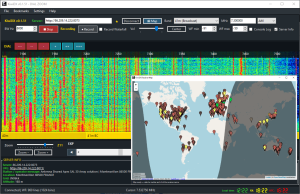
Radio Garden aggregates internet-based audio streams from commercial and community broadcasters. In contrast, WebSDR and KiwiSDR platforms connect you to physical software-defined radios that tune real over-the-air radio frequency spectrum across amateur and shortwave bands.
Sources and Further Reading
- Radio Garden Official Web Platform
- Radio Garden Station Submission and Support Portal
- Studio Puckey Design and Development Portfolio
- CesiumJS Open-Source 3D Geospatial Engine
- Netherlands Institute for Sound and Vision
- Icecast Open Source Streaming Media Server
- Transnational Radio Encounters Research Project Archive

Post Comment