Pebble HF: The Ultra-Affordable 20M QRP Transceiver Kit for Portable Operations
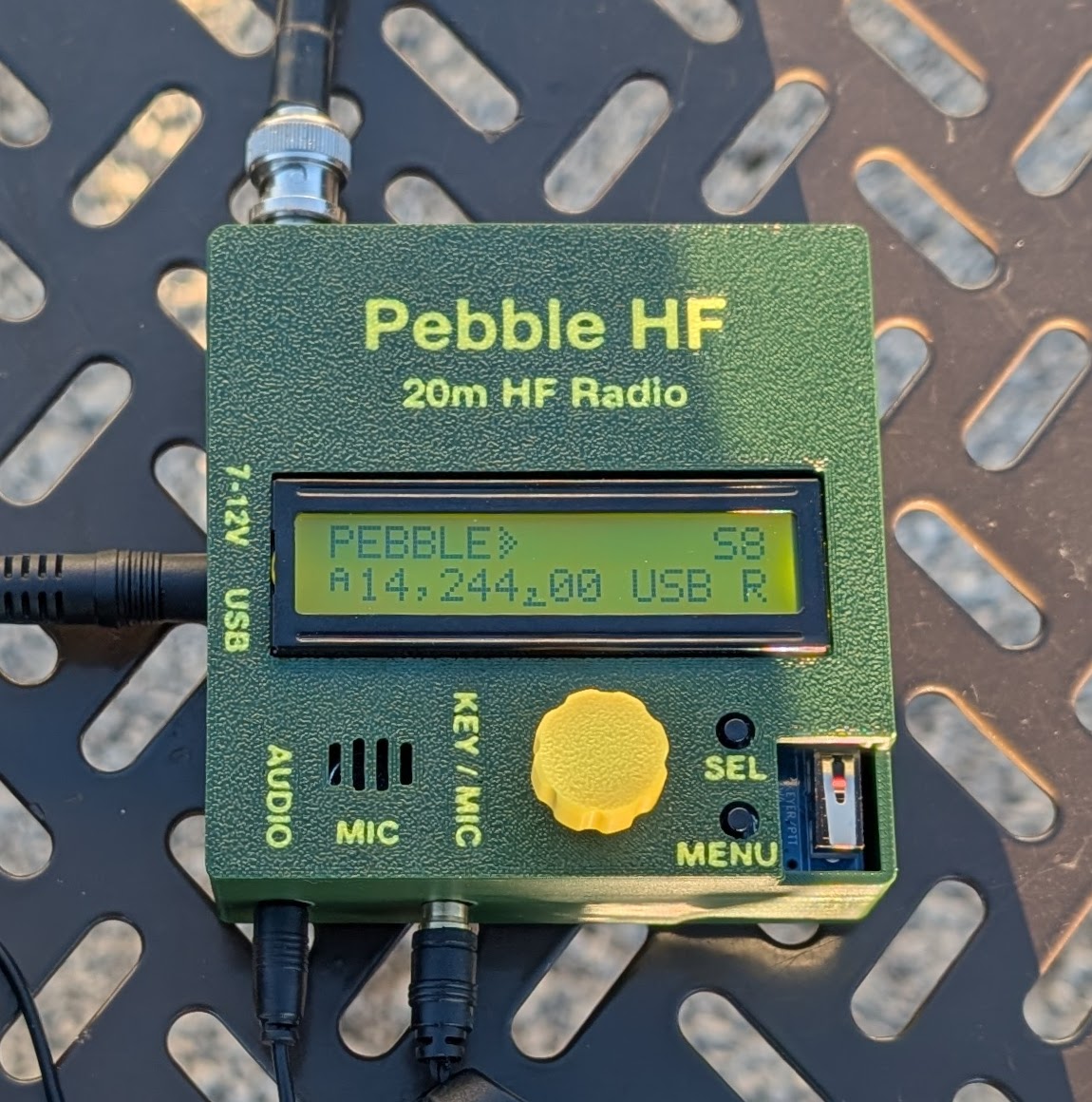
Quick Overview: What Is the Pebble HF?
- Ultra-Accessible Entry Price: Engineered to significantly lower the financial barrier to HF amateur radio, delivering a capable single-band transceiver kit for a fraction of the cost of commercial radios.
- 20-Meter Band Focus: Dedicated to the 14 MHz amateur band (14.000 to 14.350 MHz), offering consistent global propagation, compact portable antennas, and active activity across CW, SSB, and digital modes.
- Dual Power Architecture: Delivers up to 5 Watts PEP output on standard 12V to 13.8V DC power supplies, and approximately 1 Watt output powered directly from a standard 5V USB-C port or power bank.
- All-in-One On-Board Controls: Features built-in tactile microswitches that function as a CW straight key or paddle, plus an integrated electret microphone and PTT switch on the front PCB for cable-free field operation.
- Beginner-Friendly Assembly: All delicate surface-mount (SMD) components arrive pre-soldered from the factory. Builders only solder 14 through-hole connectors and controls in under an hour.
- uSDX Digital Signal Processing: Powered by an ATmega328P microcontroller running optimized DSP algorithms for digital filtering, noise reduction, and Class-E high-efficiency RF amplification.
- Open Source Hardware & Code: Developed collaboratively by the Ham Radio Duo (Mike N4FFF and Becky N4BKY) and Barb Aslan (WB2CBA) under open-source licenses.
What Is the Pebble HF?
The Pebble HF is an open-source, ultra-affordable 20-meter single-band QRP amateur radio transceiver kit delivering up to 5 watts of output power for CW, SSB, and digital modes.
┌─────────────────────────────────────────────────────────────────────────┐
│                      Pebble HF Architecture Overview                    │
└─────────────────────────────────────────────────────────────────────────┘
                                     │
         ┌───────────────────────────┼───────────────────────────┐
         ▼                           ▼                           ▼
┌──────────────────┐       ┌──────────────────┐       ┌──────────────────┐
│  DSP & Control   │       │  RF Synthesizer  │       │  RF Power Stage  │
│                  │       │                  │       │                  │
│ • ATmega328P MCU │       │ • Si5351A Clock  │       │ • Class-E Driver │
│ • 0.91" OLED UI  │◄─────►│   Generator      │◄─────►│ • 3x BS170 FETs  │
│ • DSP Filtering  │       │ • Quadrature     │       │ • 20m Low Pass   │
│ • Built-in CW/Mic│       │   Clock Output   │       │   Toroid Filter  │
└──────────────────┘       └──────────────────┘       └──────────────────┘
For decades, getting started on High Frequency (HF) amateur radio required a substantial upfront investment. New licensees eager to explore worldwide communications, Parks on the Air (POTA), and Summits on the Air (SOTA) frequently faced a daunting financial hurdle: commercial entry-level transceivers often cost between $500 and $1,200, while multi-band QRP kits require advanced soldering skills and intricate toroid winding.
Developed by the husband-and-wife YouTube team Ham Radio Duo (Mike N4FFF and Becky N4BKY) in close collaboration with legendary uSDX hardware architect Barbaros Aslan (WB2CBA), the Pebble HF dismantles this barrier. By concentrating on a single popular amateur band (20 meters) and pre-populating all complex surface-mount devices, the Pebble HF delivers a fully functional, pocket-sized QRP transceiver that anyone can build with basic soldering tools.
The uSDX Heritage and Technical Design
The Pebble HF builds directly upon the proven open-source uSDX (micro Software Defined Transceiver) architecture, which originally evolved from Guido Ten Dolle’s (PE1NNZ) revolutionary QCX-SSB firmware modifications.
┌─────────────────────────────────────────────────────────────────────────┐
│                     uSDX Signal Flow Architecture                       │
├─────────────────────────────────────────────────────────────────────────┤
│                                                                         │
│  TRANSMIT PATH (Class-E SSB / CW Generation)                            │
│  Mic / Key ──► ATmega328P ADC ──► Phase (Si5351A) ──► Class-E Amp (PA)  │
│                               └──► Amplitude (PWM) ───┘ (BS170 Array)   │
│                                                                         │
│  RECEIVE PATH (Direct Conversion SDR)                                   │
│  Antenna ──► BPF ──► FST3253 Tayloe Mixer ──► Audio ADC ──► ATmega DSP  │
│                      ▲                                      │           │
│                      └── I/Q LO (Si5351A)                   ▼           │
│                                                       Headphones / Spkr │
│                                                                         │
└─────────────────────────────────────────────────────────────────────────┘
1. Digital Signal Processing via ATmega328P
The core of the Pebble HF is the classic ATmega328P microcontroller running highly optimized DSP algorithms:
- Digital Filtering: Provides switchable audio filter bandwidths (including narrow 300 Hz and 500 Hz filters for CW and 1.8 kHz to 2.4 kHz filters for SSB voice).
- Automatic Gain Control (AGC): Fast, slow, and manual AGC algorithms keep weak signals intelligible while protecting hearing against sudden strong bursts.
- Noise Reduction: Basic DSP spectral subtraction suppresses steady background atmospheric hiss.
2. High-Efficiency Class-E Power Amplifier
Rather than relying on linear amplifiers that waste significant battery power as heat, the transmitter utilizes a Class-E switching amplifier driven by an array of parallel BS170 MOSFETs. In Class-E operation, the transistors switch on and off at zero voltage, yielding power efficiency upwards of 80% to 85%. This ensures that minimal energy is wasted, keeping the radio cool during extended field operations.
3. Direct Digital Synthesis (Si5351A)
An onboard Silicon Labs Si5351A programmable clock generator generates the local oscillator (LO) frequencies for both receive and transmit. It provides continuous tuning across the 20-meter band with selectable tuning steps from 10 Hz up to 1 MHz.
Hardware Specifications and Built-in Features
The Pebble HF integrates an array of field-oriented features into an ultra-compact circuit board weighing less than 4.7 ounces (132 grams).
┌─────────────────────────────────────────────────────────────────────────┐
│                      Pebble HF Hardware Layout                          │
├─────────────────────────────────────────────────────────────────────────┤
│                                                                         │
│  [ BNC ANT ]       [ 0.91" OLED DISPLAY ]        [ ROTARY ENCODER ]     │
│                     14.060.00 CW  -92dBm                                │
│                                                                         │
│  [ DC 12V ]        [ TACTILE CW KEYS ]           [ BUILT-IN MIC/PTT ]   │
│  [ USB-C 5V ]      (Left / Right Buttons)        (Electret Capsule)     │
│                                                                         │
│  [ PHONE/SPK ]     [ EXT KEY / PADDLE ]          [ DIGI AUDIO I/O ]     │
│                                                                         │
└─────────────────────────────────────────────────────────────────────────┘
Complete Technical Specifications
| Parameter | Specification Details |
|---|---|
| Operating Frequency | 20 Meters (14.000 MHz to 14.350 MHz) |
| Operating Modes | CW (Morse Code), SSB (USB/LSB Voice), Digital (FT8, JS8, FT4) |
| RF Power Output (12V DC) | ~5 Watts PEP / Carrier |
| RF Power Output (5V USB-C) | ~1 Watt QRPp |
| Current Consumption (RX) | ~80 mA to 100 mA (Display on) |
| Current Consumption (TX) | ~500 mA (at 1W USB) / ~900 mA (at 5W 12V) |
| Display | 0.91-inch High-Contrast I2C OLED (128×32 pixels) |
| Antenna Connector | Standard 50-Ohm BNC Jack |
| Audio Interface | 3.5mm Headphone Jack, 3.5mm External Key, 3.5mm Digital Line I/O |
| Built-in Peripherals | Onboard tactile microswitch CW buttons, Electret mic, PTT switch |
| Weight | 4.7 oz (132 grams) |
| Dimensions | Pocket-sized (~90 mm x 60 mm x 25 mm) |
What Makes the Pebble HF Unique?
1. Zero Accessories Required for Field Operation
Most portable transceivers require packing external microphone cords, separate CW paddles, and heavy battery packs. The Pebble HF places two tactile buttons directly beside the display that act as an instant straight key or electronic paddle, while a miniature electret capsule and PTT switch let you make voice contacts without plugging in an external handset.
2. True 5V USB-C Operation
You do not need to invest in expensive lithium iron phosphate (LiFePO4) battery packs and specialized chargers to get on the air. Plug a standard USB-C cable from any phone charger, solar power bank, or laptop USB port into the Pebble HF, and the radio transmits a clean 1-watt signal. When full 5-watt QRP power is required, simply plug a 12V battery into the DC barrel jack.
3. Digital Mode Ready
With dedicated 3.5mm audio in and out lines, connecting the Pebble HF to an audio interface (like a Digirig Mobile) or smartphone running FT8CN allows you to run FT8 and JS8Call digital modes from anywhere in the world.
The Build Experience: 14 Parts to Soldering Success
Traditional kit building often discourages newcomers due to complex multi-layer surface-mount components, microscopic IC packages, and tedious multi-tap transformer winding.
The Pebble HF changes this dynamic:
- Factory Pre-Assembled SMT: All surface-mount resistors, capacitors, the Si5351A synthesizer, the ATmega328P microcontroller, and the Tayloe switching mixer come pre-soldered and factory-tested on the PCB.
- Simple Through-Hole Soldering: Builders only install large, durable through-hole connectors:
- 1x BNC antenna connector
- 1x DC 5.5mm power jack
- 1x USB-C socket board
- 3x 3.5mm stereo audio jacks
- 1x Rotary encoder dial
- 1x 0.91″ OLED display header
- 3x Pre-wound low-pass filter inductors/toroids
- Tactile button caps and slide power switch
- Assembly Time: The entire build takes between 30 and 60 minutes for beginners with a standard 25W to 40W soldering iron.
Why 20 Meters Is the Ideal QRP Band
Choosing 20 meters (14 MHz) as the dedicated band for the Pebble HF is a calculated decision for portable operating:
- Reliable Propagation: 20 meters remains active throughout all phases of the 11-year solar cycle, consistently opening across continents during daylight and evening hours.
- Compact Portable Antennas: A resonant half-wave dipole for 20 meters is roughly 10 meters (33 feet) long end-to-end, making it easy to deploy in city parks, campsites, or hiking summits using a lightweight telescopic fiberglass mast or wire thrown into a tree.
- Vibrant Activity: 20 meters hosts the heaviest concentration of Parks on the Air (POTA) activators, Summits on the Air (SOTA) chasers, QRP calling frequencies (14.060 MHz CW and 14.285 MHz SSB), and global FT8 activity (14.074 MHz).
Technical Comparison: Pebble HF vs Other QRP Rigs
| Feature / Metric | Pebble HF | (tr)uSDX | QCX-Mini (QRP Labs) | Xiegu G106 |
|---|---|---|---|---|
| Band Coverage | 20 Meters Single-Band | 5 Bands (Multi-band) | Single Band (Selectable) | 80m to 10m General |
| RF Power Output | 5W (12V) / 1W (5V USB) | 4W to 5W (12V) | 5W (12V) | 5W (12V) |
| Kit Assembly Level | Pre-soldered SMT (14 TH parts) | Full Kit or Assembled | Heavy Through-Hole | Factory Built Only |
| Built-in Key & Mic | Yes (Onboard) | Built-in Mic only | External Required | External Required |
| Direct 5V USB Power | Native USB-C (1W) | USB (RX only/Modded) | 12V DC Only | 12V DC Only |
| Weight | 4.7 oz (132 g) | 5.3 oz (150 g) | 7.0 oz (200 g) | 25 oz (720 g) |
| Target Kit Price | ~$35 – $45 | ~$60 – $90 | ~$55 – $65 | ~$300 – $350 |
| License | Open Source | Open Source | Proprietary Firmware | Closed Commercial |
Frequently Asked Questions (FAQ)
What band does the Pebble HF operate on?
The Pebble HF is a single-band transceiver designed exclusively for the 20-meter amateur radio band (14.000 MHz to 14.350 MHz), supporting CW Morse code, SSB voice, and digital modes.
Do I need surface-mount soldering skills to build the kit?
No. All surface-mount (SMD) components come pre-soldered and tested on the circuit board from the factory. You only need to solder approximately 14 through-hole connectors and controls.
Can Pebble HF transmit SSB voice and digital modes like FT8?
Yes. The transceiver includes an onboard electret microphone and PTT switch for SSB voice, and provides 3.5mm line audio input and output jacks to connect sound card interfaces for FT8 and JS8Call.
How much power does the radio output on USB power?
When powered by a standard 5V USB-C connection or portable battery bank, the Pebble HF transmits approximately 1 watt of RF power. Connecting a 12V DC power source increases output to full 5-watt QRP power.
Is the Pebble HF hardware and firmware open source?
Yes. The Pebble HF design is fully open source. Hardware schematics are created in collaboration with WB2CBA, and the firmware repository is publicly accessible under the GPL open-source license.
Sources and Further Reading
- Pebble HF Official Project Hub
- Pebble HF Assembly & Documentation Portal
- Pebble HF Open Source Firmware Repository (GitHub)
- Barbaros Aslan (WB2CBA) uSDX Project & Hardware Designs
- Ham Radio Duo Official YouTube Channel
73 de 9M2PJU



Post Comment