General Interest
history
Agent Orange, B.G. Burkett, book review, Colby Award, fake veterans, Glenna Whitley, media criticism, military history, military impostors, PTSD, Stolen Valor, Stolen Valor Act, United States v Alvarez, Verity Press, Vietnam veterans, Vietnam War, Winter Soldier
9M2PJU
0 Comments
Stolen Valor: The Book That Exposed Fake Vietnam Heroes and Reclaimed History
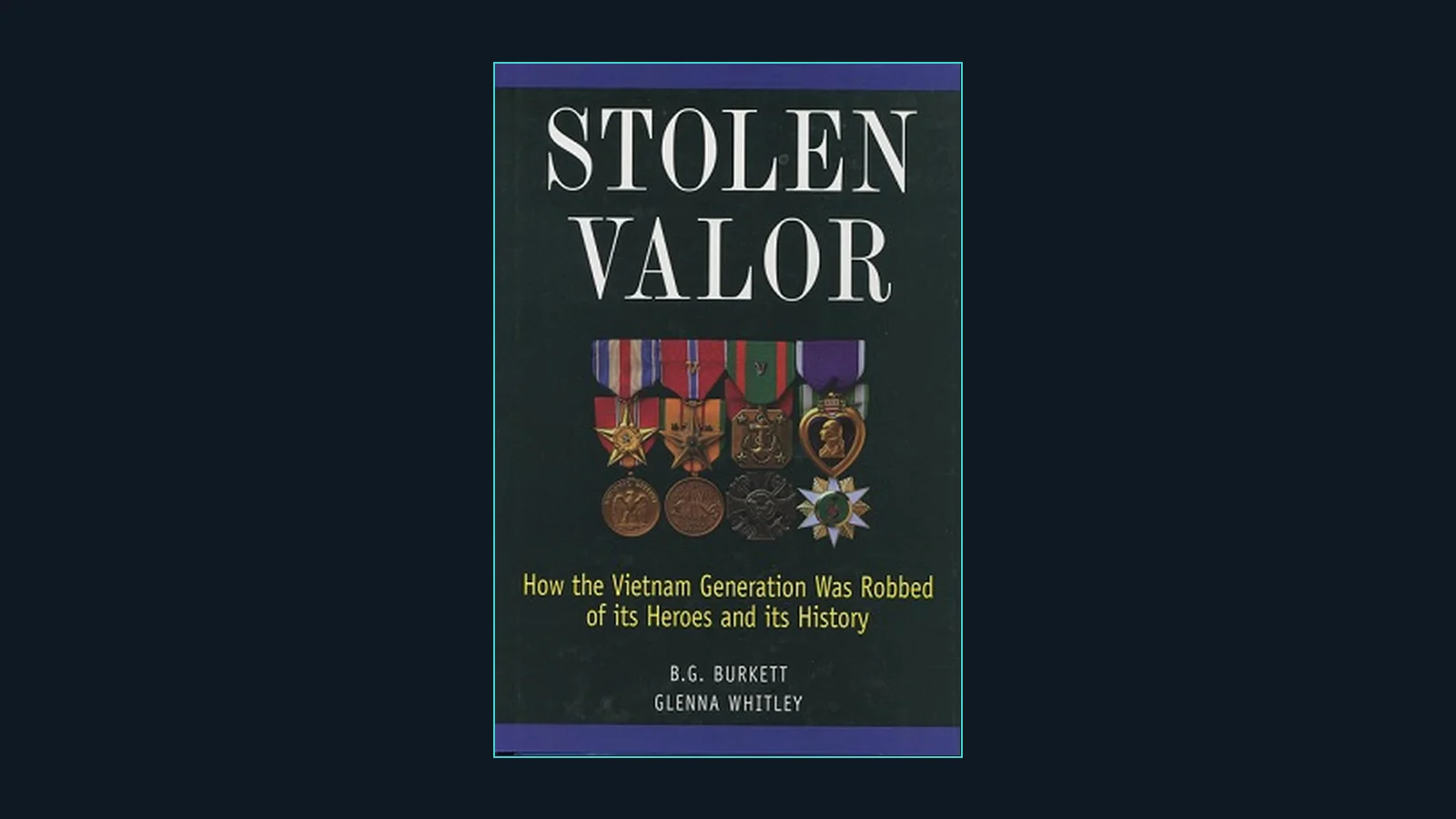
Stolen Valor Vietnam book by B.G. Burkett and Glenna Whitley is the 1998 investigative exposé that challenged the popular image of the Vietnam veteran. It used military personnel records to confront imposters, question PTSD and homelessness statistics, dispute Agent Orange narratives, and argue that media credulity had robbed genuine veterans of their history.
TL;DR: Stolen Valor Vietnam book (Verity Press, 1998, 692 pages) by B.G. Burkett and Glenna Whitley argues that fake veterans and uncritical media created a false image of Vietnam veterans. Using FOIA personnel records, it profiles imposters, disputes PTSD, casualty and Agent Orange statistics, won the 2000 Colby Award, and helped inspire the Stolen Valor Act of 2005. Read it as essential investigative history, but read the critics too.
What Stolen Valor Is
Stolen Valor is a 1998 investigative history book that argues imposters, inflated statistics and uncritical reporting created a false public image of Vietnam veterans and stole recognition from those who actually served.
The full title says the mission plainly: Stolen Valor: How the Vietnam Generation Was Robbed of Its Heroes and Its History. Authors B.G. Burkett and Glenna Whitley present it as a corrective, not a memoir and not an academic monograph. It is 692 pages, self published by Verity Press in Dallas, Texas, built around document checks, case files, statistical reanalysis and media criticism.
Three ideas carry the whole book:
- Many highly publicized stories of Vietnam trauma came from people whose service records show they never served in Vietnam, never saw combat, or never served at all.
- Widely repeated numbers about veteran suicide, homelessness, drug addiction, unemployment and disproportionate minority casualties didn’t match official records when checked.
- Reporters, filmmakers, advocacy groups and the Veterans Administration repeated these stories without verifying DD-214 discharge papers, personnel files or award citations.
Whether you accept every conclusion or not, the book changed how newsrooms, veterans groups and later Congress treated claims of military heroism. It’s the direct ancestor of the modern phrase stolen valor and of federal stolen valor law.
Meet the Authors
B.G. Burkett: the veteran investigator
Bernard Gary Burkett served in the U.S. Army during the Vietnam era and later worked as a stockbroker and businessman in Texas. His interest in the subject began in the 1980s when he encountered fellow veterans whose war stories didn’t add up and when he saw local news profiles of supposed heroes, POWs and Special Forces operators that collapsed under basic record checks.
Burkett spent years filing Freedom of Information Act requests with the National Personnel Records Center in St. Louis and the service award branches. He compared newspaper claims, book jackets, VA counseling files and public speeches against morning reports, orders, DD-214s and decoration citations. His C-SPAN appearance on Stolen Valor lays out this method in his own words: get the name, get the paper, compare the two.
Burkett was later inducted into the U.S. Army Ranger Hall of Fame for his advocacy work on behalf of veterans, a point supporters cite as evidence of standing in the Ranger community.
Glenna Whitley: the investigative reporter
Glenna Whitley was an investigative journalist in Dallas, known for long form crime and corruption reporting. She gave the project its structure, sourcing discipline and narrative pacing. Without her, the book would likely have remained a file cabinet of record extracts. With her, it became a readable four part case with scenes, interviews and document trails.
The partnership matters because the book is both a veteran polemic and a journalism critique. Whitley understood newsroom habits: deadline pressure, reluctance to question a sympathetic veteran on camera, and the temptation to let a dramatic biography carry a Veterans Day feature. A later Columbia Journalism Review retrospective made the same point, arguing that reporters who read Stolen Valor would never again file a hero profile without checking records first.
Historical Context: Why 1998 Mattered
To understand why the book landed so hard, recall what the American public believed about Vietnam veterans in the 1980s and early 1990s.
The dominant image
- The troubled loner of First Blood (1982), Born on the Fourth of July (1989) and a wave of television dramas.
- News features linking homelessness, drug use, suicide and crime directly to Vietnam service.
- Claims, repeated in classrooms and editorials, that Vietnam veterans suffered uniquely high suicide rates, that one in four homeless men was a Vietnam veteran, that African Americans bore a disproportionate share of deaths, and that Agent Orange had created a hidden health catastrophe among ground troops.
- A parallel boom in memoirs and speaking careers built around covert operations, POW escape, secret Cambodia missions and mass atrocity confessions.
Burkett argued that much of this image rested on three weak foundations: unverified personal testimony, advocacy statistics extrapolated from small or skewed samples, and entertainment shorthand that audiences mistook for sociology.
The records revolution
The timing was important. By the mid 1990s, FOIA practice had matured, the National Personnel Records Center would answer researcher requests, and award rolls for top decorations were obtainable. A private citizen with patience and postage could do what few reporters did: pull the file.
That is the core thrill of the book for history readers. It is pre internet open source intelligence. No hacked database, no leak site, just forms, waiting periods, microfiche and cross filing. For readers of HamRadio.my who enjoy archival digging, callsign verification and QSL research, the method will feel familiar. The same instinct that checks a logbook against a cluster spot applies here: trust, but pull the record. The site About page describes a similar respect for documented history over lore.
Inside the Book: Part by Part Synopsis
The book runs in four parts plus appendices. Each part has a distinct target.
Part I: The Image
Part I opens with Burkett’s own Army service, then argues that the veteran-as-victim image was manufactured.
Key chapters cover:
- Hollywood and television portrayals that turned a draftee army into a shorthand for instability.
- The draft era anger that made veterans convenient symbols for broader anti war and anti government feeling.
- Early imposter cases where local heroes unraveled when asked for orders or citations.
- How well meaning counselors, clergy and journalists amplified stories because challenging a veteran felt disrespectful.
The takeaway is blunt: sympathy suppressed skepticism. Once a man said he was a tortured ex POW or a Special Forces assassin, few listeners asked for paper.
Part II: The Trauma of War
Part II tackles post traumatic stress disorder, the Veterans Administration treatment system, and atrocity narratives.
Arguments include:
- PTSD diagnoses for Vietnam veterans grew rapidly after the diagnosis entered DSM-III in 1980, with VA disability incentives and advocacy outreach expanding the pool.
- Some claimants who became public symbols of combat trauma had no Vietnam service, no combat specialty, or brief stateside careers according to personnel files reproduced in the book.
- The famous Winter Soldier Investigation testimony and similar atrocity accounts were repeated without corroborating operational records.
- Homelessness and suicide figures attributed to Vietnam service were built on surveys that counted anyone who served during the era, not only in theater, or that extrapolated from shelter samples.
You don’t need to agree with every statistical challenge to see why this section provoked professionals. It questioned livelihoods, clinical practice and moral narratives at once. Supporters call it overdue auditing. Critics call it minimization. Both sides still cite it.
Part III: Stolen Valor
Part III is the heart of the book and the source of its title. It profiles individuals who wore medals, ribbons and badges they didn’t earn.
Method in each case is consistent:
- Quote the public claim from a newspaper, book jacket, broadcast or speech.
- Publish the personnel summary obtained by FOIA: dates of service, military occupational specialty, units, foreign service, awards listed on the DD-214.
- Note the gap between the two and ask why no reporter, publisher or veterans group checked.
Named examples include William Northrop and Frank Dux, among others whose stories had circulated in print and on screen. Some cases involve outright civilian imposters. Others involve real veterans who inflated a support assignment into reconnaissance work, a stateside tour into a combat tour, or a Commendation Medal into a Silver Star.
The section also disputes the claim that African American troops died in disproportionate numbers. Burkett cites casualty databases showing Black fatalities roughly proportional to or slightly below their share of the force in theater, and argues that the opposite impression came from counting errors and selective reporting.
Practical lesson for readers: rank, unit patches, scrolls, tabs and ribbons are claims, not proof. Proof is orders, citations and verifiable dates.
Part IV: Victims and Heroes
Part IV turns to Agent Orange and to advocacy organizations.
Points raised:
- Ranch Hand aircrew who flew C-123 herbicide spray missions are profiled as living without the catastrophic health outcomes predicted for all exposed personnel.
- Epidemiological studies available in the 1990s, in Burkett’s reading, didn’t support sweeping claims about birth defects, mass cancer clusters or universal contamination among ground troops.
- The Vietnam Veterans of America, dubbed Vietnam Victims of America in the book, is accused of building membership and fundraising around victimhood rather than service pride.
This is the most contested section today because later medical reviews, presumptive VA conditions and dioxin science evolved after 1998. Read it as a snapshot of the 1990s debate, not as current toxicology guidance.
Appendices: the reference core
The appendices are why researchers keep the book on the shelf:
- Full lists of Medal of Honor recipients for Vietnam.
- Distinguished Service Cross, Navy Cross and Air Force Cross recipient lists.
- A roster of military POWs who survived captivity.
Before searchable online award databases matured, these pages gave reporters and veterans groups a quick check against the most commonly faked top awards. If a speaker claimed a Navy Cross and was absent from the list, that was grounds for a records request.
Key Investigations and Methods
The book’s lasting value is methodological. It teaches a verification workflow anyone can adapt:
- Collect the exact claim: name spelling, branch, years, unit, job, awards, wounds, POW status.
- Request the Official Military Personnel File from the National Personnel Records Center or the relevant service archive.
- Compare the DD-214, orders and citations against the story, watching for era service versus Vietnam service, support versus combat arms, and attendance versus graduation in elite schools.
- Check award rolls for high decorations, which are narrow and well documented.
- Ask for corroboration: orders, photos with verifiable context, contemporaneous letters, buddies with checkable records.
Burkett also relied on:
- Morning reports and unit histories to place individuals at locations on dates.
- School graduation lists for Ranger, Special Forces, SEAL and flight training.
- POW debrief archives to test captivity claims.
- Newspaper morgues to show how the same false biography moved from outlet to outlet.
Limitations are real. The 1973 St. Louis fire destroyed millions of Army and Air Force personnel files, so absence of paper isn’t always proof of lying. Name variations, sealed records and privacy redactions complicate matches. Good researchers state uncertainty. The book is strongest when it shows positive contradictory evidence, such as active duty dates that exclude claimed combat tours, rather than when it argues from missing pages alone.
Myths Versus Records: The Central Claims at a Glance
This table summarizes the book’s position, not settled science. Use it as a study guide, then check primary sources.
| Popular claim in the 1980s to 1990s | What Burkett and Whitley argue the records show | Why it matters |
|---|---|---|
| Most Vietnam veterans are broken, homeless or addicted | Era veterans tracked close to civilian peers on employment, income and crime once in theater service is separated from era service | Reframes policy from pity to accurate support |
| Veteran suicides dwarfed combat deaths | Suicide studies cited small samples, loose veteran definitions and extrapolation | Affects funding, screening and public fear |
| One quarter of homeless men are Vietnam veterans | Shelter surveys counted era veterans and relied on self report without file checks | Shapes housing and outreach priorities |
| Black troops died disproportionately | Casualty files show Black deaths roughly proportional to troop strength in theater | Corrects a painful racial narrative with data |
| Atrocities were routine and officially ordered | High profile confessions came from people with thin or no combat records | Protects unit history and rules of engagement debate |
| Agent Orange doomed all who served near it | Ranch Hand crews and early epidemiology did not show the predicted universal toll | Influences compensation and risk communication |
| Top valor awards were common among storytellers | Medal of Honor, Service Crosses and POW lists are short and checkable | Gives reporters a fast fraud filter |
| Challenging a veteran is disrespectful | Polite verification protects real veterans from fraud | Core ethic behind modern stolen valor activism |
For Vietnam War background, start with the general history, then read the specialist sources below.
Publication Facts and Reception
- Title: Stolen Valor: How the Vietnam Generation Was Robbed of Its Heroes and Its History
- Authors: B.G. Burkett with Glenna Whitley
- Publisher: Verity Press, Dallas, Texas
- Year: 1998
- Length: 692 pages, hardcover and paperback
- Approach: self published investigative history with FOIA documents, photos of records, and award appendices
Reception split quickly:
- Senator Jim Webb praised it as one of the most courageous books of the decade for confronting media myths about veterans.
- It won the Colby Award for military writing in 2000, which brought it into libraries and military reading lists.
- The Vietnam Helicopter Pilots Association review called it a milestone and recommended it to everyone affected by the war.
- HistoryNet praised the exposure of frauds as a tribute to those who actually served.
- The Pritzker Military Museum and Library hosted the authors, signaling institutional interest beyond partisan circles.
Journalism impact was distinct from veteran impact. The Columbia Journalism Review piece argued that Stolen Valor exposed routine newsroom failure to verify service. After the book, checking a DD-214 before airing a hero package became harder to skip.
From Book to Law: The Stolen Valor Acts
The book didn’t create law by itself, but it supplied language, cases and moral urgency used by later campaigners.
Timeline:
- 1998: Stolen Valor published.
- 2000: Colby Award raises national profile.
- 2005: Congress passes the Stolen Valor Act of 2005, making it a federal misdemeanor to falsely claim receipt of military decorations or medals.
- 2007 to 2012: Xavier Alvarez, an elected official in California, is prosecuted for false claims of Marine service and a Medal of Honor. His case becomes United States v. Alvarez.
- 2012: Supreme Court strikes down the 2005 Act 6 to 3 on First Amendment grounds. Lying about medals, without more, is protected speech.
- 2013: Congress passes the narrower Stolen Valor Act of 2013, which criminalizes false claims made with intent to obtain money, property or other tangible benefit.
Practical meaning today:
- Simply bragging at a bar is generally not a federal crime after Alvarez.
- Using a false record to get VA benefits, jobs, donations or contracts can be prosecuted under the 2013 Act and under fraud statutes.
- State stolen valor laws, military impersonation rules and platform policies add separate layers.
The book’s phrase now labels a whole category of activism: citizen investigators who film confrontations, database builders who preserve award citations, and reporters who treat valor claims as checkable facts.
Criticism and Honest Limits
A serious review must include the pushback. The strongest critique came from Vietnam Veterans Against the War, which accused the book of partisanship, research errors and unfair treatment of Winter Soldier participants.
Common objections:
- Selective sampling: profiling the worst imposters doesn’t prove that PTSD, homelessness or Agent Orange effects are rare among genuine combat veterans.
- Statistical disputes: later researchers defend higher trauma and health burdens using longitudinal studies unavailable or downplayed in 1998.
- Tone: calling advocates victims profiteers alienates readers who might accept narrower fraud findings.
- Self publication: no university press peer review, uneven citations by modern standards, and occasional overreach from missing records.
- Medical limits: neither author is a psychiatrist or toxicologist. Their reading of PTSD and dioxin literature is lay advocacy, not clinical guidance.
How to handle this as a reader:
- Treat fraud cases and statistical claims separately. A proven imposter doesn’t disprove PTSD in others.
- Check dates. Medical and demographic science moved after 1998. Use VA and peer reviewed updates alongside the book.
- Watch for absence of evidence arguments where the St. Louis fire or sealed files may explain gaps.
- Read the VVAW response and the HistoryNet review back to back. The contrast sharpens judgment.
None of these limits erase the core contribution: verification works, and newsrooms needed it.
How to Verify Service Today Without Repeating Old Mistakes
If the book inspires you to check a claim, do it lawfully and respectfully.
- Start with consent: ask the person for a redacted DD-214, orders or citation. Many legitimate veterans will provide them.
- Use official channels: the National Personnel Records Center handles Official Military Personnel File requests. Next of kin, veterans and authorized researchers have defined paths.
- Check public award databases for top valor decorations before alleging fraud. Absence from a Medal of Honor or Service Cross list is significant because those lists are broad.
- Distinguish era, theater and combat: serving 1969 to 1971 isn’t the same as serving in Vietnam, and serving in Vietnam isn’t the same as serving in combat.
- Distinguish attendance and graduation: taking a Ranger or Special Forces course differs from earning the tab or beret.
- Don’t dox, confront or film people based on suspicion alone. Refer benefit fraud to the VA Office of Inspector General or law enforcement.
- Remember privacy: personnel files contain sensitive data. Share only what is necessary to correct the public record.
For amateur radio parallels, the same discipline applies to license claims, callsign histories and contest scores: check the authoritative log, not the story.
Who Should Read It and How to Read It Critically
Read Stolen Valor if you:
- Study Vietnam War memory, media history or veterans policy.
- Report on veterans, remembrance events or military charities.
- Serve on award boards, hiring panels or nonprofit vetting teams.
- Are a veteran tired of seeing service inflated by others.
- Collect militaria, oral histories or unit archives and need fraud awareness.
Suggested reading order for a busy reader:
- Chapters on method plus Part III case files first, for the investigative core.
- Part I second, for media and cultural context.
- Part II and Part IV last, with a notebook open, because those sections demand cross checking against newer medical and demographic work.
- Appendices as needed when you encounter a specific award claim.
Pair it with:
- A general Vietnam War history for operational context.
- Current PTSD resources from VA for clinical updates.
- The VVAW critique and CJR media analysis for balance.
- Court opinions in Alvarez for First Amendment limits on punishing lies.
Sources and Further Reading
- Stolen Valor book page on Wikipedia
- B.G. Burkett on C-SPAN discussing Stolen Valor
- Vietnam Helicopter Pilots Association review of Stolen Valor
- HistoryNet book review of Stolen Valor
- Columbia Journalism Review: A Failure of Skepticism on Stolen Valor
- Vietnam Veterans Against the War response: Stolen Valor, Stolen Legacy
- Stolen Valor Act of 2005 background
- United States v. Alvarez Supreme Court case
- Stolen Valor Act of 2013
- Colby Award for military writing
- National Personnel Records Center: request military service records
- Vietnam War overview
- PTSD overview
- VA National Center for PTSD
- Pritzker Military Museum and Library author event
- HamRadio.my homepage
- About 9M2PJU on HamRadio.my
73 de 9M2PJU








Post Comment