Can an Apple AirTag Actually Save You If You Get Lost in a Forest With No Cell Service?
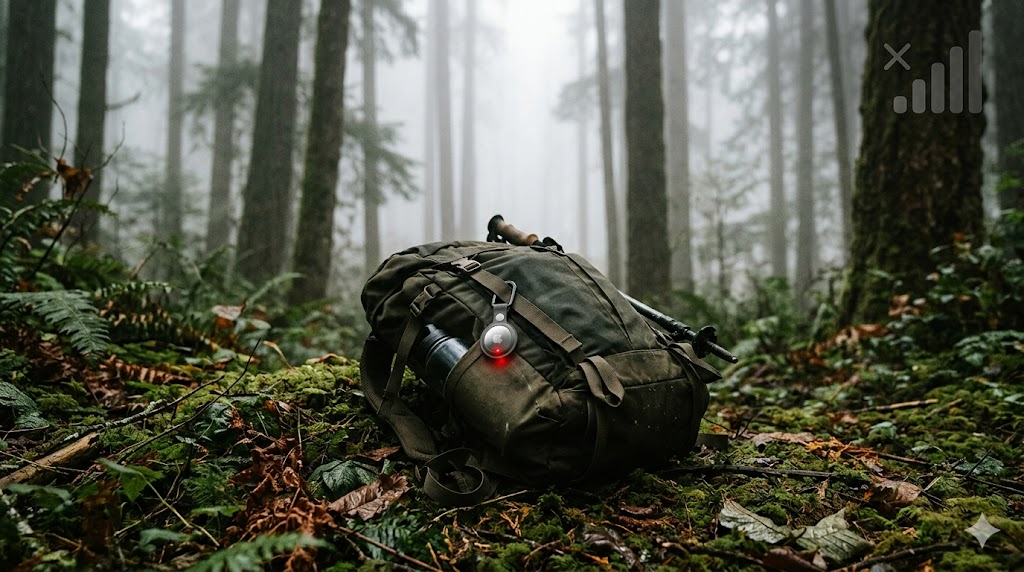
The Technical Answer: No. Here Is Why.
There is a growing misconception that a RM129 AirTag can double as a backcountry safety device. It cannot. The way AirTags work makes them useless for search and rescue in areas with no people and no cell coverage. This is not an opinion. It is a hardware limitation.
1. AirTags Do Not Have GPS or Satellite Capability
An AirTag does not know where it is. There is no GPS chip inside. It cannot connect to satellites and it cannot send an SOS.
All an AirTag does is broadcast an encrypted Bluetooth Low Energy signal to its immediate surroundings. That signal contains no location data. It is useless on its own.
2. The Find My Network Requires Other People
For an AirTag’s location to appear on a map, three things must happen at the same time:
- The AirTag broadcasts its Bluetooth signal.
- An iPhone, iPad, or Mac owned by someone else passes within approximately 40 meters.
- That person’s device has an internet connection and uploads the encrypted location to Apple’s servers.
In a forest with zero people and zero cell coverage, steps 2 and 3 fail. No one is there to pick up the signal. Even if someone was, their phone cannot upload anything without service.
The result is that your location in the Find My app freezes at the “Last Seen” point. If you lost coverage at the trailhead and hiked 15 km in, rescuers will still see the trailhead. The AirTag will not update from inside the forest.
3. Bluetooth Is Not a Search and Rescue Technology
The effective range for Precision Finding is 10 to 40 meters in open conditions. That is not a search radius. It is a homing range used once rescuers are already very close to the subject.
An AirTag cannot help a SAR team narrow down a 50 square kilometer search area. It only helps when the team is within shouting distance and needs to pinpoint an unconscious person in thick brush.
When AirTags Do Work for Rescue
AirTags have assisted in real rescues, but the conditions matter. They work when:
- The area has foot traffic. A lost dog in California was found because its AirTag collar pinged off a rescuer’s iPhone as they searched drainage tunnels.
- The final search phase. A man who fell in New Jersey was located after police heard his AirTag “ping” when they were close. It acted as an electronic whistle for the last 40 meters.
Both cases required other iPhones to be present in the search area.
The Correct Tools for No Coverage Areas
If your goal is to call for help from anywhere without relying on strangers, you need a device that talks directly to satellites.
| Device | SOS Without People/Coverage? | How It Works |
|---|---|---|
| AirTag | No | Needs nearby iPhone with internet |
| PLB (Personal Locator Beacon) | Yes | Transmits 406 MHz SOS directly to Cospas-Sarsat satellites |
| Garmin inReach / Zoleo | Yes | Two way satellite texting and SOS via Iridium network |
PLBs and satellite messengers do not need cell towers or other people. They send your GPS coordinates straight to rescue coordination centers.
The Bottom Line
Using an AirTag to find your keys at a campsite is smart. Relying on an AirTag to save your life in a remote forest with no service is a dangerous misunderstanding of the technology.
The cost of a PLB is high until you compare it to the cost of a multi day SAR operation or the cost of a life.
If you hike off grid, carry a PLB. Tell someone your itinerary. An AirTag can come along as a backup noisemaker for when rescuers are already on top of you. It should never be your primary plan.





Post Comment