amateur radio
history
249 Signal Squadron, 9H3FZ, 9M2DQ, 9M2GF, 9M2NF, 9M2PO, 9M2RH, 9V1PY, amateur radio history, ARRL, Barrow in Furness, Commonwealth Brigade, Cumbria, cw, DL5YO, FISTS, G3ZFZ, Gordon Gibson, GQRP, Kedah, KL, Malaysian Royal Signals, melaka, Parkrun, Penang, RAAF Butterworth, RAOTA, Royal Signals, RSARS, RSGB, silent key, SKCC, Terendak
9M2PJU
1 Comments
Gordon Gibson G3ZFZ: Royal Signals Veteran and 9M2RH Melaka Club Station Operator
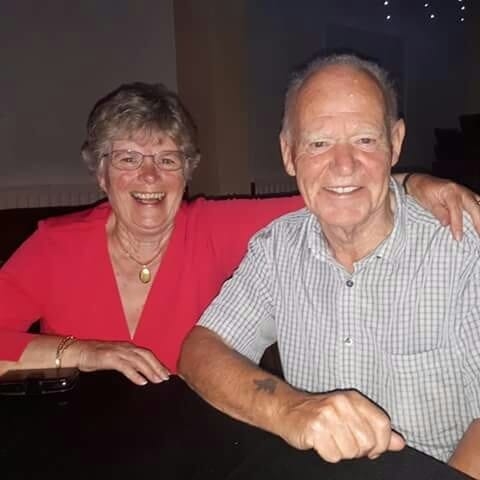
Gordon Gibson G3ZFZ, A QRZ Biography
Gordon Gibson holds the British callsign G3ZFZ, issued on 17 March 1970 but his ham radio story began a year earlier, on the other side of the world.
According to his QRZ.com biography, Gordon was:
- First licensed in 1969 as 9V1PY (Singapore)
- DL5YO in Germany, 1970-71
- Also licensed as 9H3FZ (Malta)
- G3ZFZ issued 17 March 1970
- An operator of club stations 9M2RH later 9M2KT, 9M2KTC (Terendak Camp, Melaka, Malaysia), DL2VR (Verden, Germany) and DL5YW (Berlin, Germany)
- 99% CW, 1% phone, no interest in HF digital modes
- Retired from full-time work on 12 April 1996
- Member of RSGB, ARRL, RSARS (life member #053), FISTS, SKCC, RAOTA and GQRP
- Other interests: running (Parkrun, member of the Parkside Panthers running group), walking, and watching the natural world as a member of the Cumbria Wildlife Society
Gordon is a CW man to the bone. “Activity is 99% CW, 1% Phoney,” he writes on QRZ, “no interest in HF digital modes.” In an era where FT8 dominates the HF bands, that kind of lifelong dedication to Morse code is increasingly rare and increasingly precious.
9M2RH, The Terendak Camp Club Station in Melaka
In 1969, Gordon was serving with 249 Signal Squadron and was licensed as 9V1PY in Singapore. He was an occasional visitor to Terendak Camp in Melaka (Malacca), the home of the 28th Commonwealth Brigade, a British and Commonwealth military base that housed units from the UK, Australia and New Zealand during the Confrontation and the early post-Confrontation period.
At Terendak, the amateur radio club station was 9M2RH (later 9M2KT, 9M2KTC). Gordon operated 9M2RH as one of several Royal Signals operators who kept the station on the air. In his own words, the station ran:
- A KW Vespa transceiver (a classic British HF transmitter from the 1960s)
- A Yaesu FTDX-400 transceiver
- A cubical quad antenna
The KW Vespa was a robust, well-regarded British-made HF transmitter, and the Yaesu FTDX-400 was one of the early solid-state transceivers of the era. A cubical quad antenna, a multi-element loop antenna, was a serious piece of work for a tropical HF station, offering gain and a low noise angle that suited the equatorial conditions of Melaka.
Terendak Camp is still active today. It is now the home of the 10th Para Brigade, the Malaysian Army’s paratrooper formation, and the 10th Signals Squadron (paratrooper) is based there. The camp’s signals lineage runs directly from the Commonwealth era to the present-day Malaysian Royal Signals Regiment.
The Royal Signals Connection: 9M2RH, 9M2NF, 9M2GF and 9M2PO
When asked about other 9M2 callsigns of the era, he remembered a network of Royal Signals and British expatriate operators across Peninsular Malaysia in the late 1960s and early 1970s:
- 9M2NF, Dennis Bowden, G3PNF, based in Kuala Lumpur. Royal Signals. Silent key.
- 9M2GF, Tom, based in Kuala Lumpur. Royal Signals. Silent key.
- 9M2PO, Gordon Foster, G3POD, a military policeman. (Gordon suggests contacting him via QRZ.com.)
- 9M2DQ, James Pershouse, a rubber plantation manager in Kedah. Not Royal Signals, but a keen DXer. Silent key.
- 9M2BQ, with the police in Kuala Lumpur. Name not recalled.
Gordon himself was Royal Signals, as were 9M2NF (Dennis) and 9M2GF (Tom). 9M2PO (Gordon Foster) was a military policeman. This small cluster of callsigns paints a picture of a tight expatriate and military ham radio community in late-1960s Malaysia, a community that, like 9M2MT at Sungai Besi, has largely faded from the air and from living memory.
9M2DQ James Pershouse, A Rubber Planter and DXer in Kedah
One of the most evocative stories Gordon shared was about 9M2DQ, James Pershouse, who managed a rubber plantation in Kedah, northern Peninsular Malaysia.
James was a serious DXer. At his Kedah station he ran a switchable terminated rhombic antenna, a large, multi-wavelength wire antenna that is among the most efficient and directive HF antennas ever built, but which requires a great deal of real estate. A rubber plantation, with its long straight rows and open space, was the perfect QTH for one. He paired the rhombic with Drake transceivers, premium American HF gear of the era.
When James fell ill and had to leave Kedah, he and his wife Daisy moved to Penang. There, with less space, he had to “settle for” a triband beam, a Yagi covering 20, 15 and 10 metres. For a man who had operated a rhombic, that was a comedown, but a triband beam on a tower in Penang was still a serious station.
James Pershouse is a silent key now. His story is preserved in a tribute by 9M2ESM at 9m2esm.blogspot.com, which also touches on his connection to Tunku Abdul Rahman, Malaysia’s first Prime Minister.
From Malaysia to Germany: DL5YO and the Cold War
In 1971, Gordon was posted from Malaysia to Germany, where he was licensed as DL5YO. He also operated the German club stations DL2VR in Verden and DL5YW in Berlin.
This was the height of the Cold War, and British Forces Germany maintained a large signals presence. For a Royal Signals operator, a posting to Germany meant working on NATO communications one day and chasing DX on the HF bands the next. Berlin, in particular, was a unique ham radio environment, a divided city where operators in the Western sectors could work both East and West, and where the club stations of the Allied forces were well-known on the bands.
Gordon’s callsign trail, 9V1PY → 9M2RH → DL5YO → G3ZFZ, with stops in Malta as 9H3FZ, is a classic Royal Signals operator’s passport. It traces the arc of a military signals career across the declining British Empire and into Cold War Europe.
A Lifelong CW Operator
Gordon is unambiguous about his operating preferences: 99% CW, 1% phone, no digital.
This places him in a distinguished lineage of CW operators who learned Morse as a professional military skill and carried it into amateur radio as a lifelong craft. His memberships tell the story:
- FISTS, the International Morse Preservation Society, dedicated to keeping CW alive on the HF bands
- SKCC, the Straight Key Century Club, for operators who use mechanical (non-electronic) keys
- GQRP, the G-QRP Club, for low-power (QRP) operators
- RAOTA, the Royal Artillery Old Timers Amateur Radio Association
- RSARS, the Royal Signals Amateur Radio Society, of which Gordon is a life member (#053)
- RSGB and ARRL, the UK and US national amateur radio societies
At 83, Gordon no longer gets on the HF bands much. He sticks mainly to 80, 40 and 30 metres, ragchewing on 80m CW, the traditional home of British CW ragchewers.
Terendak Today
Terendak Camp in Melaka is still an active Malaysian Army base. It is now the home of the 10th Para Brigade, the Malaysian Army’s airborne formation. The 10th Signals Squadron (paratrooper) is based there.
The camp that Gordon knew as a 249 Signal Squadron operator in 1969, with its KW Vespa, Yaesu FTDX-400 and cubical quad on 9M2RH, is now a paratrooper base. The signals lineage.
Gordon Off the Air
Gordon Gibson is now 83 and lives in Barrow-in-Furness, Cumbria, in the northwest of England. His ham radio activity has wound down to occasional CW ragchews on 80 metres. His energies these days go to running, he is a member of the Parkside Panthers running group and participates in Parkrun, the free weekly 5K event, and to walking and watching the natural world as a member of the Cumbria Wildlife Society.
Cumbria, with the Lake District on its doorstep, is about as far from the rubber plantations of Kedah and the cubical quad at Terendak as you can get within the British Isles. But Gordon’s QRZ biography, with its roll-call of callsigns from Singapore to Malta to Germany to Malaysia, is a reminder that ham radio operators carry the world with them, wherever they end up.
73 de 9M2PJU (RSARS #4269)
Related Reading
- 9M2MT, History of the Malaysian Royal Signals Regiment Amateur Radio Club Station, the Sungai Besi Signals club station
- About 9M2PJU, Malaysian Amateur Radio Operator
- Guide to Obtain an Amateur Radio License in Malaysia
External Sources
- G3ZFZ on QRZ.com, Gordon Gibson’s biography and logbook
- Royal Signals Amateur Radio Society (RSARS), the society for Royal Signals amateur radio operators
- FISTS, The International Morse Preservation Society (FISTS CW Club)
- SKCC, Straight Key Century Club
- G-QRP Club, low-power amateur radio
- 9M2DQ James Pershouse tribute at 9m2esm.blogspot.com


1 comment