W1AW, The Hiram Percy Maxim Memorial Station: The Voice of Amateur Radio
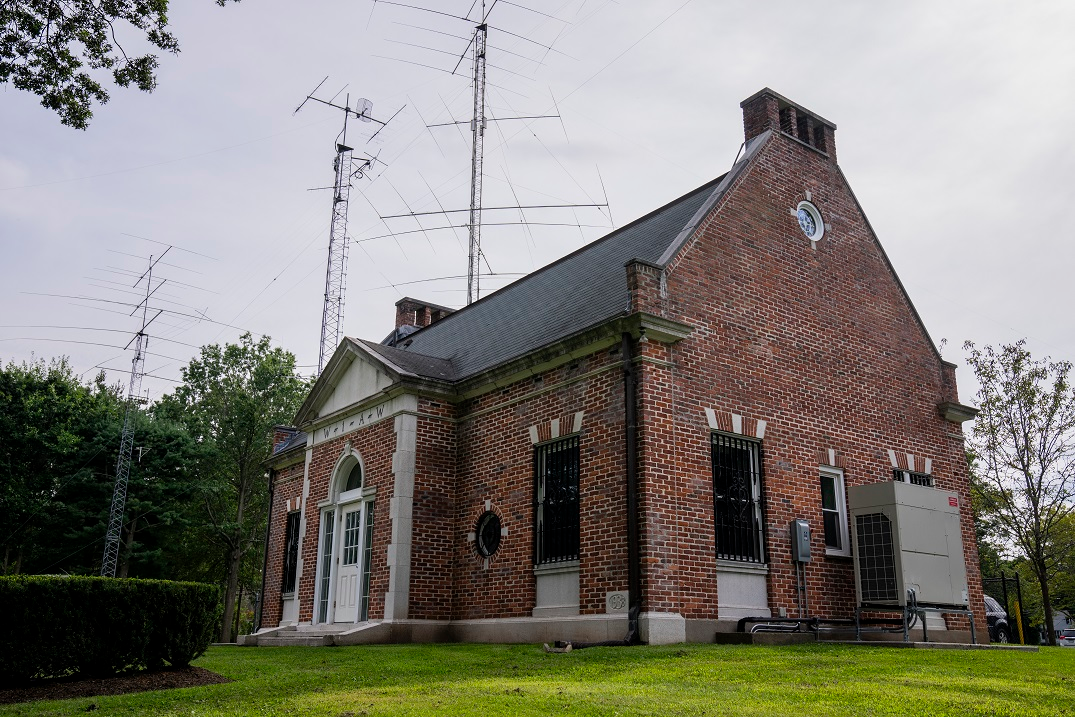
W1AW, The Hiram Percy Maxim Memorial Station: The Voice of Amateur Radio
“QST de W1AW.”, six characters known to almost every amateur on the air.
If you have spent any time on the HF bands, you have heard them. Each day, from a quiet seven-and-a-half-acre site in Newington, Connecticut, the American Radio Relay League’s headquarters station W1AW transmits Morse code practice, news bulletins and digital bulletins to operators around the world. It is, quite simply, the most recognised callsign in amateur radio, and the only major club station that doubles as a working memorial to the man who founded the League itself.
This article traces the origin, mission, history, vision, membership, activities and contributions of W1AW, the Hiram Percy Maxim Memorial Station, with reference links for further reading at the end.
Origin: A Station Born From a League’s Need to Be Heard
The story of W1AW goes back almost as far as the story of the ARRL itself. The American Radio Relay League was founded in May 1914 by Hiram Percy Maxim, 1AW, of Hartford, Connecticut, and Clarence Tuska. From the earliest days the League understood that it needed an on-air voice, a station that could relay messages, demonstrate the state of the art, and bind the fledgling amateur community together.
The first headquarters station was licensed in about 1924 as 1MK, applied for and assigned to the ARRL by the Federal Radio Commission. The first rig was four UV202s in parallel, “five-watters”, generating perhaps a few watts of CW. From a Hartford office building at 1045 Main Street, 1MK’s signal was, at best, feeble and heavily reliant on relays.
By 1925 the League had nearly 20,000 members and a solidifying position in international spectrum negotiations. The leadership decided that the on-air voice of the League needed to be loud. In 1928, responsive to membership demand, the Board of Directors authorised an official HQ station located away from the downtown office, and the hiring of a full-time operator. After much searching, the station was installed in a National Guard building at Brainard Field in Hartford. The location, on the flood plain of the Connecticut River, gave excellent ground characteristics, and 1MK boasted a signal that stood “head and shoulders above everything else on the band.” The man at the key was Bob Parmenter (“RP”), formerly 9OX / 9TW in Kentucky. The station went on the air in September 1928.
When the International Radiotelegraph Convention (Washington, 1927) provisions took effect, 1MK became W1MK. For almost eight years, W1MK represented ARRL HQ on the air, with Parmenter doing most of the operating, supplemented by other staffers including Hal Bubb, W8DES (later W1JT), who took over the function in April 1934.
Two events in 1936 changed everything. The Brainard Field site was destroyed by the waters of the Connecticut River in the great flood of that year. And on February 17, 1936, Hiram Percy Maxim, president and co-founder of the ARRL, who had served 22 years as the organisation’s president, died.
The Board of Directors resolved that the new headquarters station would be built as a memorial to Maxim, and that it would assume his personal callsign, W1AW. On February 17, 1937, the first anniversary of Maxim’s death, the office-building station began broadcasting for the first time under the callsign W1AW. The dedication was, in the words of the League’s historians, “a reflection of the esteem in which the Leader was held.”
Mission: To Be the On-Air Voice of the ARRL
W1AW’s mission is inseparable from the mission of the ARRL itself. Where the League advances the art, science and enjoyment of amateur radio through advocacy, education and membership services, W1AW is the audible, visible embodiment of that mission on the air. Its concrete purposes, unchanged in spirit since 1937, are to:
- Transmit Morse code practice at multiple speeds, so that any licensed or prospective operator can learn and improve CW.
- Broadcast news bulletins of interest to amateurs, regular operational news, propagation updates, and emergency information when normal communications are disrupted.
- Provide a working memorial to Hiram Percy Maxim, preserving his callsign and his legacy as the founder of organised amateur radio in the United States.
- Offer a station that visitors can operate, giving ARRL members a tangible, hands-on connection to the League’s headquarters.
- Serve as a communications hub in emergencies, when bulletins are transmitted hourly to keep amateurs informed.
In a communications emergency, W1AW’s role becomes explicit: monitor W1AW for special bulletins, voice on the hour, digital at 15 minutes past the hour, and CW on the half hour.
History: From Hartford to Newington, 1924 to Today
| Year | Event |
|---|---|
| 1914 | ARRL founded by Hiram Percy Maxim, 1AW, and Clarence Tuska. |
| c. 1924 | First HQ station licensed as 1MK at 1045 Main Street, Hartford. |
| 1928 | HQ station relocated to a National Guard building at Brainard Field, Hartford; Bob Parmenter (“RP”) hired as full-time operator. Station goes on the air in September. |
| 1928 | Under the Washington 1927 Convention, 1MK becomes W1MK. |
| 1934 | Hal Bubb, W8DES (later W1JT), takes over the operator function from RP. |
| Feb 17, 1936 | Hiram Percy Maxim dies after 22 years as ARRL president. |
| 1936 | Brainard Field site destroyed by the Connecticut River flood. |
| Feb 17, 1937 | Office-building station begins broadcasting with Maxim’s call, W1AW, on the first anniversary of his death. |
| 1937-38 | Board searches for a permanent site; purchases a 7½-acre rural parcel in Newington, Connecticut, for $2,200 from Ms. Elsie Starr (namesake of today’s Starr Avenue at HQ). |
| Sep 2, 1938 | New Hiram Percy Maxim Memorial Station dedicated on what would have been Maxim’s birthday. Ceremonies broadcast nationally on the CBS Radio Network. The building features a multi-band rhombic antenna directed predominantly to the west. |
| 1963 | ARRL Headquarters building constructed next to W1AW. |
| Today | W1AW continues daily code practice, bulletins, visitor operations and special events from the same Newington site, now surrounded by the ARRL campus at 225 Main Street. |
The 1938 building appears much as it did when first built, a deliberate act of preservation. The rhombic antenna farm has evolved into a modern multi-band, multi-mode antenna system, but the building itself remains a working memorial.
Vision: A Living Memorial, Not a Museum
W1AW is not a static exhibit behind glass. Its vision is to be a living station, on the air every day, heard around the world, and operated by visitors throughout the working week. The Maxim Memorial is honoured not by silence but by signals. Every CW practice transmission, every bulletin, every contact made by a visiting operator from the W1AW operating position is, in a real sense, a continuation of the work Hiram Percy Maxim began in 1914.
The station’s continued use of Maxim’s callsign, a callsign that predates the modern K, N and W prefix system, is itself a statement of vision: that the founding ideals of amateur radio (self-training, international goodwill, public service, and the experimental spirit) are not historical curiosities but living practices, demonstrated daily from the very place where the League was built.
Members and Visitors: Who Operates W1AW?
W1AW is not a membership organisation in its own right, it is the headquarters station of the ARRL, the National Association for Amateur Radio, which has roughly 160,000+ members across the United States and around the world. The station is operated by:
- ARRL staff and station volunteers, who run the daily scheduled code practices, bulletins and digital transmissions.
- Visiting licensed amateurs, who may operate W1AW from 10 AM to 3:45 PM Eastern time, Monday through Friday, when they visit ARRL Headquarters. Visitors must bring a current Amateur Radio license (or a photocopy). It is one of the most popular “bucket list” activations in amateur radio, a chance to put the world’s most famous callsign on the air from the operating position itself.
- Special-event operators, including the annual W1AW/xx Portable Operations for events such as VOTA (Volunteers On The Air), Field Day, ARRL Contests, and SKYWARN Recognition Day.
ARRL Headquarters and W1AW are open to visitors from 8 AM to 5 PM Eastern time, Monday through Friday, except holidays (New Year’s Day; Presidents’ Day; Memorial Day; Independence Day; Labor Day; Veterans Day when it falls on a weekday; Thanksgiving and the following Friday; and Christmas Day).
Activities: Code Practice, Bulletins, Qualifying Runs and More
W1AW is famously active on the air, every day, on multiple bands and modes. The current operating schedule (subject to seasonal adjustment, note the spring/summer vs. winter UTC offsets) is summarised below.
Morse Code Practice and CW Bulletins
W1AW transmits daily Morse code practice and CW bulletins on nine frequencies spanning 160 metres through 6 metres and 2 metres:
- CW frequencies (MHz): 1.8025, 3.5815, 7.0475, 14.0475, 18.0775, 21.0675, 28.0675, 50.350, 147.555
- CWs (slow code): 5, 7.5, 10, 13 and 15 WPM
- CWf (fast code): 35, 30, 25, 20, 15, 13 and 10 WPM
- CWb (CW bulletins): 18 WPM
Code practice texts are taken from QST, the ARRL’s membership journal, and the source of each practice is announced at the beginning of the practice and at the beginning of alternate speeds. This makes W1AW not just a practice station but a reading station, operators can follow along in the printed magazine.
Qualifying Runs
Once each month, W1AW transmits Qualifying Runs, formal code proficiency tests at graded speeds, on the same frequencies as the regular code practice. Successful copying of a Qualifying Run can be submitted for a W1AW Code Proficiency Certificate. The schedule of Qualifying Runs is published in advance on the ARRL website.
Digital and Voice Bulletins
- Digital frequencies (MHz): 3.5975, 7.095, 14.095, 18.1025, 21.095, 28.095, 50.350, 147.555, using Baudot (45.45 baud), BPSK31 and MFSK16 in a revolving schedule.
- Voice frequencies (MHz): 1.855, 3.990, 7.290, 14.290, 18.160, 21.390, 28.590, 50.350, 147.555, SSB on HF, FM on 2 metres.
A DX bulletin replaces or is added to the regular bulletins between 0000 UTC Thursday and 0000 UTC Friday (8 PM EDT Thursday to 8 PM EDT Friday), keeping the worldwide DX community current.
EchoLink and IRLP
Audio from W1AW’s CW code practices, CW/digital/phone bulletins and monthly Qualifying Runs is streamed in real time via EchoLink on the W1AWBDCT conference server, and via IRLP. This means that even operators without HF capability, or without a licence at all, as SWLs, can follow W1AW’s transmissions from anywhere on the planet with an internet connection.
Special Events and Portable Operations
W1AW is regularly activated portable from across the United States for major events, including:
- ARRL Field Day (June)
- ARRL Sweepstakes, RTTY RU, DX Contest, January VHF, June VHF, September VHF, 10 and 160 Metre Contests, W1AW is often a multiplier or bonus station.
- SKYWARN Recognition Day (December), in cooperation with the National Weather Service.
- VOTA (Volunteers On The Air), throughout 2023, W1AW/xx portable operations honoured ARRL volunteers across all 50 states and territories. (Note: 2023 VOTA W1AW/xx contacts were confirmed via LoTW only, no QSL cards.)
- Frequency Measuring Test (FMT), periodic transmissions that allow operators to measure their receive frequency accuracy to a fraction of a hertz.
QSL Cards
QSL cards are available as normal for contacts made with W1AW in Newington, Connecticut. Cards for the 2023 W1AW/xx VOTA portable operations were not issued, those contacts are confirmed via Logbook of the World (LoTW) only.
Contributions: What W1AW Has Given to Amateur Radio
W1AW’s contributions to the hobby are difficult to overstate. Over nearly nine decades on the air, the station has:
- Taught Morse code to generations of amateurs. Long before the FCC dropped the Morse requirement (2007 in the US), W1AW’s daily code practices were the de facto standard for self-study. They remain so today for operators worldwide who choose to learn or improve CW.
- Issued Code Proficiency Certificates through the Qualifying Run programme, providing a recognised benchmark of CW skill independent of any licensing requirement.
- Distributed operational news to the amateur community, especially in emergencies. When normal communications fail, W1AW’s hourly bulletins, voice on the hour, digital at quarter past, CW on the half hour, are a lifeline for operators supporting served agencies.
- Preserved the legacy of Hiram Percy Maxim. By continuing to use his callsign on the air every day, W1AW keeps the founding story of organised amateur radio alive in the most direct way possible, as a working signal, not a plaque.
- Provided a pilgrimage destination. For many amateurs, operating W1AW from the Newington operating position is a once-in-a-lifetime experience that connects them personally to the League’s history.
- Supported the ARRL contest and awards programmes as a multiplier, bonus station and special-event callsign, and as a beacon on bands such as 6 metres (W1AW is now QRV on 50.350 MHz for all its regular CW code practice and CW/digital/phone bulletins, with a stated goal of acting as a 6-metre beacon from the northeastern US).
- Adapted to the times. From spark to CW to AM to SSB to digital modes (Baudot, BPSK31, MFSK16) and now to EchoLink and IRLP streaming, W1AW has consistently demonstrated the experimental spirit that Maxim championed. The September 2024 move of the 17-metre CW frequency to 18.0775 MHz to avoid interference is a recent example of the station’s continuing attention to operating conditions.
Why W1AW Still Matters
In an era of FT8 pile-ups, remote-controlled superstations and online log search, W1AW is a quiet, daily reminder of what amateur radio was built for: a community of operators bound together by signals on the air. The station’s continued broadcasts of code practice from QST, its hourly emergency bulletins, its visitor operating position, and its unbroken use of Hiram Percy Maxim’s callsign since 17 February 1937 are all expressions of the same idea, that the League has a voice, and that voice is on the air.
Whether you are a newcomer copying 5 WPM slow code for the first time, a veteran chasing a 35 WPM Qualifying Run certificate, a DXer reading the weekly DX bulletin, or a visitor sitting down at the W1AW operating position on a Tuesday morning in Newington, you are taking part in a tradition that stretches back to 1914, to a Hartford inventor who believed that radio amateurs, organised and heard, could be a force for good in the world.
QST de W1AW.
Sources and Further Reading
- ARRL, W1AW main page: https://www.arrl.org/w1aw
- W1AW Operating Schedule: https://www.arrl.org/w1aw-operating-schedule
- W1AW Code Transmissions (frequencies): https://www.arrl.org/code-transmissions
- W1AW Digital Transmissions: https://www.arrl.org/digital-transmissions
- W1AW Voice Transmissions: https://www.arrl.org/voice-transmissions
- W1AW Qualifying Run Schedule: https://www.arrl.org/qualifying-run-schedule
- Code Practice QST Source: https://www3.arrl.org/code-practice-qst-source
- W1AW Bulletins archive: https://www.arrl.org/w1aw-bulletins-archive
- W1AW Operating Events: https://www.arrl.org/w1aw-operating-events
- Frequency Measuring Test (FMT): https://www.arrl.org/frequency-measuring-test
- EchoLink / IRLP at W1AW: https://www.arrl.org/echolink-irlp
- Visitor Operating at W1AW: https://www.arrl.org/visitor-operating-at-w1aw
- A Concise History of the ARRL Headquarters Station (PDF): https://www.arrl.org/files/file/2100w1aw-info.pdf
- A Chronicle of W1AW, Emblem of Excellence (PDF, ARRL Heritage Museum): http://www3.arrl.org/files/file/ARRL%20Heritage%20Museum/HMR%209%20(A)%20NARR.pdf
- The History of W1AW, Script (PDF, ARRL Heritage Museum): http://www.arrl.org/files/file/Heritage%20Museum/W!AW%20HISTORY%20SCRIPT%20REVISION%20ONE.pdf
- W1AW, Wikipedia: https://en.wikipedia.org/wiki/W1AW
- ARRL, The National Association for Amateur Radio: https://www.arrl.org
- ARRL address: 225 Main Street, Newington, CT 06111-1400 USA, Tel: +1-860-594-0200, [email protected]

Post Comment