amateur radio
open source
Technology
10 MHz reference, 12-bit ADC, 2T2R, 56 MHz bandwidth, 70 MHz to 6 GHz, 9M2PJU, AD9361, ADALM Pluto, Analog Devices, ARM Cortex-A9, B210, bladeRF, DragonOS, Ethernet, Ettus, FPGA, GNU Radio, GPSDO, GQRX, HAMGEEK E310, hamradio.my, IIO, libiio, Matlab Simulink, MIMO, Nuand, Open5G-PHY, OpenWiFi, PetaLinux, PlutoSDR, PPS, sdr, SDR#, SDRangel, SigDigger, software defined radio, srsRAN, USB-C, USRP, Xilinx, Zynq, Zynq 7020
9M2PJU
0 Comments
HAMGEEK E310 Review: A 70 MHz to 6 GHz AD9361 + Zynq SDR for OpenWiFi, DragonOS and Open5G-PHY
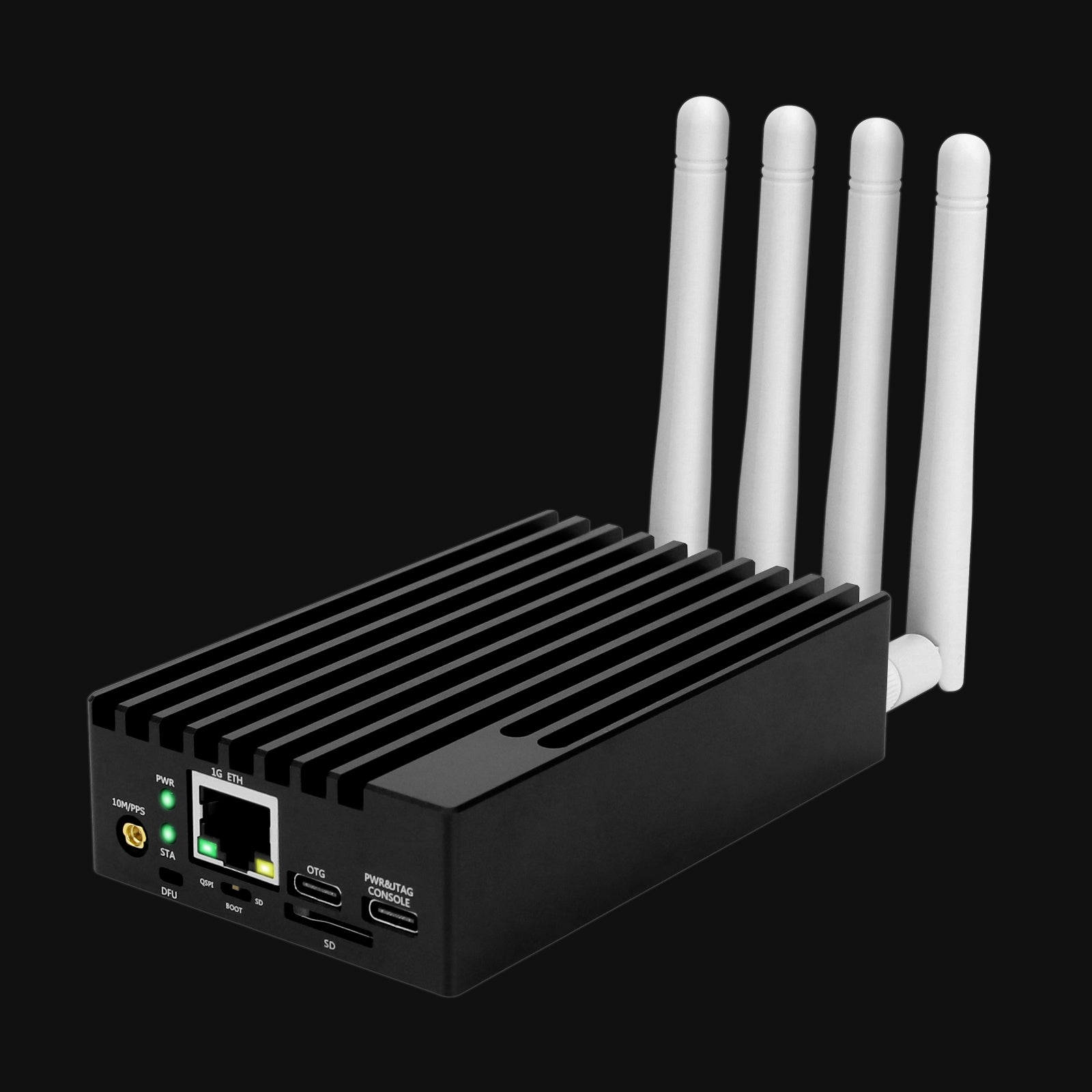
TL;DR: The HAMGEEK E310 is a compact, USB-C powered 2T2R software defined radio built around the Analog Devices AD9361 wideband transceiver IC and a Xilinx Zynq XC7Z020 SoC. It tunes 70 MHz to 6 GHz with up to 56 MHz of instantaneous bandwidth, runs GNU Radio, SDR#, SDRangel, Gqrx, DragonOS, SigDigger and Matlab Simulink on the host, and carries enough on-board ARM Cortex-A9 plus FPGA fabric to run OpenWiFi, srsRAN, Open5G-PHY and gps_sdr_sim stand-alone, with no PC attached. At $229 it sits in the sweet spot between the ADALM Pluto and a full USRP, and it is one of the cheapest ways into a Zynq-class SDR with a real Linux-capable baseband.
What Is the HAMGEEK E310?
The HAMGEEK E310 is a professional-grade software defined radio transceiver sold by Hong Kong Geek Innovation Technology (HamGeek.com) out of Shenzhen and Hong Kong. It pairs the same Analog Devices AD9361 wideband RF Agile transceiver used in the ADALM Pluto and the Ettus USRP B2xx/E31x family with a Xilinx Zynq XC7Z020 all-programmable SoC, then wraps the whole thing in a 107.5 x 64.5 x 23 mm aluminium case that draws 2 to 6 watts over a single USB-C cable.
In plain terms: it is a PlutoSDR that has been given a bigger FPGA, a second receive and transmit channel, an Ethernet jack, and a metal enclosure. The “E310” name is a deliberate nod to the Ettus Research USRP E310, the popular battery-powered AD9361 + Zynq field SDR, and the hardware family tree is honest about that lineage.
The radio targets experimenters who have outgrown an RTL-SDR or a HackRF and want a true 2T2R transceiver with on-board baseband processing for OpenWiFi, 5G PHY work, and portable GNU Radio deployments, without paying USRP money.
Last updated: August 2026. Listed price $229.00 USD on the HamGeek store; check the product page for current availability.
Why AD9361 + Zynq Is Still the Sweet Spot
To understand where the E310 fits, it helps to know why the AD9361 + Zynq combination refuses to die, even though the chip is over a decade old.
The AD9361 is Analog Devices’ wideband 2T2R RF transceiver. It covers 70 MHz to 6 GHz in one chip, with up to 56 MHz of instantaneous bandwidth per channel, 12-bit ADC and DAC at 61.44 MS/s, and a noise figure under 8 dB. It’s the radio inside the ADALM Pluto, the Ettus B210/B200mini/E310/E312, the Nuand bladeRF 2.0 micro, and a long list of industrial and aerospace radios. It is well documented, has mature Linux IIO drivers, and is the reference platform for OpenWiFi and srsRAN.
The Zynq XC7Z020 is a Xilinx All-Programmable SoC that puts a dual-core ARM Cortex-A9 (typically 667 MHz to 866 MHz) next to 85,000 logic cells of 7-series Artix FPGA fabric on one die. The ARM side runs a full Linux kernel, the IIO framework, and your application code. The FPGA side runs the digital down/up-converters, the AD9361 DMA interface, and any custom PHY you want to drop in. You get the ergonomics of a Linux single-board computer and the determinism of an FPGA, with no JTAG-only workflow.
The E310 uses the Zynq 7020, the second-largest part in the Z-7010/7020/7030/7045 line. Compared with the Zynq 7010 in the ADALM Pluto, the 7020 roughly doubles the logic cells and the DSP slices, which is the difference between “I can run a QPSK demo” and “I can run a real OFDM PHY”. The E310 ships with 1 GB of DDR3 RAM and 256 Mbit of QSPI flash, which is enough to boot PetaLinux, the OpenWiFi stack, or a stripped Debian with GNU Radio installed.
This is the same architecture Ettus used in the original USRP E310 in 2015, and it’s still the cheapest way to get a self-contained, network-attached SDR that can run a full PHY without a host PC.
Full Specifications
Pulled from the HamGeek product page and cross-referenced with the AD9361 and Zynq 7020 datasheets.
| Category | Specification |
|---|---|
| Brand / Model | HAMGEEK E310 |
| RF Transceiver IC | Analog Devices AD9361, 2T2R MIMO |
| Frequency Range | 70 MHz to 6 GHz (single chip, no band switching) |
| Instantaneous Bandwidth | Up to 56 MHz per channel (AD9361 limit) |
| TX / RX Channels | 2 transmit, 2 receive (2T2R) |
| ADC | 12-bit, 61.44 MS/s |
| DAC | 12-bit, 61.44 MS/s |
| TX IQ Bandwidth | 10 MSPS (host path) |
| Transmit Power | Approximately 3 dBm (frequency dependent, into 50 ohm) |
| Noise Figure | Less than 8 dB |
| Baseband SoC | Xilinx Zynq XC7Z020 (dual-core ARM Cortex-A9 + Artix-7 FPGA) |
| System RAM | 1 GB DDR3 |
| Boot Flash | 256 Mbit QSPI |
| Host Interface | 1 GbE Ethernet (primary high-throughput path) |
| Other Interfaces | USB 2.0, USB-C JTAG/UART, GPIO expansion header |
| Reference Clock | VCTCXO, 0.5 ppm initial accuracy, digitally tunable via PLL to better than +/-5 ppb |
| Synchronization | External 10 MHz reference in, PPS in, supports multi-chip sync |
| Power Supply | USB Type-C, 2 to 6 W typical consumption |
| Board Dimensions | 100 x 60 mm (3.9 x 2.4 in) |
| Case Dimensions | 107.5 x 64.5 x 23 mm (4.2 x 2.5 x 0.9 in) |
| GPS | None (use external 10 MHz / PPS for time and frequency discipline) |
| APIs | Analog Devices IIO (pre-installed), C/C++, Python |
| Firmware Porting | ADALM Pluto firmware, ZED + FMCOMMS firmware |
| List Price | $229.00 USD (was $299.00) |
The package ships with the E310 unit, one Ethernet cable, two USB cables, and four whip antennas. There’s no GPS, no battery, and no SMA gender changer in the box. So plan for those separately if you need them.
Hardware Architecture, Block by Block
A simplified signal chain for the E310 looks like this:
+----------+    +----------+    +-------------+    +----------------+
| 2x RX    |===>| AD9361   |===>| Zynq 7020   |===>| 1 GbE / USB    |
| SMA      |    | 12-bit   |    | ARM A9 +    |    | to host        |
| (RX1/RX2)|    | ADC      |    | FPGA fabric |    +----------------+
+----------+    | 70M-6G   |    | 1GB DDR3    |
                | 56 MHz   |    | IIO + Linux |
+----------+    | BW       |    +-------------+
| 2x TX    |<===| 12-bit   |<===| Zynq 7020   |
| SMA      |    | DAC      |    | (DDC/DUC in  |
| (TX1/TX2)|    | 2T2R     |    |  FPGA)       |
+----------+    +----------+    +-------------+
       ^                              ^
       |                              |
+----------+                +----------------+
| 10 MHz / |                | USB-C power    |
| PPS in   |                | 2-6 W          |
+----------+                +----------------+
RF Front End: AD9361
The AD9361 is a direct-conversion transceiver, which means it mixes RF directly to baseband I/Q with no intermediate frequency stage. That gives the wide 70 MHz to 6 GHz tuning range in a single chip, at the cost of needing DC offset and I/Q imbalance calibration, both of which the AD9361 handles on-die. The chip supports TDD and FDD, has on-chip PLLs with fractional-N synthesis, and can be clocked from the E310’s VCTCXO or from an external 10 MHz reference for frequency-accurate work.
The 56 MHz bandwidth figure is the hard AD9361 ceiling. For most amateur and ISM work that is plenty: a 20 metre band is 0.35 MHz wide, a 2.4 GHz 802.11n channel is 20 MHz, and even a 5 GHz 802.11ac 80 MHz channel can be captured by tuning to the centre and accepting the roll-off at the edges. For full 100 MHz 802.11ac/ax capture you would need an AD9363 or a newer AD9361 variant, which the E310 doesn’t use.
Baseband: Zynq XC7Z020
The Zynq 7020 is the heart of what makes the E310 more than a Pluto clone. The Processing System (PS) side is a dual-core ARM Cortex-A9 with NEON SIMD, floating-point, and a Mali-400 GPU you’ll never use. It boots Linux from QSPI, mounts the 1 GB DDR3 as system RAM, and exposes the AD9361 through the Analog Devices IIO framework, the same framework used by the Pluto and the FMCOMMS reference boards.
The Programmable Logic (PL) side is the FPGA fabric. The standard gateware from Analog Devices puts the AD9361 DMA interface, a set of digital down-converters and up-converters, and an AXI interconnect in the PL. That’s what lets the E310 push 2T2R samples into DDR3 without involving the ARM cores. The PL is also where you would instantiate a custom PHY: an OpenWiFi OFDM modem, an srsRAN 5G stack accelerator, or your own DSP block.
Clocking and Synchronization
The on-board VCTCXO has 0.5 ppm initial accuracy, which is fine for general listening but not for WSPR or FT8 frequency-accurate work. The good news is that the VCTCXO is disciplined by a digital PLL that can pull it to better than +/-5 ppb when locked to an external 10 MHz reference. Feed it a GPSDO or an OCXO and the E310 becomes a frequency-standard-grade receiver.
The 10 MHz and PPS inputs also enable multi-E310 synchronisation. The AD9361 supports sharing LO and sample clock across multiple chips, so you can build a 4×4 MIMO node or a coherent passive radar array out of two E310s locked to the same reference. This is the same trick Ettus uses on the B2xx family with the external 10 MHz/PPS jacks.
Power and Physical
The whole radio runs from a single USB-C port at 2 to 6 W. That is low enough to run from a phone charger, a power bank, or a modest solar setup in the field. There’s no on-board battery, but a 10,000 mAh USB power bank will run an E310 for the better part of a day of receive-only duty. The case is aluminium and acts as the heatsink for the Zynq and the AD9361, so don’t block the vents.
Software Stack: What Actually Runs on It
The E310’s value proposition is the software. HamGeek explicitly lists the supported stack on the product page, and it falls into two layers: host-side SDR software and on-board open source PHY projects.
Host-Side Software (the E310 is the radio, your PC is the DSP)
When you treat the E310 as a network-attached SDR and stream samples to a host over the 1 GbE link, it works with:
- GNU Radio – the reference open source SDR framework. The E310 shows up as an IIO source and sink block, the same block used with the Pluto and the FMCOMMS boards.
- SDR# (SDRSharp) – the popular Windows SDR receiver, via the IIO or network backend.
- SDRangel – a multi-channel RX/TX application that handles ADS-B, AIS, DAB, DMR, FT8, and a long list of other modes, with native IIO support.
- Gqrx SDR – the macOS and Linux receiver built on GNU Radio and Qt, good for general shortwave, VHF and satellite listening.
- Matlab Simulink – via the Communications Toolbox Support Package for Analog Devices AD9361-based radios, the same path used by universities for SDR coursework.
- DragonOS – a Debian-based Linux distribution that ships with GNU Radio, SDRangel, OpenWiFi, srsRAN, and dozens of SDR tools pre-installed. The E310 is one of the recommended radios for DragonOS because the IIO drivers are already in the kernel.
- SigDigger – an interesting signal analysis tool by Airtop for reverse-engineering unknown signals, with IIO backend support.
- STASAGEN – listed by HamGeek as supported, a signal generator framework for testing.
The 1 GbE interface is the key here. Over Ethernet the E310 can sustain the full 56 MHz of 2T2R IQ without the USB 2.0 bottleneck that limits the Pluto to about 20 MHz of 1T1R. For wideband capture and MIMO work, plug the E310 into your router or directly into your PC’s Ethernet port, not into USB.
On-Board Projects (the E310 is the radio AND the DSP)
Because the Zynq runs Linux and has FPGA fabric, you can run the PHY on the radio itself, with no host PC at all. HamGeek lists four supported open source projects:
- OpenWiFi – the open source IEEE 802.11 a/b/g/n/p MAC and PHY implementation that runs on AD9361 + Zynq. The E310 can act as a real, standards-compliant WiFi access point or station in the 2.4 and 5 GHz ISM bands, with the OFDM modem instantiated in the FPGA. This is the headline use case for the radio and the reason “Openwifi” is in the product title.
- srsRAN – the open source 4G LTE and 5G NSA RAN stack. With an E310 you can run a private LTE base station (eNodeB) on the bench, or experiment with 5G NR in the sub-6 GHz bands. The Zynq 7020 is at the small end of what srsRAN wants for a full gNodeB, but it works for education and lab work.
- Open5G-PHY – an open 5G physical layer research project that targets exactly this class of AD9361 + Zynq hardware.
- gps_sdr_sim – the popular GPS signal simulator. With an E310 you can generate GPS L1 C/A signals for testing receivers in the lab, with the 10 MHz reference keeping the simulated satellites frequency-accurate.
The firmware porting notes mention that the E310 can run the standard ADALM Pluto firmware and the ZED + FMCOMMS firmware. That means the entire Analog Devices reference ecosystem, including the iio oscilloscope, the IIO attribute daemon, and the libiio Python bindings, works out of the box.
HAMGEEK E310 vs ADALM Pluto vs USRP B210 vs bladeRF 2.0 micro
The E310 doesn’t exist in a vacuum. It is one of four well-known AD9361-based SDRs in the hobbyist and education price band, and the differences matter.
| Feature | HAMGEEK E310 | ADALM Pluto | Ettus B210 | Nuand bladeRF 2.0 micro |
|---|---|---|---|---|
| RFIC | AD9361 | AD9363 (cut-down AD9361) | AD9361 | AD9361 |
| Frequency Range | 70 MHz – 6 GHz | 325 MHz – 3.8 GHz (stock), unlockable to 70 MHz – 6 GHz | 70 MHz – 6 GHz | 70 MHz – 6 GHz |
| Channels | 2T2R | 1T1R | 2T2R | 2T2R |
| Max Bandwidth | 56 MHz | 20 MHz (stock), 56 MHz (unlocked) | 56 MHz | 56 MHz |
| Baseband SoC | Zynq XC7Z020 | Zynq XC7Z010 | FX3 USB controller (Cypress) | Lattice iCE40 USB controller |
| On-board Linux | Yes (PetaLinux/Debian) | Yes (minimal) | No (host-only) | No (host-only) |
| Host Interface | 1 GbE + USB 2.0 | USB 2.0 | USB 3.0 | USB 3.0 |
| RAM | 1 GB DDR3 | 512 MB DDR3 | n/a (host RAM) | n/a (host RAM) |
| FPGA Logic Cells | ~85,000 (Z-7020) | ~28,000 (Z-7010) | none | none |
| OpenWiFi | Yes, on-board | Yes, on-board (tight) | No (host-only) | No (host-only) |
| srsRAN on-board | Yes (limited) | No | No | No |
| GPSDO | External 10M/PPS only | External only | Optional internal | External only |
| Power | 2-6 W, USB-C | ~2 W, USB | ~5-6 W, USB | ~6 W, USB |
| Case | Aluminium | Plastic | Bare board | Bare board |
| List Price | $229 | $199 (Adafruit/DigiKey) | ~$700-1100 | ~$400-650 |
The pattern is clear. The Pluto is the cheapest entry point but is 1T1R and USB-bound. The B210 and bladeRF 2.0 are proper 2T2R lab radios but are host-only, so all the DSP happens on your PC and you need a fast USB 3.0 port. The E310 splits the difference: 2T2R like the B210, on-board Linux and FPGA like the Pluto, and priced well below either of the USB 3.0 radios.
The trade-off is the host interface. The E310’s 1 GbE is plenty for the AD9361’s 56 MHz of 2T2R IQ, but it isn’t a USB 3.0 pipe, and the on-board ARM Cortex-A9 is a 2013-era core, not a modern desktop CPU. If your workflow is “stream 56 MHz of IQ into a host-side GNU Radio flowgraph and do heavy DSP”, a B210 on USB 3.0 will feel snappier. If your workflow is “run a self-contained OpenWiFi AP or a private srsRAN eNodeB with no laptop attached”, the E310 is the only one of the four that does it.
Getting Started with the E310
1. Power and Network
Plug the E310 into a USB-C power source. The radio boots its on-board Linux from QSPI in about 20 seconds. Connect the Ethernet port to your network (or directly to your PC with a static IP). The default image ships with a known IP, documented in the HamGeek download folder, and you can SSH in once you know the address.
2. Verify the AD9361 from the Host
From a Linux host with libiio installed:
# Install the IIO tools (Debian/Ubuntu)
sudo apt install libiio-utils iiod

# Probe for IIO devices on the network
iio_info -u ip:<E310-IP-ADDRESS>

# List the AD9361 attributes
iio_attr -u ip:<E310-IP-ADDRESS> -c -o ad9361-phy
You should see the AD9361 phy device with its sampling frequency, RF bandwidth, and LO frequency attributes. If those respond, the radio is alive and the IIO daemon is reachable over Ethernet.
3. Receive Something in GNU Radio
In GNU Radio Companion, drop in an IIO Device Source block, point it at the E310’s IP, set the sample rate to 1 MS/s, the LO to a strong local FM station (around 88-108 MHz), and feed a Waterfall Sink. You should see the broadcast FM band light up. From there the rest of the GNU Radio ecosystem is open to you.
4. Try OpenWiFi
The OpenWiFi project ships pre-built bitstreams for the AD9361 + Zynq 7020 combination. Flash the OpenWiFi gateware into the Zynq, boot the OpenWiFi Linux image, and the E310 becomes an 802.11 a/g/n access point on a frequency of your choosing inside the 2.4 and 5 GHz ISM bands. The OpenWiFi documentation walks through the hostapd configuration and the sibyte management interface.
5. DragonOS on a Host PC
If you would rather run the DSP on a host, download the DragonOS image, flash it to a USB stick or a VM, and boot. DragonOS ships with the IIO drivers and the gr-iio blocks, so the E310 shows up as a network SDR the moment you point it at the radio’s IP. From there you have SDRangel, Gqrx, SigDigger, and the full GNU Radio suite ready to go.
Practical Notes and Honest Caveats
A few things the product page doesn’t emphasise, but that matter in practice:
- Transmit power is low. The 3 dBm (about 2 mW) TX figure is the AD9361’s direct output, not a final-stage amplifier. For real on-air transmitting you’ll need an external RF power amplifier and a band-pass filter, plus the appropriate licence for the band you’re transmitting in. For Malaysian operators, that means an Amateur Radio Operator’s Certificate from MCMC and a callsign before you key up on any amateur band.
- No GPS. The E310 has no on-board GPS. For time and frequency discipline you need an external GPSDO or OCXO feeding the 10 MHz and PPS inputs. Budget for one if you care about WSPR, FT8, or coherent multi-radio work.
- The Zynq 7020 is small for full 5G. It runs srsRAN and Open5G-PHY for education and lab work, but a production 5G gNodeB with 100 MHz bandwidth and multiple layers wants a bigger FPGA. Treat the on-board 5G stack as a learning tool, not a deployment radio.
- Stock and shipping. The E310 is listed as “Sold out” on the HamGeek store at the time of writing, with shipping from Shenzhen via 4PX (10-20 days) or DHL/FedEx/UPS at extra cost. Check the product page for current availability before planning a build around it.
- Documentation is in the Google Drive folder. HamGeek ships the manual, firmware images, and a
microphase.isoready-made image in a public Google Drive folder linked from the product page. Read it before you buy. - It isn’t a USRP. The E310 is a clone of the architecture, not of the Ettus quality, support, or UHD software stack. If you need UHD, calibration data, or a vendor you can email for support, buy an Ettus. If you want the same silicon for a quarter of the price and are happy to read Analog Devices reference docs, the E310 is a lot of radio for the money.
Who Is the E310 For?
The E310 earns its place on the bench for a specific kind of operator:
- GNU Radio learners who want 2T2R without spending USRP money. The second channel opens up MIMO experiments, passive radar, and direction finding that a 1T1R Pluto can’t do.
- OpenWiFi and private 5G researchers. The on-board Zynq 7020 is the cheapest way to run OpenWiFi and srsRAN on the radio itself, with no host PC in the loop.
- Universities and clubs teaching SDR. A classroom set of E310s is a workable lab for a fraction of what B210s would cost, and the Ethernet interface means students can SSH in from their own laptops.
- Portable and field operators. The 2-6 W USB-C power and the aluminium case make the E310 a credible field SDR for portable receive work, especially with an external GPSDO for frequency accuracy.
- Anyone who has outgrown an RTL-SDR or HackRF and wants a real transceiver. The step from a HackRF One (1T1R, 8-bit, half-duplex) to an E310 (2T2R, 12-bit, full-duplex, FPGA-backed) is large, and the price step is modest.
It’s less ideal for operators who want a turnkey commercial radio, who need UHD compatibility, or who plan to transmit on amateur bands without first getting a licence and an amplifier.
Frequently Asked Questions
What is the HAMGEEK E310?
The HAMGEEK E310 is a 2T2R software defined radio built around the Analog Devices AD9361 wideband transceiver and a Xilinx Zynq XC7Z020 SoC, covering 70 MHz to 6 GHz with up to 56 MHz of bandwidth, sold by HamGeek for around $229.
Is the HAMGEEK E310 the same as an Ettus USRP E310?
No. The HAMGEEK E310 uses the same AD9361 + Zynq architecture as the Ettus USRP E310, but it’s a separate product from a different vendor, without UHD support, Ettus calibration, or Ettus warranty.
Can the HAMGEEK E310 run OpenWiFi?
Yes. OpenWiFi is one of the headline supported projects. The Zynq 7020 has enough FPGA fabric to run the OpenWiFi OFDM PHY, and the radio can act as an 802.11 a/g/n access point or station in the 2.4 and 5 GHz ISM bands.
Does the HAMGEEK E310 work with GNU Radio and SDR#?
Yes. The radio exposes the AD9361 through the Analog Devices IIO framework over 1 GbE Ethernet, so GNU Radio, SDR#, SDRangel, Gqrx, SigDigger, Matlab Simulink, and DragonOS all work with it as a network-attached SDR.
What transmit power does the HAMGEEK E310 output?
Approximately 3 dBm, which is about 2 milliwatts, direct from the AD9361 with no external amplifier. For real on-air transmitting you need an external RF power amplifier, a band-pass filter, and the appropriate amateur radio licence for your country.
Sources and Further Reading
-
- HAMGEEK E310 product page: https://www.hgeek.com/products/hamgeek-e310-70mhz-6ghz-sdr-software-defined-radio-ad9361-zynq7020-for-openwifi-dragonos-open5g-phy
- Analog Devices AD9361 datasheet and reference design: https://www.analog.com/en/products/ad9361.html
- Xilinx Zynq XC7Z020 product page: https://www.amd.com/en/products/programmable/soc/zynq-7000.html
- OpenWiFi project (open source 802.11 PHY on AD9361 + Zynq): https://openwifi.doc.box.cm/
- srsRAN open source 4G/5G RAN: https://www.srsran.com/
- Analog Devices IIO framework and libiio: https://wiki.analog.com/resources/tools-software/linux-software/iio
- DragonOS Debian SDR distribution: https://cemaxecuter.com/
- ADALM PlutoSDR (the E310’s closest relative): https://www.analog.com/en/design-center/evaluation-hardware-and-software/evaluation-boards-kits/adalm-pluto.html
- Ettus Research USRP B210 and E310: https://www.ettus.com/
- Nuand bladeRF 2.0 micro: https://www.nuand.com/
- GNU Radio: https://www.gnuradio.org/
73 de 9M2PJU

Post Comment