The Feel Method: Tightening Bolts Without a Torque Wrench
Most repair manuals list torque values for bolts – numbers like 25 Nm or 40 ft-lb. If you own a torque wrench, following those specs is simple. But what if you don’t have one?
That’s where the feel method comes in. It’s a time-tested way mechanics tighten bolts consistently by hand, without stripping threads or leaving things loose.
Why Torque Matters
Bolts aren’t just “tight or loose.” When properly tightened, a bolt stretches slightly, creating the clamping force that holds parts together.
- Too little torque → the joint may loosen.
- Too much torque → you risk stripping threads, warping parts, or snapping the bolt.
Soft materials like aluminum and brass are especially unforgiving, making hand feel a valuable skill.
Step 1: Find the Snug Point
- Start threading the bolt by hand only.
- It should spin freely. If it doesn’t, back it out and try again – never force it.
- Once the fastener makes full contact with the surface (or washer), you’ll feel it stop turning easily. This is the snug point.
Step 2: Tighten by Feel
From the snug point, apply just a small extra turn:
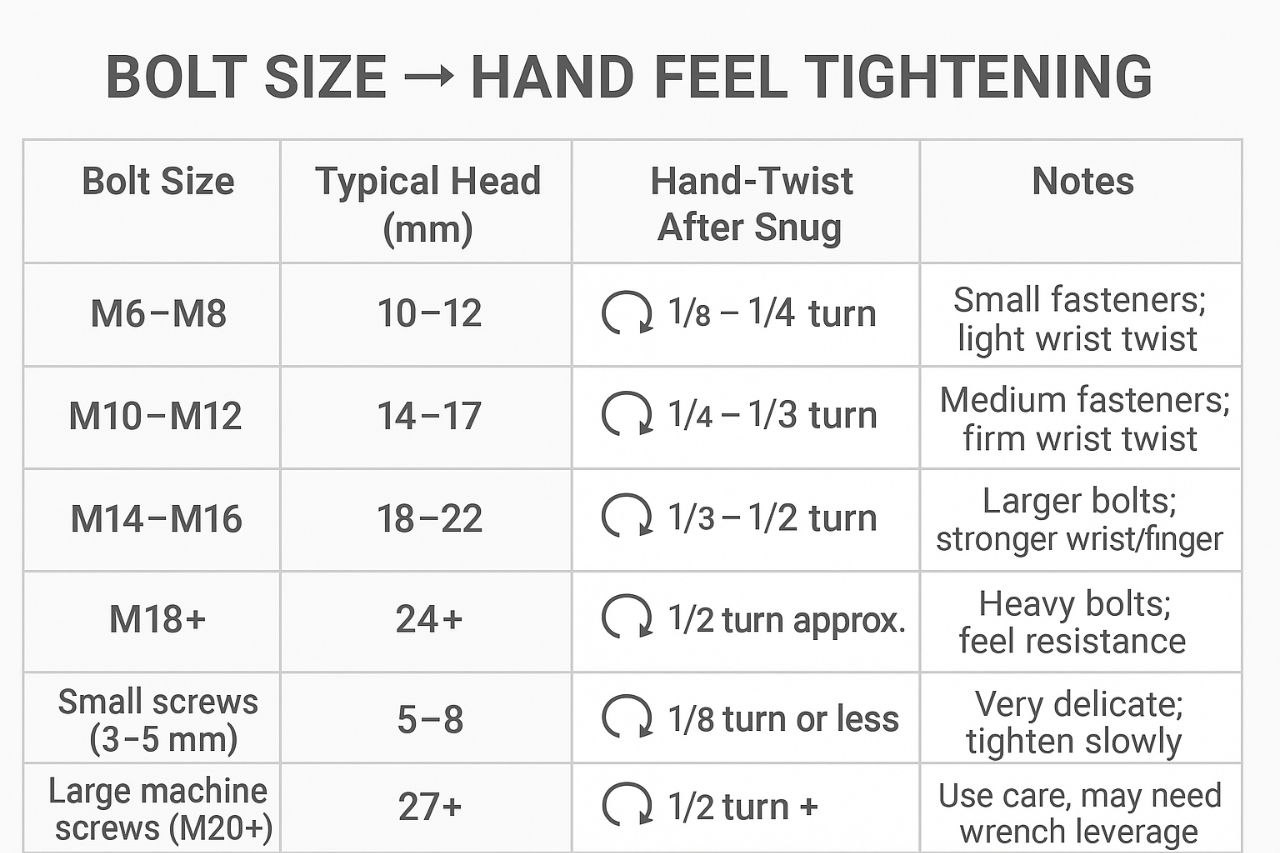
- Small bolts (M6-M8, 10-12 mm head): 1/8-1/4 turn (firm wrist twist).
- Medium bolts (M10-M12, 14-17 mm head): 1/4-1/3 turn.
- Large bolts (M14+): about 1/3-1/2 turn.
You’ll notice a transition: first, soft resistance as the joint compresses, then a firmer stop. That’s where you stop.
Step 3: Control Your Leverage
The wrench you use makes a big difference:
- Short wrench (15-20 cm / 6-8 in): safer for small fasteners.
- Long wrench: multiplies force, easier to over-tighten.
- Hold closer to the fastener for more control.
Think of it this way:
👉 Short wrench = wrist strength.
👉 Long wrench = gorilla strength.
Step 4: Confirm and Inspect
After tightening:
- Check that the joint feels secure.
- Look for gaps, movement, or leaks (for fluid joints).
- Recheck after initial use to ensure nothing has loosened.
Bonus: Train Your Hands
If you can borrow a torque wrench, practice like this:
- Tighten a test bolt by feel.
- Check with the torque wrench.
- Repeat a few times.
This calibrates your sense of torque – soon, you’ll be surprisingly accurate without a tool.
Quick Reference: Hand-Tightening by Feel
| Bolt Size | Head Size (mm) | Turn After Snug | Notes |
|---|---|---|---|
| M6-M8 | 10-12 | 1/8-1/4 turn | Small bolts; light wrist twist |
| M10-M12 | 14-17 | 1/4-1/3 turn | Medium bolts; firm wrist twist |
| M14-M16 | 18-22 | 1/3-1/2 turn | Larger bolts; solid resistance |
| M18+ | 24+ | ~1/2 turn | Heavy bolts; feel carefully |
| Small screws (3-5 mm) | 5-8 | 1/8 turn or less | Very delicate; slow tightening |
| Large machine screws (M20+) | 27+ | 1/2 turn+ | May need wrench leverage |
Final Thoughts
The feel method is about developing mechanical intuition. Instead of blindly cranking bolts, you learn to sense when a joint is secure without overstressing it.
Remember this simple rule:
✅ Snug + a little extra = correct
❌ Snug + brute force = broken threads
With practice, you’ll be able to tighten bolts confidently even without a torque wrench.





Post Comment