Top Features Every Amateur Radio Operator Wishes Their Transceiver Had, With Real-Life Use Cases
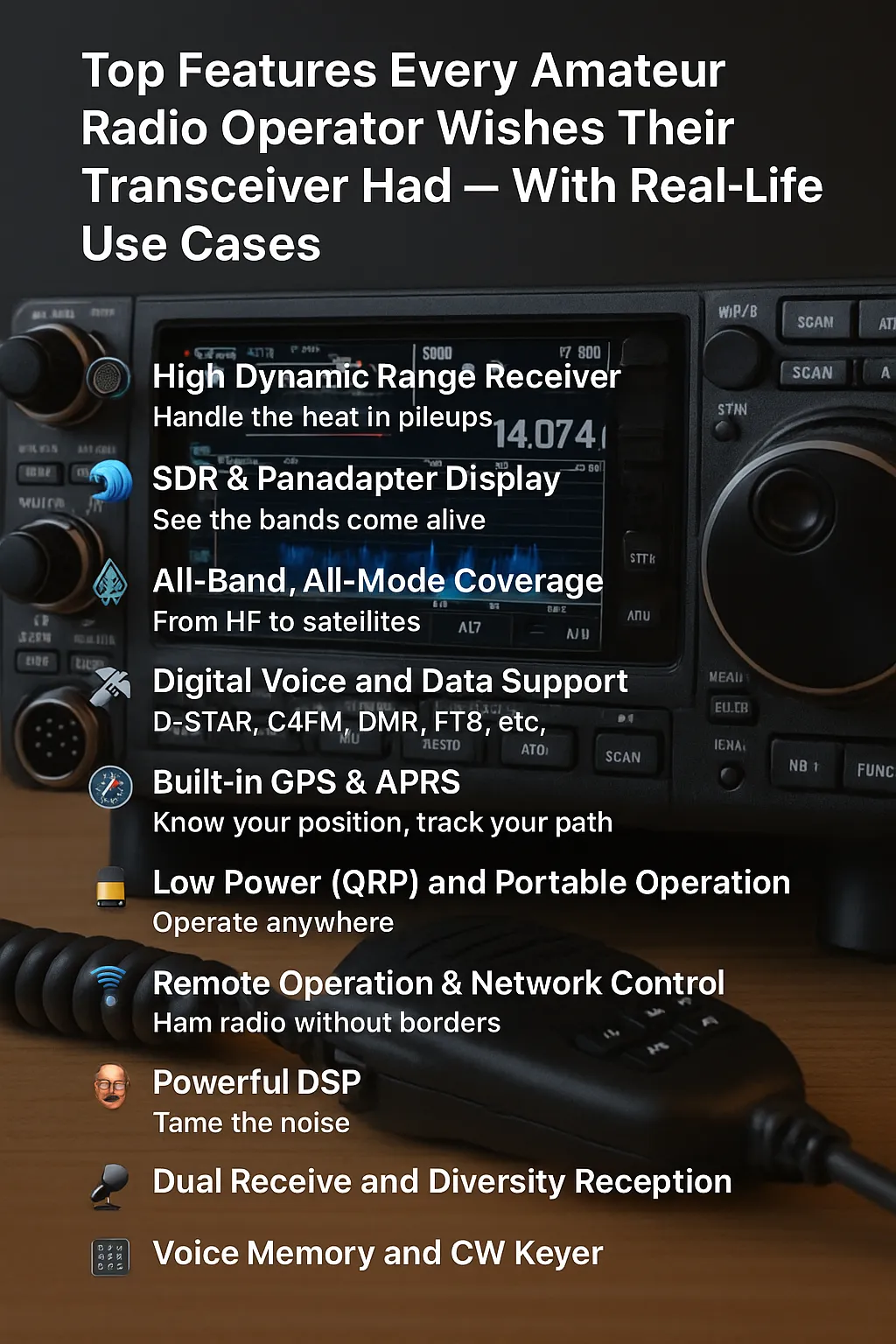
In the ever-evolving world of amateur radio, the transceiver is the heart of every shack. Whether you’re a seasoned DXer, a digital mode enthusiast, a SOTA hiker, or someone who just loves ragchewing on VHF, having the right features in your radio can make the difference between frustration and flawless communication.
Below, we’ll explore the most desired features in modern amateur radio transceivers – not just specs, but how they make a difference in real-life ham operations.
🎧 1. High Dynamic Range Receiver: Handle the Heat in Pileups
Imagine you’re chasing a rare DX station during a massive pileup. Stations from across the globe are pounding the airwaves. A high dynamic range (HDR) receiver helps you focus on that weak DX signal without getting overwhelmed by nearby strong stations.
- Real-Life Example: During a 40m contest, you try to pull in a weak S9 signal from South America while local stations are transmitting at 59+40. A rig like the Elecraft K4 or Yaesu FTDX101D can isolate that weaker station with crystal clarity, thanks to superb dynamic range and filtering.
- Who Needs This: Contesters, DXers, and anyone operating in crowded bands.
🌊 2. SDR & Panadapter Display: See the Bands Come Alive
Software Defined Radio (SDR) architecture with a panadapter lets you see what’s happening across the band. Waterfall displays show activity in real time – you can spot signals, identify pileups, or find quiet spots without scanning.
- Real-Life Example: On a Saturday morning, you’re sipping coffee and glancing at your IC-7300. The display shows a strong digital cluster on 14.074 MHz (FT8). Without even tuning, you’re already planning your QSO.
- Who Needs This: Digital ops, DX chasers, anyone who prefers a visual interface over traditional dials.
📡 3. All-Band, All-Mode Coverage: From HF to Satellites
Radios with wide frequency coverage and multimode support are perfect for hams who enjoy variety.
- Real-Life Example: You’re operating portable during a camping trip. Your IC-705 or FT-991A lets you work 20m SSB in the morning, chase satellites on VHF in the afternoon, and experiment with digital modes in the evening – all from one compact radio.
- Who Needs This: Field operators, SOTA activators, satellite enthusiasts, and minimalist operators.
🛰️ 4. Digital Voice and Data Support (D-STAR, C4FM, DMR, FT8, etc.)
In today’s digital age, voice and data modes are no longer niche. Many radios now come equipped or are easily compatible with digital systems.
- Real-Life Example: Using Yaesu’s C4FM (System Fusion), you join a local repeater net with crystal-clear voice. Later, you switch to FT8 and fire up WSJT-X via the built-in USB sound card on your radio. No messy interfaces – just plug and play.
- Who Needs This: Hams who experiment with modes, join global DMR or D-STAR networks, or love FT8 simplicity.
🧭 5. Built-in GPS & APRS: Know Your Position, Track Your Path
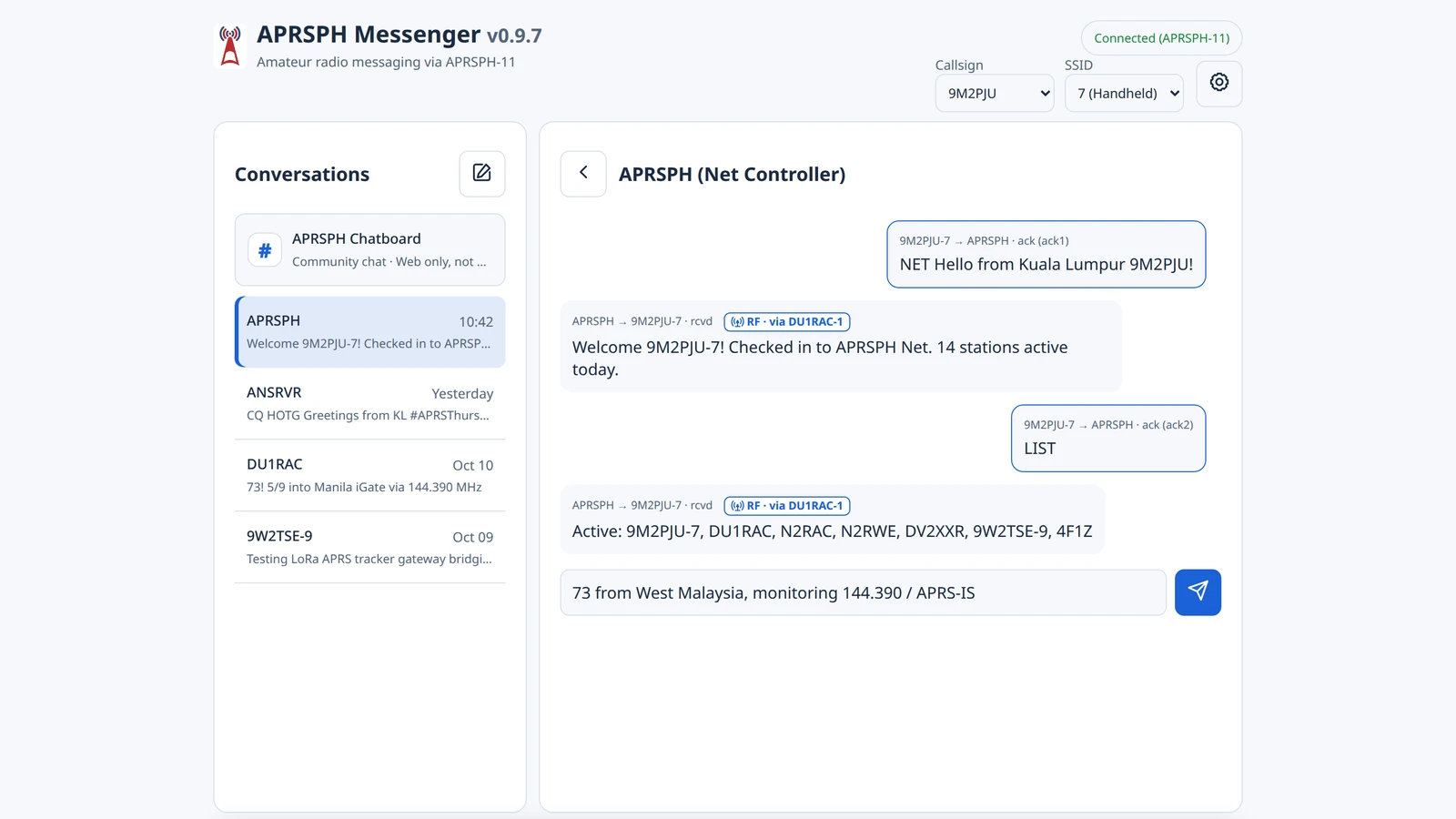
APRS (Automatic Packet Reporting System) allows real-time tracking, messaging, and weather reporting. Radios with built-in GPS and TNCs simplify setup dramatically.
- Real-Life Example: You’re hiking in the highlands with a Kenwood TH-D74. APRS automatically transmits your position to aprs.fi every few minutes. If there’s an emergency, other operators can find you. You also see nearby stations and repeaters on the radio screen.
- Who Needs This: EmComm operators, hikers, mobile operators, APRS users.
🔋 6. Low Power (QRP) and Portable Operation: Operate Anywhere
For some, less is more. QRP (low-power) rigs are compact, efficient, and ideal for outdoor adventures.
- Real-Life Example: You’re on a SOTA summit with an Elecraft KX2 and a simple wire antenna. Using just 5 watts, you work stations across Europe and Asia – all while enjoying the view from a mountaintop.
- Who Needs This: Portable operators, backpackers, emergency communicators, stealth hams.
📶 7. Remote Operation & Network Control: Ham Radio Without Borders
Remote control capability lets you operate your rig from anywhere – your office, a hotel, or even your smartphone.
- Real-Life Example: You’re traveling abroad but miss your home station. With a FlexRadio 6600 and SmartLink or an Icom IC-705 using RS-BA1 software, you operate your station over the internet. Tune, transmit, and log QSOs as if you were there.
- Who Needs This: Tech-savvy hams, frequent travelers, remote station builders.
🧠 8. Powerful DSP: Tame the Noise
Digital Signal Processing (DSP) enhances readability by cutting out unwanted noise, filtering QRM/QRN, and improving weak signals.
- Real-Life Example: You’re on 80m at night with static crashes and a noisy neighbor. With just a few menu taps, the noise reduction kicks in and transforms an unintelligible signal into a comfortable SSB conversation.
- Who Needs This: Every ham – especially those in urban or noisy environments.
🎙️ 9. Dual Receive and Diversity Reception
Dual receivers let you monitor two frequencies or bands simultaneously – incredibly useful for working Split operations or monitoring two nets.
- Real-Life Example: You’re monitoring a DXpedition on 20m while keeping an ear on your local emergency net on 2m. Your Icom IC-9700 or Elecraft K4D handles both without blinking.
- Who Needs This: DXers, net control operators, multitaskers.
🎛️ 10. Voice Memory and CW Keyer
Voice and CW memory functions make contests, nets, and repetitive calling much easier.
- Real-Life Example: You’re running a contest and programmed your CQ call into memory. Hit a button, grab some coffee, and watch the pileup form while your radio calls CQ on loop.
- Who Needs This: Contesters, net controllers, and CW enthusiasts.
🚀 Final Thoughts: What Should You Aim For?
There’s no one-size-fits-all in amateur radio. A good transceiver is one that aligns with your interests – whether it’s:
- HF DXing? → Prioritize dynamic range, DSP, and SDR display.
- Digital modes? → Go for USB audio interface, CAT control, and good filtering.
- Portable/QRP? → Look for light weight, battery efficiency, and multiband coverage.
- Emergency comms or mobile? → Built-in GPS, APRS, and ruggedness matter most.
The dream shack might cost thousands, but many budget-friendly rigs pack serious features too. Know what you need, and build your setup with purpose.
Got a favorite feature or radio setup you rely on? Share it in the comments!


Post Comment