dstar.guru: The Real-Time Compass for Finding Active D-STAR Reflectors and Worldwide QSOs
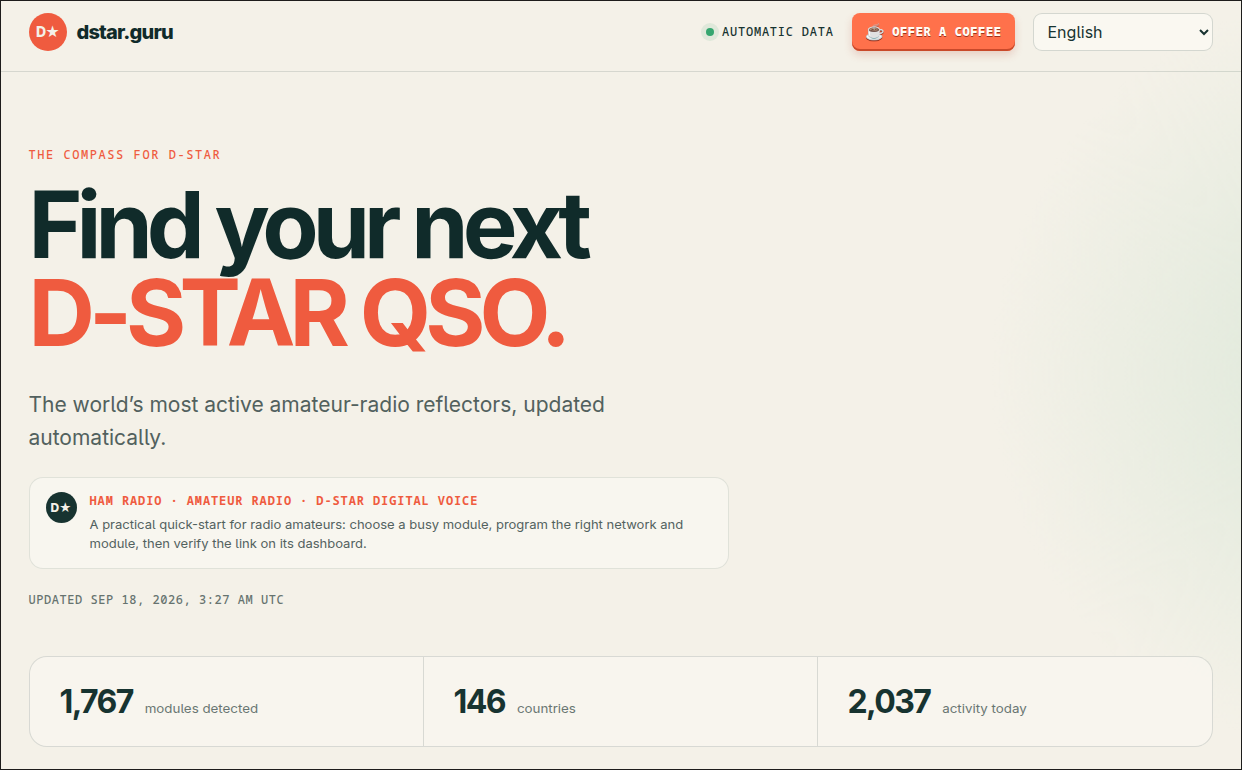
TL;DR: dstar.guru is an open-access analytics platform that monitors and ranks over 1,700 D-STAR digital voice reflector modules across 146 countries in real time. By tracking unique daily callsign connections and computing a 7-day rolling median, it eliminates guesswork for amateur radio operators looking for active QSOs across REF (DPlus), XLX, and DCS networks on native Icom transceivers, Kenwood handhelds, and MMDVM/Pi-Star hotspots.
One of the most persistent frustrations for new and experienced digital voice operators alike is calling CQ into an empty reflector. On analog FM repeaters or HF phone frequencies, finding activity requires spinning the VFO dial or monitoring a calling channel. In the digital voice world, especially on D-STAR (Digital Smart Technology for Amateur Radio), traffic is distributed across hundreds of independent servers known as reflectors, each containing multiple operational modules (A through Z).
Because D-STAR operates across several decentralized reflector protocols (including classic REF/DPlus, DExtra/XRF, DCS, and modern multi-protocol XLX systems), finding an active conversation historically meant opening dozen of separate web dashboards or guessing which module had operators listening.
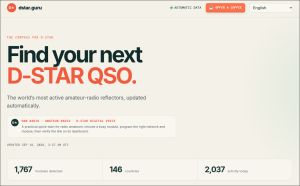
The dstar.guru platform (https://dstar.guru/) solves this challenge. Acting as a live activity compass for the global D-STAR community, dstar.guru automatically aggregates traffic data from public reflector dashboards, ranks modules by verified operator participation, displays regional demographics, and provides a quick-start reference for linking transceivers and hotspots.
What is dstar.guru?
dstar.guru is a free, web-based amateur radio analytics platform and directory that aggregates live activity data from worldwide D-STAR reflectors (REF, XLX, and DCS) to rank the most active digital voice modules in real time.
+-------------------------------------------------------------------------+
|                        dstar.guru System Architecture                   |
+-------------------------------------------------------------------------+
| [Public Reflector Dashboards]  [XLX Servers]  [REF/DPlus]  [DCS / ircDDB] |
+------------------------------------+------------------------------------+
                                     |
+------------------------------------v------------------------------------+
|               dstar.guru Automated Data Harvester                       |
|  - Continuous Status Polling & Log Scraping                             |
|  - Unique Callsign Deduplication per UTC Day (Zero Privacy Intrusion)   |
|  - Geographic Demographics & Language Identification                    |
+------------------------------------+------------------------------------+
                                     |
+------------------------------------v------------------------------------+
|               Median & Trend Analytics Engine                           |
|  - 7-Day Rolling Median Calculation (Filters Out Spurious Spikes)       |
|  - Daily Growth / Trend Percentage Metric                               |
|  - Country-of-Origin Operator Breakdown                                 |
+------------------------------------+------------------------------------+
                                     |
+------------------------------------v------------------------------------+
|               Web Frontend & Public REST API (/api/ranking)             |
|  - Filterable Activity Leaderboard (1,700+ Modules, 146 Countries)      |
|  - Direct Reflector Dashboard Hyperlinks                                |
|  - Multi-Language UI (20+ Locales) & Linking Command Reference          |
+------------------------------------+------------------------------------+
                                     |
            +------------------------+------------------------+
            |                                                 |
+-----------v-----------+                         +-----------v-----------+
| Native D-STAR Radios  |                         | MMDVM / Pi-Star / WPSD|
| (Icom, Kenwood, Flex) |                         | Hotspot Nodes         |
+-----------------------+                         +-----------------------+
Rather than presenting an uncurated list of all existing reflectors, dstar.guru processes telemetry to separate live, thriving digital voice hubs from dormant or abandoned nodes. With over 1,760 detected modules across 146 countries, the site provides instant clarity on where conversations are actually taking place.
Understanding the D-STAR Reflector Ecosystem: REF, XRF, DCS, and XLX
To understand why an aggregator like dstar.guru is essential, it helps to review the architecture of D-STAR reflector networks.
+-------------------------------------------------------------------------+
|                 Evolution of D-STAR Reflector Protocols                 |
+-------------------------------------------------------------------------+
| 1. REF (DPlus / AA4RC)                                                  |
| - Original G2 gateway protocol, closed trust server registration        |
| - Classic hubs: REF001 (International), REF030 (North America)          |
+------------------------------------+------------------------------------+
                                     |
+------------------------------------v------------------------------------+
| 2. XRF (DExtra / KI4LKF)                                                |
| - Decentralized cross-linking protocol without trust server dependency  |
+------------------------------------+------------------------------------+
                                     |
+------------------------------------v------------------------------------+
| 3. DCS (Digital Call Server / DG1HT)                                    |
| - 26 fixed lettered modules (A-Z) per country, popular across Europe    |
+------------------------------------+------------------------------------+
                                     |
+------------------------------------v------------------------------------+
| 4. XLX (Multi-Protocol / LX1IQ & ON8JL)                                 |
| - Modern universal bridge: D-STAR (DPlus/DExtra/DCS), DMR, & YSF Fusion |
| - Dynamic hardware vocoder transcoding (AMBE-3000)                      |
+-------------------------------------------------------------------------+
1. REF (DPlus)
Developed by Robin Cutshaw (AA4RC), DPlus introduced the concept of reflectors to D-STAR. Under the DPlus architecture, individual repeater gateways connect to centralized conference bridges identified as REFxxx (such as REF001, REF030, or REF004). REF reflectors remain the backbone of classic North American and international D-STAR activity.
2. XRF (DExtra)
Created by Scott Lawson (KI4LKF), DExtra was developed to provide open, decentralized reflector linking without requiring access to proprietary Icom trust servers. XRF reflectors allow flexible repeater-to-repeater interconnections.
3. DCS (Digital Call Server)
Pioneered by Torsten Schultze (DG1HT) and European developers, the DCS system expanded reflector architecture by offering 26 distinct modules (labeled A through Z) for each reflector number, establishing standardized regional and country-specific calling channels.
4. XLX (Multi-Protocol Reflector)
Developed by Luc Engelmann (LX1IQ) and Jean-Luc Deltombe (ON8JL), the XLX Multiprotocol Gateway revolutionized digital voice by supporting D-STAR (DPlus, DExtra, DCS), DMR, and Yaesu System Fusion (YSF/C4FM) on a single server. Equipped with hardware AMBE vocoder chips, an XLX reflector transcodes audio streams seamlessly, allowing a D-STAR user on Module B to talk directly to a DMR user on a linked talkgroup.
Common Module Designations
While individual reflector managers can assign modules as they see fit, standard conventions have emerged across the community:
- Module A: International or Statewide primary channel.
- Module B: Regional or cross-mode bridge (frequently linked to DMR or YSF).
- Module C: Worldwide general calling channel (e.g.,
REF030 C,REF001 C). - Module D: Low-speed data, APRS over D-STAR (D-STAR D-RATS), or local emergency nets.
How dstar.guru Measures and Ranks Reflector Activity
Not all activity metrics are created equal. Ranking servers by raw transmitted packet counts or total connected nodes can be misleading: a single operator with a malfunctioning stuck transmitter or an automated weather bot can artificially inflate packet numbers on an empty channel.
+-------------------------------------------------------------------------+
|                      dstar.guru Ranking Methodology                     |
+-------------------------------------------------------------------------+
| 1. Daily Unique Callsigns Tracked per UTC Day                           |
|    (Measures true human participation, not packet volume)               |
+------------------------------------+------------------------------------+
                                     |
+------------------------------------v------------------------------------+
| 2. 7-Day Rolling Median Primary Sorting Metric                          |
|    (Eliminates weekend net spikes; reflects genuine weekday baseline)   |
+------------------------------------+------------------------------------+
                                     |
+------------------------------------v------------------------------------+
| 3. Yesterday & Today Activity Used Solely as Tie-Breakers               |
+------------------------------------+------------------------------------+
                                     |
+------------------------------------v------------------------------------+
| 4. Geographic Demographics & Language Metadata Mapping                  |
+-------------------------------------------------------------------------+
dstar.guru uses a robust statistical approach:
- Unique Callsign Count: The system tallies the number of distinct, valid amateur radio callsigns that transmit on each reflector module during each UTC day (00:00 to 23:59 UTC).
- 7-Day Rolling Median: The primary ranking metric is the median activity over the preceding 7 complete days. Using a median rather than a simple mathematical average prevents one-off weekend nets or special event pileups from skewing the rank for the rest of the week.
- Tie-Breaker Metrics: If two reflectors share identical 7-day median scores, the system uses yesterday’s unique participant count, followed by today’s live count, to determine final order.
- Trend Telemetry: A percentage trend indicator highlights whether a reflector’s activity is growing or tapering off over time.
- Callsign Privacy: dstar.guru strictly records aggregate counts and origin country codes. Individual operator callsigns are never republished or monetized, maintaining full privacy while honoring public data standards.
Worldwide Reflector Snapshot: Where the Action Is
Based on live metrics from dstar.guru, global D-STAR activity is concentrated across several high-traffic institutional and regional hubs:
| Rank | Reflector | Network | Primary Country / Language | 7-Day Median Users | Common Module Focus | Typical Community / Use Case |
|---|---|---|---|---|---|---|
| #1 | REF030 | REF (DPlus) | United States (English) | ~1,050+ | Module C | North America & Georgia D-STAR Mega-Channel |
| #2 | REF001 | REF (DPlus) | International (English) | ~880+ | Module C | Worldwide Mega-Reflector, international ragchew |
| #3 | XLX457 | XLX | United States (English) | ~240+ | Module B / C | Kansas City Wide cross-mode network |
| #4 | XLX458 | XLX | United States (English) | ~240+ | Module B | Regional Midwest US & multi-protocol bridge |
| #5 | XLX775 | XLX | Italy (Italian) | ~110+ | Various | Italian national & regional inter-repeater grid |
| #6 | XLX068 | XLX | Italy (Italian) | ~90+ | Module B | ircDDB Italian national D-STAR network |
| #7 | XLX190 | XLX | Argentina (Spanish) | ~75+ | Various | Latin American Spanish-language hub |
| #8 | XLX444 | XLX | Netherlands (Dutch/Eng) | ~70+ | Module B | Dutch national digital voice network |
| #9 | XLX092 | XLX | Switzerland (German/Mult) | ~65+ | Various | Swiss Alpine D-STAR & cross-mode link |
| #10 | REF004 | REF (DPlus) | United States (English) | ~60+ | Module A / B | California & Western US regional traffic |
How to Connect Your Station to a D-STAR Reflector
Once you identify an active reflector module on dstar.guru, connecting to it depends on whether you are operating a native D-STAR transceiver or an internet-connected hotspot.
+-------------------------------------------------------------------------+
|                  D-STAR Radio Callsign Routing Fields                   |
+-------------------------------------------------------------------------+
| MYCALL: [9M2PJU  ] (Your registered 8-character callsign)               |
| URCALL: [REF030CL] (Target command: Link to REF030 Module C)            |
| RPT1:   [9M2XXX B] (Local repeater callsign and band module)            |
| RPT2:   [9M2XXX G] (Local repeater gateway callsign with 'G' in pos 8)  |
+-------------------------------------------------------------------------+
1. Operating with a Native D-STAR Transceiver (Icom IC-705, ID-52A, ID-5100A, IC-9700)
Modern Icom radios feature DR (D-STAR Repeater) Mode, simplifying linking:
- Select Local Repeater: Choose your local D-STAR repeater from the radio’s repeater list (e.g.,
FROM: 9M2XXX B). - Set Destination (TO):
- Press TO and select Your Call Sign or Direct Input (URCALL).
- To link to a reflector, enter the reflector name with the module letter in position 7 and the letter
L(Link) in position 8:REF030CL - Key the PTT briefly (1 to 2 seconds). The repeater gateway will respond with an audible voice or data confirmation: “Linked to REF030 Charlie”.
- Switch to CQ Calling:
- Change your TO field back to standard local call mode:
CQCQCQ - You can now transmit and participate in the ongoing conversation.
- Change your TO field back to standard local call mode:
- Unlinking:
- When finished, change your TO field to seven spaces followed by a
U(Unlink) in position 8:_______U - Key the PTT briefly. The gateway will confirm: “Unlinked”.
- When finished, change your TO field to seven spaces followed by a
+-------------------------------------------------------------------------+
|                    Essential D-STAR URCALL Commands                     |
+-------------------------------------------------------------------------+
| Command String   | Position Format | Action Taken                       |
+------------------+-----------------+------------------------------------+
| REF030CL         | [REF030C][L]    | Link to Reflector 030 Module C     |
| XLX068BL         | [XLX068B][L]    | Link to XLX Reflector 068 Module B |
| _______U         | [       ][U]    | Unlink from Current Reflector      |
| _______I         | [       ][I]    | Reflector Link Status Query        |
| CQCQCQ           | [CQCQCQ  ]      | Normal Voice Transmission (Talk)   |
+-------------------------------------------------------------------------+
2. Operating with MMDVM, Pi-Star, or WPSD Hotspots
For operators using simplex hotspots (such as an MMDVM hat on a Raspberry Pi or an OpenSpot):
- Web Dashboard Configuration:
- Access the Pi-Star or WPSD configuration page in your web browser.
- Enable D-Star Mode in the modem section.
- Under D-Star Configuration, select your default startup reflector (e.g.,
REF030 CorXLX458 B).
- On-The-Fly Radio Control:
- Set your radio’s RPT1 to
CALLSIGN_B(with B in position 8) and RPT2 toCALLSIGN_G(with G in position 8). - Use URCALL memory channels on your radio to link and unlink reflectors dynamically without opening the hotspot web interface.
- Set your radio’s RPT1 to
- Cross-Mode Operation:
- If you are using a DMR or YSF radio with a cross-mode enabled hotspot to access an XLX reflector, verify that the target XLX module has active hardware transcoding enabled before transmitting.
Comparison Matrix: Digital Voice Reflectors & Activity Tracking
| Feature / System | D-STAR (REF / XLX) | DMR (BrandMeister / TGIF) | System Fusion (YSF / FCS) | dstar.guru Activity Monitor |
|---|---|---|---|---|
| Architecture | Decentralized multi-protocol reflectors | Centralized master servers & talkgroups | Wires-X rooms & standalone FCS servers | Real-time meta-indexer across all D-STAR networks |
| Channel Units | Reflector + Module (e.g., REF030 C) | Numeric Talkgroups (e.g., TG 91, TG 3100) | 5-digit Room IDs or FCS module slots | Aggregates 1,760+ individual lettered modules |
| Activity Metric | Unique callsigns per UTC day | Active time-slot streams & Hose telemetry | Dashboard connection tables | 7-day rolling median of verified callsigns |
| Cross-Mode Transcoding | Native on XLX with AMBE hardware | Handled via server talkgroup bridges | Handled via YSF2DMR / cross-gateways | Identifies cross-mode capable XLX bridges |
| Callsign Registration | Trust server / ircDDB registration | RadioID.net 7-digit ID allocation | Callsign-based (no central ID needed) | Aggregated from public dashboards (read-only) |
Best Practices for D-STAR Reflector Etiquette
When joining active reflectors identified on dstar.guru, observing good operating practice keeps conversations enjoyable for everyone:
- Listen Before Keying: Always pause and monitor the reflector for at least 15 to 30 seconds before calling CQ to make sure an ongoing ragchew or emergency net is not in progress.
- Leave a 2 to 3 Second Gap Between Overs: Digital voice gateways and internet links require time to unkey, reset network buffers, and allow other repeaters in the link chain to drop their carrier. Rapid back-to-back keying prevents breaking stations from checking in and causes gateway lockups.
- Announce Your Callsign and Module Clearly: When linking to a busy hub, identify yourself properly: “This is 9M2PJU listening on REF030 Charlie.”
- Unlink When Finished on Repeaters: If you link a shared local repeater to a high-traffic international reflector, always transmit the unlink command (
_______U) when your conversation ends so the repeater returns to its default local configuration. - Check Dashboard Rules: Many large reflectors host scheduled weekly nets. Use the direct dashboard links provided on dstar.guru to review reflector rules, net schedules, and etiquette guidelines.
Frequently Asked Questions (FAQ)
What is dstar.guru?
dstar.guru is an open-access website that aggregates real-time usage statistics from D-STAR reflectors worldwide, ranking modules by 7-day median unique callsign activity across REF, XLX, and DCS networks.
How does dstar.guru rank D-STAR reflectors?
The platform ranks reflectors primarily by the 7-day rolling median of unique amateur radio callsigns transmitting per module, using today and yesterday’s activity only as tie-breakers.
What is the difference between REF, DCS, and XLX reflectors?
REF uses the original DPlus protocol, DCS provides 26 regional European channels, and XLX is a modern multi-protocol system that bridges D-STAR, DMR, and YSF with hardware vocoder transcoding.
How do I link my Icom radio to an active reflector?
In DR mode, set URCALL to the reflector name with the module in position 7 and ‘L’ in position 8 (e.g., REF030CL), key the PTT, and then switch back to CQCQCQ.
Does dstar.guru track my personal callsign?
No. dstar.guru tallies aggregate counts of unique callsigns from public repeater dashboards to calculate statistical activity. Individual callsigns are never republished, stored, or exposed on the site.
Summary: A Must-Bookmark Utility for Every D-STAR Shack
D-STAR remains one of amateur radio’s most versatile and mature digital voice protocols, but its decentralized nature has historically made discovering active conversations a hit-or-miss experience. By combining automated dashboard scraping, statistical median smoothing, and a clean user interface, dstar.guru delivers an invaluable service to the worldwide ham radio community.
Whether you are configuring your first Pi-Star hotspot, setting up an Icom IC-705 in the field, or looking for an international ragchew on an idle evening, dstar.guru provides the exact coordinates to find your next digital voice QSO.
73 from 9M2PJU.
Sources and Further Reading
- dstar.guru Official Website – Live global D-STAR reflector activity leaderboard and API.
- dstar.guru Ranking API Endpoint – Live JSON ranking data for developers.
- Icom D-STAR Official Resource Center – Directory of D-STAR repeaters, reflectors, and user registrations.
- XLX Multiprotocol Gateway Project – Open-source multi-protocol digital voice reflector software.
- WPSD Digital Voice Software – Advanced digital voice software suite for Raspberry Pi hotspots.
- Pi-Star Digital Voice Dashboard – Multi-mode digital voice dashboard for MMDVM nodes.
- JARL D-STAR System Overview – Japan Amateur Radio League technical specifications.


Post Comment